All About Cookies
1 / 390% of Americans risk identity theft while traveling abroad
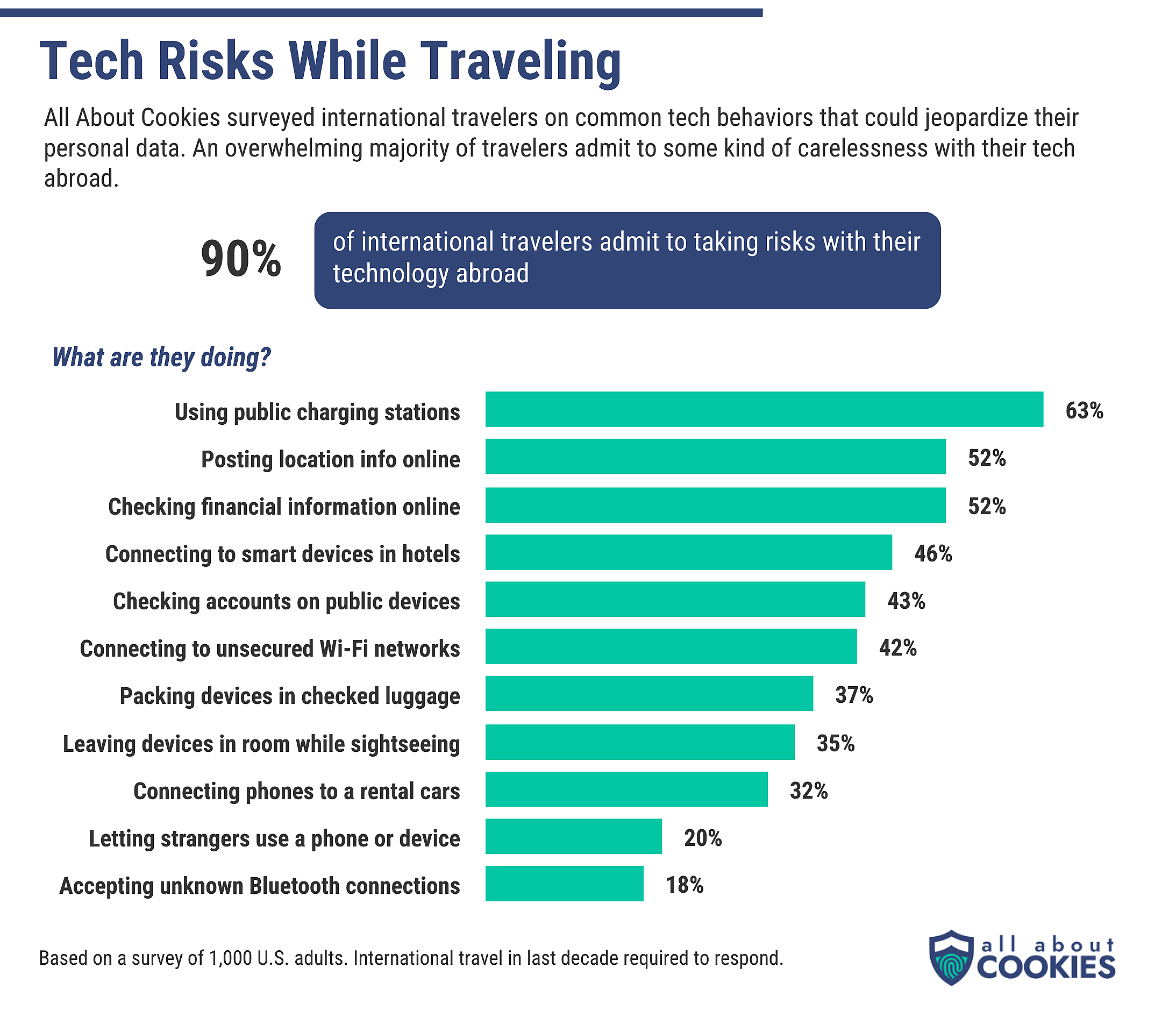
While there are plenty of tips for keeping data and devices safe while traveling, there are even more ways to put those things at risk. Some of these behaviors seem innocent enough in the moment, but can cause big issues for travelers who aren't careful. When asked about some of these risky practices, 90% admitted to risky online behavior while traveling.
Public charging stations can feel like a blessing for anyone with a rapidly draining cell phone battery, but the potential for these kinds of stations to spread malicious software to connected devices is great enough that the FBI issued a public warning about them in 2023. Despite the dangers public charging stations pose, nearly two-thirds of travelers (63%) indicate that they have used one while traveling abroad.
Smart devices such as TVs and speakers in hotel rooms pose a similar threat, as anyone who has had access to the room in the past could have hacked these devices for nefarious purposes. Despite that, nearly half of travelers (46%) have connected their personal devices to smart devices located in their hotel rooms.
One of the most dangerous things anyone can do with their devices (both at home and while traveling) is connecting to an unsecured Wi-Fi network. These kinds of networks are highly susceptible to security vulnerabilities, which can impact devices that do not have sufficient antivirus protection. Alarmingly, 42% of travelers say they have connected to an unsecured Wi-Fi network while traveling internationally.
So are all Wi-Fi networks or charging stations unsafe for travelers? Of course not, but it's hard to differentiate the safe from the unsafe, especially when you're in an unfamiliar place (or an unfamiliar language is spoken). While some of these ubiquitous public access points are necessary from time to time, travelers can protect themselves from virus or malware risks by investing in quality antivirus software on their devices in case they encounter anything malicious. This includes using antivirus software with VPN's you may be using in foreign countries.