DEA PICTURE LIBRARY / Contributor // Getty Images
1 / 2Researchers have been working at this for a long time
Countless scientists have attempted to understand how the brain affects the rest of the body. In the late 18th century, Italian physicist and physician Luigi and his partner Lucia Galvani discovered they could induce muscle contractions in frogs by applying electric shocks. The married pair from Bologna theorized they witnessed animal electricity and that the brain was vital in transmitting electrical fluid through nerves.
Over a century later, researchers honed their understanding of the electromagnetic signals sent from the brain. In 1929, German psychiatrist Hans Berger was the first to create an electrocorticogram recording of a surgery patient's brain waves, an inflection point in the evolution of neuroscience.
Brain wave research did not take off in earnest until the 1960s, with early experiments often focusing on monkeys. In 1973, Jacques Vidal, a computer science professor at the University of California, Los Angeles, published a paper coining the phrase "brain-computer interface" and laying the groundwork for the field.
In the early 1990s, Jonathan Wolpaw and a group of other researchers created early brain computer interfaces that let people move computer cursors from the center of a computer screen to the edges—with their minds.
By 1999, researchers figured out how to build a machine that let rats control a robotic arm well enough to get water, then used their "brain-derived signals" to control it. Studies that once may have read like science fiction now had a higher purpose: to learn about the potential to restore mobility in paralysis patients.
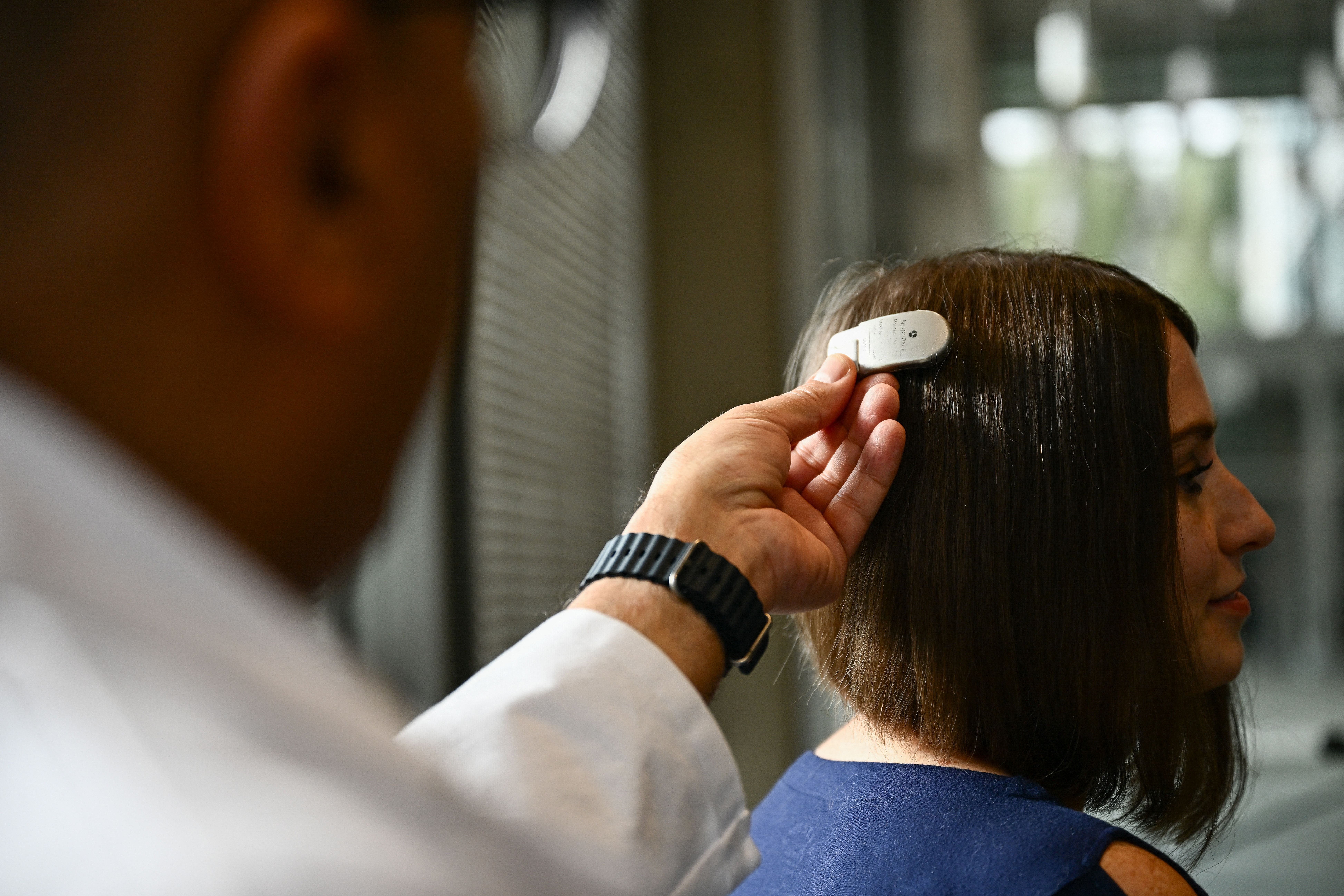
Neuralink's brain chip reflects the latest advancements in BCI technology. It works wirelessly, meaning people don't have a wire coming out of their heads as they did with past products. The brain chip also offers users more precise control compared to past devices. Arbaugh reported he could play Civilization VI, a popular computer game, for eight hours, only stopping because his brain implant needed recharging.
Other companies like Blackrock Neurotech and BrainGate are building similar devices.