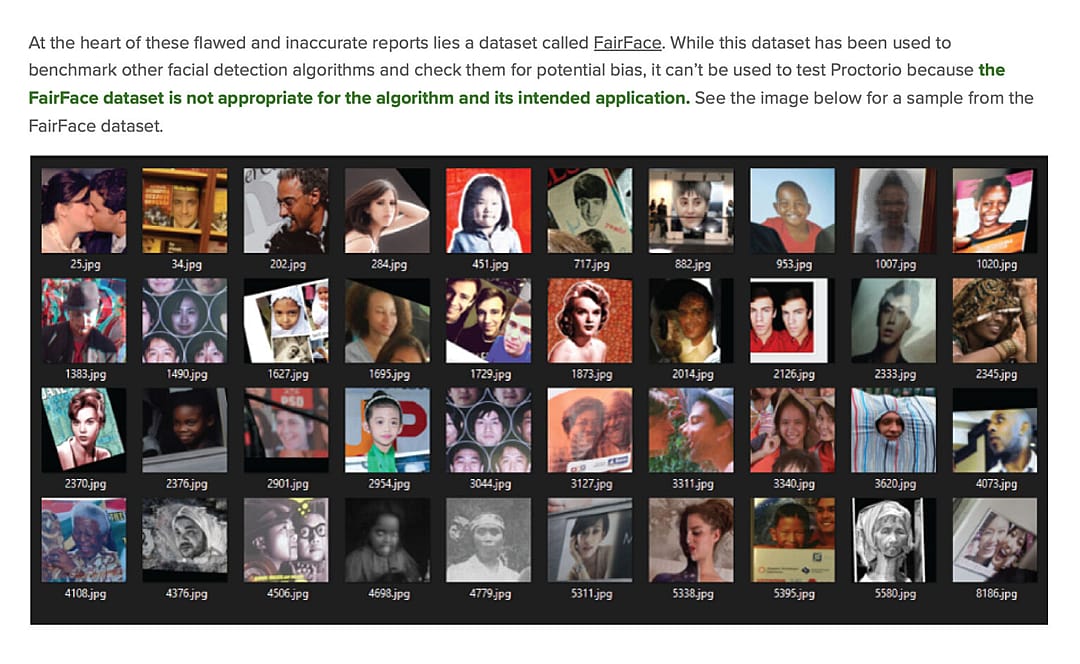
Fairface data set screenshot
1 / 2Proctorio's CEO counters fail rate claims against remote proctoring tool
To Ian Linkletter, a librarian from Canada embroiled in a long-running battle with Proctorio over whether its products were harmful, Olsen's response was baffling. Sure, cartoon characters don't take tests. But children, he said, certainly do. What he wasn't sure about, however, was whether those younger test-takers were being monitored by Proctorio — so he set out to find out.
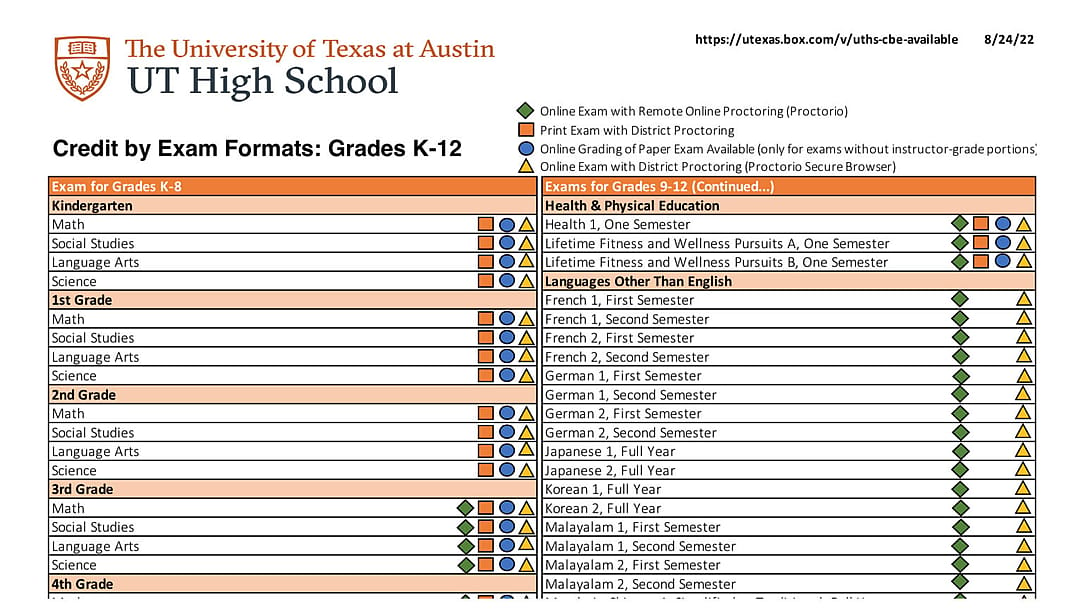
He found two instances, both in Texas, where Proctorio was being used in the K-12 setting, including at a remote school tied to the University of Texas at Austin. Linkletter shared his findings with The 74, which used the government procurement tool GovSpend to identify other districts that have contracts with Proctorio and its competitors.
More than 100 K-12 school districts have relied on Proctorio and its competitors, according to the GovSpend data, with a majority of expenditures made during the height of the pandemic. And while remote learning has become a more integral part of K-12 schooling nationwide, seven districts have paid for remote proctoring services in the last year. While extensive, the GovSpend database doesn't provide a complete snapshot of U.S. school districts or their expenditures.
"It was just obvious that Proctorio had K-12 clients and were being misleading about children under 18 using their product," Linkletter said, adding that young people could be more susceptible to the potential harms of persistent surveillance. "It's almost like a human rights issue when you're imposing it on students, especially on K-12 students." Young children, he argued, are unable to truly consent to being monitored by the software and may not fully understand its potential ramifications.
Proctorio did not respond to multiple requests for comment by The 74. Founded in 2013, the Arizona-based company claims it provided remote proctoring services during the height of the pandemic to more than 2,000 education institutions globally.
In 2020, Proctorio sued Linkletter over a series of tweets in which the then-University of British Columbia learning technology specialist linked to Proctorio-produced YouTube videos, which the company had made available to instructors. Using the video on the tool's "Abnormal Eye Movement function," Linkletter tweeted that it showed "the emotional harm you are doing to students by using this technology."
Proctorio's lawsuit alleged that Linkletter's use of the company's videos, which were unlisted and could only be viewed by those with the link, amounted to copyright infringement and distributing of confidential material. In January, Canada's Supreme Court declined to consider Linkletter's claim that the litigation was specifically designed to silence him.
While there is little independent research on the efficacy of any remote proctoring tools in preventing cheating, one 2021 study found that Proctorio failed to detect test-takers who had been instructed to cheat. Researchers concluded the software is "best compared to taking a placebo: It has some positive influence, not because it works but because people believe that it works, or that it might work."