Verbit
1 / 2Optimistic about AI
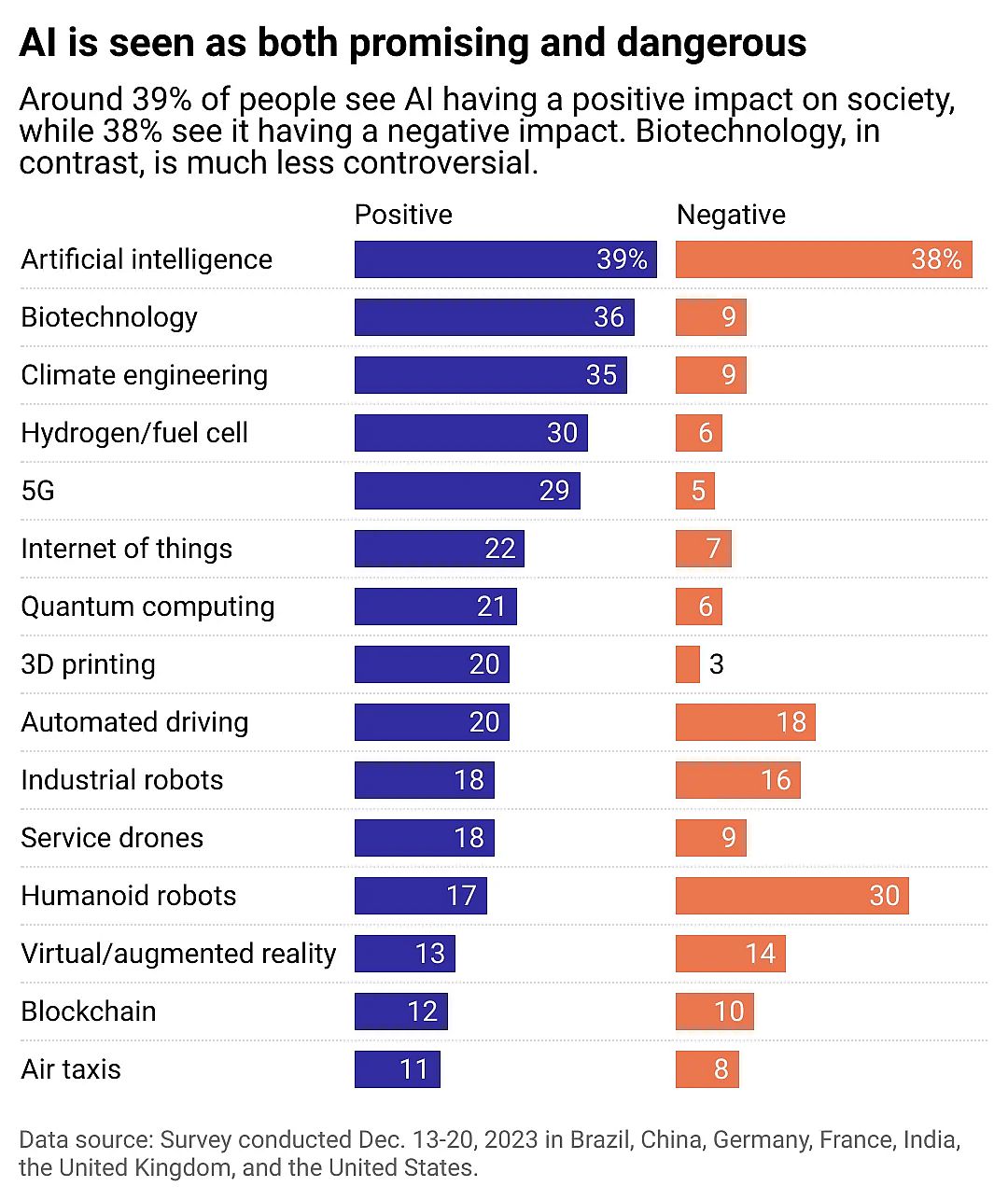
Bosch surveyed respondents between the ages of 18 and 69 from Brazil, China, Germany, France, India, the United Kingdom, and the United States. The survey might not be representative of adults in every country polled; in China, for instance, Bosch only interviewed people from the wealthiest cities.
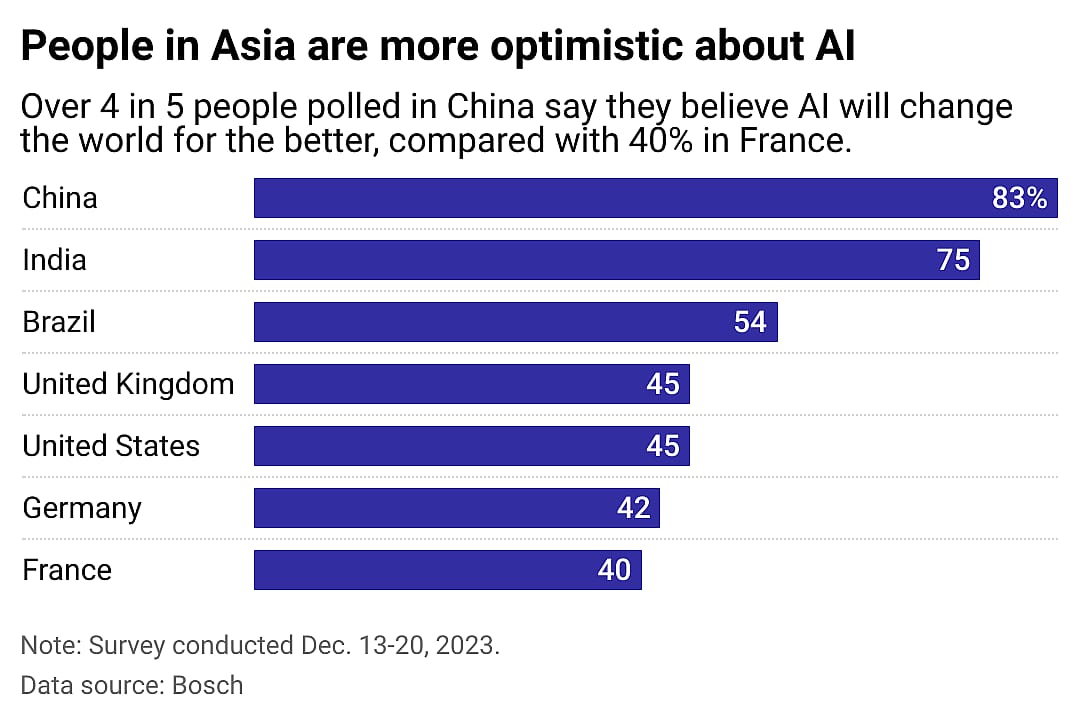
The data reveals a striking trend: In general, respondents from middle-income countries are more optimistic about AI than those from high-income countries. Around 83% of respondents from China and 75% of people from India say that AI technologies will change the world for the better. In contrast, less than half of those surveyed in Germany, France, and the U.S. agreed with the sentiment.
One reason for this discrepancy might be that people from developing countries have more to gain from the rise of AI. Wealthier countries also tend to have more educated professionals, such as doctors. AI systems that are smart enough to replace doctors and white collar workers might give many people a chance to afford services that they otherwise would not be able to, improving quality of life.
China, India, and Brazil survey respondents ranked 'better work outcomes' higher than Western countries as a personal benefit of AI. Globally, respondents considered improving health and making life more comfortable among AI's top advantages.
Another reason for the divide between middle- and high-income countries might be that those in developing countries tend to be more optimistic about economic forecasts. For instance, a survey conducted by Ipsos found that respondents in emerging markets were more likely to have confidence in the global economic outlook; 91% of people in Indonesia thought 2024 would be a better year for them than 2023. Only 65% of U.S. respondents and 39% of people in Japan agreed.