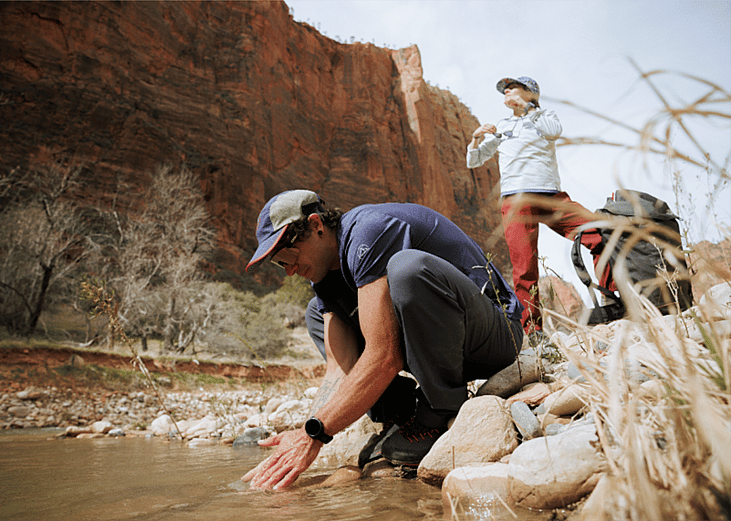
According to the most recent available data from the National Park Service, people entered national parks in the United States 323 million times in 2025, down slightly from the peak in 2024. And while national park visitation numbers will likely remain high in 2026, our favorite outdoor destinations may feel slightly different this year, mainly due to actions by President Donald Trump. To start, the president's face has been plastered on annual passes since January, which has led to a counter-movement to cover up Trump's image. Then there's the fact that the administration now demands an extra $100 entrance fee for international guests. Last but not least, Trump also removed Martin Luther King, Jr. Day and Juneteenth from the national parks' list of free entry days.
National parks themselves originated with a different president: Woodrow Wilson. He signed the "Organic Act" on Aug. 25, 1916, creating the National Park Service. Since then, the service has helped safeguard many of the nation's scenic treasures with titles as varied as parks, preserves, reservations, fossil sites, and more. Stacker zooms in on national parks and ample land or water areas, typically larger than national monuments and more general than national preserves. Stacker used publicly available data and resources from the National Park Service to compile this brief history of all 63 national parks in the U.S.
Every national park is a natural or cultural resource the federal government has deemed worthy of protection. Congress typically passes a statute to create a national park. Before that, each park passed a rigorous screening process to determine whether it was worth federal conservation. Researchers with the NPS have to deem the area of national significance; in other words, it is an unspoiled example of a resource that tells the story of U.S. natural or cultural heritage and history. Many of the older parks on this list, such as Acadia National Park, started as national monuments at the beginning of the 20th century and later became national parks.
If you're looking for your next outdoor adventure, the West Coast offers plenty of opportunities. California has nine, Arizona and Washington have three, and Oregon adds one more. However, national parks are found nationwide and offer many sites and experiences.
You may also like: The top small towns for taking in the fall foliage
Doug Lemke // Shutterstock
1 / 63Acadia National Park, Maine
Before Acadia became a national park, it was home to the Wabanaki people for 12,000 years. After colonization, European American settlers and tourists began to strain the infrastructure of the Maine islands that now make up the park. In 1916, wealthy landowners donated thousands of acres to the care of the government, and in 1929, the park was officially named Acadia National Park. Today, it's one of the top 10 most visited national parks. NPS calls it the "crown jewel of the North Atlantic coast.
Danita Delimont // Shutterstock
2 / 63National Park of American Samoa, American Samoa
The National Park of American Samoa is the only U.S. national park south of the equator. NPS established the park in 1988 across three islands in the U.S. territory. The park intends to conserve the tropical rainforests, coral reefs, and archaeology of the islands, among other things.
Fotoluminate LLC // Shutterstock
3 / 63Arches National Park, Utah
If you've ever seen a picture of Arches National Park in Utah, it probably contained the Delicate Arch, the most popular feature of the park. There are more than 2,000 naturally-forming arches in the park, as well as balanced rocks and other unique rock formations. President Herbert Hoover first signed a proclamation to preserve the land in 1929, and the area officially became a national park in 1971.
Paul Brady Photography // Shutterstock
4 / 63Badlands National Park, South Dakota
Badlands National Park may have gotten its name from the original inhabitants of the land. The Lakota people called this part of South Dakota "mako sica," which translates to "bad lands," likely a reference to the terrain that makes living here difficult. Today, the national park is known for its many mammal fossils and for its clear views of the Milky Way thanks to the dark sky.
Piotr Kalinowski Photos // Shutterstock
5 / 63Big Bend National Park, Texas
Texas' largest national park was established in June 1944. It preserves large parts of the Chihuahuan desert, the Chisos Mountains, and the Rio Grande River.
You may also like: The 20 most fun cities in America in 2025
Wangkun Jia // Shutterstock
6 / 63Biscayne National Park, Florida
Biscayne Bay, inside Biscayne National Park, is one of the top places for scuba diving in the U.S. The national park is about 30 miles south of Miami and was originally created in 1968 to protect the area's keys, coral reefs, and marine life.
Kent Raney // Shutterstock
7 / 63Black Canyon of the Gunnison National Park, Colorado
Colorado's Black Canyon of the Gunnison may be one of the newer national parks, having been established in 1999, but the landscape is much older. The canyon has some of the oldest exposed rocks at almost two billion years old, not to mention the 2,250-foot Painted Wall, which is more than 1,000 feet taller than the Empire State Building.
Andriy Blokhin // Shutterstock
8 / 63Bryce Canyon National Park, Utah
Bryce Canyon is known for its many hoodoos—columns of weathered rock with a larger top, like the shape of a mushroom. The land in Utah officially became a national park in 1928 after first being declared a national monument in 1923. It encompasses more than 35,000 acres and is less than 40 miles from another popular park, Zion.
Kelly vanDellen // Shutterstock
9 / 63Canyonlands National Park, Utah
Canyonlands National Park was established in 1964 to conserve the canyons, buttes, and arches carved by the Colorado River and its tributaries. Canyonlands may not be as popular as other Utah national parks like Zion and Arches, but it still offers incredible views.
LHBLLC // Shutterstock
10 / 63Capitol Reef National Park, Utah
Another one of Utah's five national parks, Capitol Reef is also more of a hidden gem. It became a national park in 1971. In 2015, it was designated an International Dark Sky Park.
You may also like: Top 30 city destinations in the world
Kit Leong // Shutterstock
11 / 63Carlsbad Caverns National Park, New Mexico
Carlsbad Caverns National Park in New Mexico has some of the most publicly-accessible caves in the world. In order to protect the caves, timed-entry tickets must be reserved for $1 per person before getting to the park, either online or by phone (877-444-6777). Once visitors arrive during their scheduled time, they'll pay an entrance fee.
MarkinStillwater // Shutterstock
12 / 63Channel Islands National Park, California
One of the country's least visited national parks can be found off the coast of Southern California. Five islands comprise Channel Islands National Park. Anacapa Island, which is about one square mile in total, is great for birding, and Santa Cruz is known for sea cave kayaking.
University of College // Shutterstock
13 / 63Congaree National Park, South Carolina
South Carolina's only national park is Congaree, located outside of the city of Columbia. Established in 2003 after being declared a national monument in 1976, the federally-protected land contains an old-growth bottomland hardwood forest. It is the largest intact area of this kind in existence in the southeast. It is also one of the smallest national parks when it comes to acreage.
Cat Dang Photography // Shutterstock
14 / 63Crater Lake National Park, Oregon
Southern Oregon is home to Crater Lake National Park, which became a national park in 1902. Crater Lake is the deepest lake in the U.S. at 1,943 feet. It's also one of the clearest and cleanest lakes in the world.
Kelly vanDellen // Shutterstock
15 / 63Cuyahoga Valley National Park, Ohio
fotomak // Shutterstock
16 / 63Death Valley National Park, California and Nevada
This national park along the eastern border of California and the western part of Nevada is known for being the hottest, driest, and lowest national park. The area became a national monument in 1933 to protect it from mining and became a national park in 1994.
Jay Yuan // Shutterstock
17 / 63Denali National Park, Alaska
Michael Gordon // Shutterstock
18 / 63Dry Tortugas National Park, Florida
Seven islands are the only land found in this national park near the Florida Keys, but the real gems are underwater, such as the coral reef and marine wildlife. Dry Tortugas National Park is only accessible by seaplane or boat.
JHVEPhoto // Shutterstock
19 / 63Everglades National Park, Florida
When visitors head back to Florida's mainland, they can find Everglades National Park on the southern tip of the peninsula. This is the largest mangrove ecosystem found in the western hemisphere and is home to several endangered and threatened animal species, such as the Loggerhead sea turtle.
Danita Delimont // Shutterstock
20 / 63Gates of the Arctic National Park, Alaska
William Silver // Shutterstock
21 / 63Gateway Arch National Park, Missouri and Illinois
On the other hand, St. Louis' Gateway Arch National Park is full of people in and around the iconic 630-foot tall monument, the largest man-made monument in the country. The national park tells the story of the many people who called this area home and the important court case of Dred Scott, tried in St. Louis' old courthouse. Scott's case hastened the Civil War.
Robert Paulus // Shutterstock
22 / 63Glacier National Park, Montana
Montana's Rocky Mountains are home to Glacier National Park, established in 1910 to make it the country's 10th national park. One unique thing to do in the park is to drive the 50-mile Going-To-The-Sun Road, which crosses the continental divide that separates the Pacific and Atlantic watersheds, and takes riders by waterfalls and glaciers.
Wildnerdpix // Shutterstock
23 / 63Glacier Bay National Park, Alaska
Not to be confused with the former park, Glacier Bay National Park is found in Alaska. Although it's possible to fly into the park, most people reach Glacier Bay National Park by boat, either on a cruise ship, a smaller boat, or even a kayak. It became a national park in 1980 and a World Heritage Site in 1992.
Fabian Van Scshepdael // Shutterstock
24 / 63Grand Canyon National Park, Arizona
With about 4.7 million visitors in 2022, Grand Canyon National Park is the second most visited national park. The Hualapai Tribe manages the most well-known attraction on the west side of the canyon called The Skywalk, which gives stunning views of the canyon gorge.
Kelly vanDellen // Shutterstock
25 / 63Grand Teton National Park, Wyoming
Kelly vanDellen // Shutterstock
26 / 63Great Basin National Park, Nevada
Near Nevada's border with Utah, Great Basin National Park conserves the South Snake Mountains and Lehman Caves. The Shoshone Native people have lived in this area for hundreds of years.
Gary Saxe // Shutterstock
27 / 63Great Sand Dunes National Park, Colorado
Colorado is home to the largest sand dunes in the United States, found in Great Sand Dunes National Park. Visitors can surf on the sand or float down Medano Creek to cool off.
Steven Schremp // Shutterstock
28 / 63Great Smoky Mountains National Park, North Carolina and Tennessee
The Great Smoky Mountains National Park, which straddles the border of Tennessee and North Carolina, is the NPS' most visited national park, averaging nearly 11.5 million visits per year since 2012. One of its most popular events is viewing the synchronous fireflies at night.
Cornelio Bravo III // Shutterstock
29 / 63Guadalupe Mountains National Park, Texas
Frederick Millett // Shutterstock
30 / 63Haleakalā National Park, Hawaii
Tada Images // Shutterstock
31 / 63Hawai'i Volcanoes National Park, Hawaii
Located on the nearby big island, Hawaiʻi Volcanoes National Park includes the bases of two of the world's most active volcanoes. Mauna Loa and Kīlauea made news recently when they erupted in 2022 and 2023, respectively.
Barbara Kalbfleisch // Shutterstock
32 / 63Hot Springs National Park, Arkansas
The ancient thermal springs may be one of the most popular enticements to this Arkansas national park. The eight bathhouses that make up Bathhouse Row, were declared a National Historic Landmark District in 1987.
Zack Frank // Shutterstock
33 / 63Indiana Dunes National Park, Indiana
One of the nation's newest national parks is found in northern Indiana along its border with Lake Michigan. Formed in 2019, the Indiana Dunes National Park is known as the birthplace of ecology thanks to a Chicago professor who studied the area in order to preserve it.
Jacob Boomsma // Shutterstock
34 / 63Isle Royale National Park, Michigan
ThroughLensPhotosNVideos // Shutterstock
35 / 63Joshua Tree National Park, California
Southern California's Joshua Tree National Park only gained national park status in 1994 (it was a national monument before that) but has quickly become one of the more popular parks in the national park system. Park leadership recently signed a cooperation agreement with the Twenty-Nine Palms Band of Mission Indians for shared stewardship of the land.
You may also like: 20 of the most surreal places to visit in the US
Wirestock Creators // Shutterstock
36 / 63Katmai National Park, Alaska
One can't think of Alaska's Katmai National Park without conjuring images of brown bears hunting for salmon, especially along the Brooks River. It became a national park in 1980.
Wangkun Jia // Shutterstock
37 / 63Kenai Fjords National Park, Alaska
In 1980, Kenai Fjords in Alaska became a national park to protect the Harding Icefield, made of several glaciers, a coastal fjord, and nearby islands. The park also protects wildlife like seals and sea lions.
Noah Sauve // Shutterstock
38 / 63Kings Canyon National Park, California
BlueBarronPhoto // Shutterstock
39 / 63Kobuk Valley National Park, Alaska
Kobuk Valley is the ancestral home of the Iñupiat indigenous Alaskans. They've been in this area for more than 10,000 years. The park in their homeland encompasses arctic sand dunes and a boreal forest in the northwestern part of Alaska.
Danita Delimont // Shutterstock
40 / 63Lake Clark National Park, Alaska
Sundry Photography // Shutterstock
41 / 63Lassen Volcanic National Park, California
Wangkun Jia // Shutterstock
42 / 63Mammoth Cave National Park, Kentucky
Mammoth Cave in Kentucky is the longest-known cave system in the world. Visitors to the national park can walk on a path through some of the widest parts of the cave. It became a national park in 1941 and UNESCO World Heritage Site in 1981.
Jason Kolenda // Shutterstock
43 / 63Mesa Verde National Park, Colorado
Mesa Verde National Park in southwest Colorado preserves the Pueblo indigenous communities built into the rock cliffs of Mesa Verde. Because of this, the park is also a World Heritage site.
Jon Marc Lyttle // Shutterstock
44 / 63Mount Rainier National Park, Washington
The pinnacle of Mount Rainier National Park is the 14,410-foot-tall volcano from which the park gets its name. The park's Wonderland Trail loops around Mount Rainier and includes stunning nature views.
Gestalt Imagery // Shutterstock
45 / 63New River Gorge National Park and Preserve, West Virginia
Mason Vranish // Shutterstock
46 / 63North Cascades National Park, Washington
Washington state is home to North Cascades National Park, established in 1968. It's home to the North Cascade Range, over 300 beautiful glaciers and lakes, waterfalls, and deep valleys. Careful: grizzly bears also call this land home.
Lindsay Snow // Shutterstock
47 / 63Olympic National Park, Washington
Also in Washington state, Olympic National Park is about 120 miles southwest of North Cascades. Olympic National Park differentiates itself as a more accessible and family-friendly park, with easier hikes not too far from its parking lots.
Edwin Verin // Shutterstock
48 / 63Petrified Forest National Park, Arizona
Arizona's Petrified Forest National Park is home to the Navajo Nation. While the park contains petrified forests, where the trees have turned to stone, perhaps its most stunning images are from the colorful badlands, rock striped with colors. Historic Route 66 used to run through a portion of the park. It's not in use anymore, but geocaching fans can search for telephone poles and other remnants of the old highway.
Sundry Photography // Shutterstock
49 / 63Pinnacles National Park, California
East of Central California's Salinas Valley is where Pinnacles National Park is found. It became a national park in 2013 and protects what's left of an ancient volcano. Today, it's abundant caves, wildflowers, and nearly 500 different species of bees.
Zack Frank // Shutterstock
50 / 63Redwood National Park, California
Christopher Jackson // Shutterstock
51 / 63Rocky Mountain National Park, Colorado
With an average of 4.5 million visits a year, Rocky Mountain National Park in Colorado is one of the most popular national parks in the country, and it's easy to see why. Its mountain vistas and scenic drives are a favorite, especially with Denverites who live close by. The park was established in 1915 by President Woodrow Wilson.
Wangkun Jia // Shutterstock
52 / 63Saguaro National Park, Arizona
Near Tucson, Arizona is Saguaro National Park, where visitors can find the largest cacti in the country. The average Saguaro can live 150 years. The blossoms are Arizona's state flower.
Kelly vanDellen // Shutterstock
53 / 63Sequoia National Park, California
Next to its sister national park, Kings Canyon, Sequoia National Park also features the famed sequoia trees. If viewing the majestic trees is the goal, Sequoia National Park may be at the top of the list. It has more sequoia trees than any other national park.
Joseph Sohm // Shutterstock
54 / 63Shenandoah National Park, Virginia
Shenandoah National Park is found about 75 miles outside of Washington D.C. and stretches along part of the Blue Ridge Mountains. One of its most well-known features is Skyline Drive, a National Scenic Byway that drivers can take through the entire park.
Randy Runtsch // Shutterstock
55 / 63Theodore Roosevelt National Park, North Dakota
Theodore Roosevelt National Park was established in North Dakota decades after the president left office. It was named after Roosevelt in 1947 to honor him for establishing the U.S. Forest Service and preserving several other land masses. It is the only national park established in memoriam.
You may also like: The most affordable winter getaways for your mental health
Wangkun Jia // Shutterstock
56 / 63Virgin Islands National Park, Virgin Islands
Virgin Islands National Park is the only one of the 63 national parks found in the Caribbean. The park is on the U.S. territory's island of St. John. It conserves the history of the Taino Indigenous people and the enslaved Africans forced to work on sugar plantations.
Becca in Colorado // Shutterstock
57 / 63Voyageurs National Park, Minnesota
Renting a houseboat to explore and camp is likely one of the most special experiences one can have at Voyageurs National Park. The park, near Minnesota's northern border with Canada, became a national park in 1975.
Kit Leong // Shutterstock
58 / 63White Sands National Park, New Mexico
White Sands delivers on its name thanks to the one-of-a-kind dunes made of gypsum, the mineral providing the white color. The New Mexico park officially became a national park in 2019.
SamanthaZurbrick // Shutterstock
59 / 63Wind Cave National Park, South Dakota
President Theodore Roosevelt declared South Dakota's Wind Cave a national park in 1903. It's home to a large cave complex—not quite as vast as Mammoth Cave. It was the first park in the world to protect a cave. The atmospheric pressure between the cave and the surface is known to change the wind direction, flowing into or out of the cave.
melissamn // Shutterstock
60 / 63Wrangell-St. Elias National Park, Alaska
blvdone // Shutterstock
61 / 63Yellowstone National Park, Idaho, Montana, and Wyoming
According to a report by the RV insurance company Roamly, Yellowstone National Park is the most popular for overnight stays. These overnight visitors likely want to take their time exploring the sprawling park that covers parts of Wyoming, Montana, and Idaho. Old Faithful, Yellowstone's most well-known geyser, erupts on average 20 times a day. It is the first national park in the world, established by President Ulysses S. Grant in 1872.
Katie Whit // Shutterstock
62 / 63Yosemite National Park, California
Paul Brady Photography // Shutterstock
63 / 63Zion National Park, Utah
Hiking through Zion Canyon may be the most popular activity in this national park, where some areas are only 20 to 30 feet wide. Visitors also love the natural arches found throughout this southwest Utah park. Zion has been a national park since 1919.
Data reporting by Dom DiFurio. Story editing by Carren Jao. Copy editing by Robert Wickwire. Photo selection by Clarese Moller.