1 / 50
More mothers are breadwinners
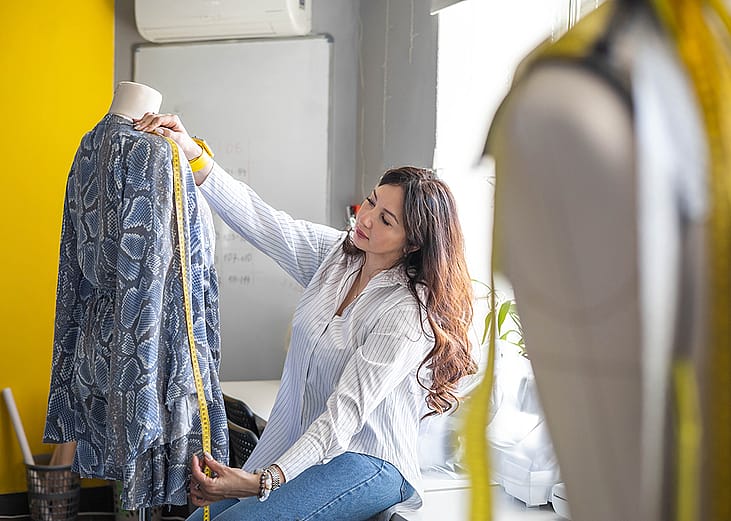
In 1960, only 11% of households with children under 18 had mothers who contributed all or most of the income for the family. In 2018, that number—which includes single and married moms—has jumped to 42%.

Life looked a lot different 50 years ago. In 1968, everyone had landlines and no one had an email address. In 2018, cars can drive themselves, same-sex couples can get married, and single women can get a credit card. A half-century of technological advancements has put a computer in practically every home, and a cell phone in almost everyone's hands.
An undeniable catalyst for the most change was the invention of the modern internet, which was introduced as the World Wide Web in 1991. Now, shopping for anything can be done online. Entertainment and news are consumed on-demand in real time. With search engines at their fingertips, students no longer spend long hours at the library or combing through their home set of Encyclopedia Britannica for their book reports.
Domestic life also looks different: More women are breadwinners, men share more of the household chores—though perhaps not as much as some might like—and families are having fewer children.
Using data from the Pew Research Center, the U.S. Census Bureau, and news reports, Stacker compiled a list of 50 ways family and domestic life has changed over the past 50 years. Click through to see how modern life is totally different.
You may also like: 5 essential types of apps for older adults that support health and wellness
In 1960, only 11% of households with children under 18 had mothers who contributed all or most of the income for the family. In 2018, that number—which includes single and married moms—has jumped to 42%.
In the 1960s, only about one-third of pregnant women worked up until the month before giving birth. In the late 2000s, that number rose to 82%. Expectant mothers were able to work more easily after the Pregnancy Discrimination Act was passed in 1978. This amendment to the Civil Rights Act of 1964 prohibits sex discrimination based on pregnancy. Because working mothers can't usually return home during the day, they have the right to pump breast milk at work. Employers covered under the Fair Labor Standards Act (nearly all workplaces) are required to provide a clean, quiet space other than a bathroom. Although it is illegal to fire—or choose to not hire—a woman because she is pregnant, it still happens.
In 1965, men dedicated about two hours a week to domestic chores. A 2012 study showed that had doubled to four hours by 2010, a number that leveled off in the ‘90s. Men still don't do as much housework as women, and lean toward shopping and cooking. Women report doing more laundry and house cleaning. Research shows that when men share in the housework, couples are more satisfied with their relationship.
Fertility rates in the United States have declined for decades. In 2018, rates for American women hit an all-time low of 1.76 births, but at least the rate for teenage pregnancy has fallen by 70% since 1991.
In 1969, the U.S. Department of Defense started using the Advanced Research Projects Agency Network (ARPANET), the precursor to the modern internet. The public didn't get the World Wide Web until 1991. Google launched in 1998, and now nearly half of the world's population uses the internet.
You may also like: What 'home skillet' and 25 other old-timey slang words mean
In 1975, IBM released the first modern desktop computer. In 2015, 78% of households had a desktop or laptop computer, and 77% had a broadband internet subscription. In 2008, laptop orders surpassed desktops for the first time.
In the 1960s, there were only three major networks: ABC, CBS, and NBC. In 2018, satellite and cable options offer hundreds of channels, including movie networks like HBO, which launched in 1972, and MTV, which started playing music videos in 1981.
Before the ubiquity of the internet, people wrote and mailed physical letters. In 1996, Hotmail started a free email service that could send messages instantaneously. A year later, about 10 million people worldwide had an email address. By 2019, about 3.8 billion people are expected to use email.
Before Google and Wikipedia, kids thumbed through volumes of the Encyclopedia Britannica or the World Book to get information for their book reports and history projects. In 2012, Britannica suspended printing further editions, a decision some say was long overdue.
There were no Kindles, iPads, or other e-readers 50 years ago, so readers carried physical copies of their books. Now, avid readers can consume pages digitally, keeping 1,000 or more books in one portable place. Physical books aren't dead, however—e-books actually saw a decrease in sales in 2017.
You may also like: 25 LGBTQ+ books that changed the literary landscape
More than half of the population has given up landlines. Since cell phone ownership wasn't common until the early 2000s, older generations are more likely to hang on to their home phones.
While 95% of the population has a cell phone, about 77% of Americans have a smartphone. For many, these internet-enabled devices are their chief means of getting online at home. From 2007 to 2013, the smartphone saw double-digit sales growth. Since so many people now have smartphones—and are holding onto them for longer—sales decreased for the first time in 2017.
In the 1960s, people were much less connected. Getting someone on the phone meant ringing them up at home or at work, not on their commute in-between. Since people constantly have their cell phones or smartphones next to them, they're almost always reachable, which might not always be a good thing.
The first VHS tape came to America from Japan in 1977. The original VCR cost $1,280 (more than $5,000 in inflation-adjusted dollars). Consumers could rent videos (and later DVDs) beginning in 1987. When Netflix was founded in 1997, it killed video rental chains (well, almost).
In 1968, being gay was classified as a mental disorder. It wasn't removed from the diagnostic manual until 1987. Over the past 50 years, society has become more inclusive of the LGBTQ community, and in 2015, the Supreme Court legalized same-sex marriage in all 50 states.
You may also like: Far from making their last calls, LGBTQ+ bars evolve to imagine a new world
Newspaper circulation increased in the ‘60s, and peaked in the ‘90s with more than 62 million Americans receiving a paper on Sunday morning. After the rise of the internet and major declines in advertising, the Sunday circulation dropped to fewer than 34 million subscribers. Newsrooms have lost nearly half of their reporters, editors, and photographers since 2004.
With the development of DVR technology, which records live television, people can fast-forward through commercials. With streaming services like Netflix and Hulu, viewers can avoid ads completely.
The Roomba hit the market in 2002, and consumers had purchased more than a million of these small, efficient robotic vacuums by 2004. The Roomba was one of the first robots that could do actual housework. Some models collect data while they clean, prompting concern that the vacuums could transmit information about home layout to Amazon, Apple, or Google.
Mirrors of the ‘60s could do one thing: reflect. Modern smart mirrors can show someone's visage while simultaneously displaying text messages and the weather. They can also provide a live fitness session (for a price).
In 2017, 43% of the American workforce reported working remotely for at least some of the week. Those who spent 60-80% of their time away from the office reported the highest levels of engagement.
You may also like: 100 of the best books by Black authors
In 1971, IBM installed floppy disk drives into their computers, the first of which stored 80 kilobytes of data. By 1986, the disk size decreased and the storage capacity increased to 1.44 megabytes. In 2018, Samsung created a 2.5-inch device that can hold 30 terabytes of storage—enough memory for 5,700 HD movies.
The first curbside recycling truck hit the streets in 1976. Now the practice is commonplace, though people often unintentionally do it wrong.
While Americans still depend on daily mail carriers, the milkman has all but disappeared. In 1963, almost 30% of the population had milk delivered. By 2005—when milk was cheap, readily available, and easy to transport—that figure plunged to 0.4%.
Before personal GPS technology, people found their way using map books. While these paper guides haven't completely disappeared, their popularity has waned. It might be worth breaking out a physical map every now and then, however. When humans depend on digital directions, the brain's navigation function goes dormant.
Before World War II, only 13% of Americans lived in the suburbs. By 2010, more than half of the population had opted for single-family homes outside of the city. Bucking the trend in 2014, young professionals and older Americans started moving back into the city.
You may also like: If these 10 celebrities were famous pieces of furniture, they would be…
In the 1960s, someone had to pull out a cookbook before heading to a market to buy ingredients. Now, whether someone is vegan, gluten-free, or a meat-lover, they can have dinner delivered. Some meal delivery kits come with ingredients that customers prepare themselves, while others are pre-packaged and ready to eat.
Don't want to leave the house to get fresh flowers, dairy-free ice cream, or toilet paper? Now online services will deliver groceries to the front door, often same day. Whole Foods, founded in 1980 and bought by Amazon in 2018, can deliver in two hours.
Dog- and cat-ownership has quadrupled in the last 50 years. In 2018, spending on pets reached an all-time high of $70 billion. $440 million of that was just for Halloween costumes, and $751 million was for Valentine's Day.
While home values have increased, incomes have not risen at the same pace. Compared to the ‘70s, renters are waiting twice as long to buy a home. The average age for a new homeowner is 44.
Since 2007, the number of cohabiting adults rose by 29%. The number of unmarried adults who are 50 or older and live together rose by 75%.
You may also like: 9 Black modernist architects and the landmarks they designed
In 1960, the FDA approved the first birth control pill. Within five years, millions of women had prescriptions for oral contraception. In 1973, women gained legal access to abortion services. The next several decades saw a revolution in birth control options, including the IUD and Plan B, emergency contraception available over-the-counter.
An unmarried woman wasn't allowed to get a credit card until the Equal Credit Opportunity Act in 1974. Until then, only men or married women, whose husbands co-signed their applications, could obtain one.
Parents nationwide will be excited to hear that between 1991 to 2017, the percentage of high school students who had sexual intercourse dropped from 54% to 40%. Kids may be sexting on their smartphones from their bedrooms, but they're on track to have fewer sex partners than previous generations.
In 1960, 72% of people 18 and older were married, and they married in their early 20s. Only about half of adults were married as of 2016. On average, a woman was 27.4 years old when she married for the first time; men were 29.5.
In 1960, 73% of children lived with two parents who had likely never been married before. Only 46% of kids live in that type of household today. Single or cohabiting, unmarried parents are more common than they were 50 years ago.
You may also like: Only 20 women have won the National Book Award for fiction—here's who they are
In 1979, people could take their music with them for the first time with the Sony Walkman. Between 1987 to 1997, the popular device led to a 30% increase in the number of people who said they walked for exercise. Cassette tapes gave way to CDs in the ‘90s, which could be listened to on the go with a Discman. Apple's iPod debuted in 2001, and now people can access an unlimited amount of music with streaming services through their smartphones.
In the 1960s, people got subscriptions to their favorite magazines. In 2018, you can subscribe to monthly services that send boxes filled with everything from scented candles or murder mystery novels to fossils, craft beer, and dog treats.
In the digital age, people can deposit or transfer money on their computers or smartphone apps. They can also get money from an ATM, further reducing the need for physical banks. While many choose to bank electronically, physical branches are still a much-needed option in many communities.
There aren't flying cars yet, but self-driving vehicles are a reality. Autonomous cars have received some bad press, but many think they'll be safer for drivers and pedestrians in the long run.
In 2016, about 3% of teens identified as transgender or gender non-conforming. Unlike 50 years ago, more kids are openly talking about gender fluidity, and celebrities like Caitlyn Jenner and actress Laverne Cox are raising awareness of trans people's stories.
You may also like: In the pandemic, gaming boomed. Which US states have the most players?
With the advent of ride-sharing services like Uber and Lyft, many urbanites are foregoing car ownership entirely, resulting in fewer car purchases than previous generations. More than half of millennials—those born between 1981-1996—claim they simply don't need a car.
In the 1960s, depression was considered a rare condition. The antidepressant Prozac was introduced in 1987. Over the past 50 years, depression has become the leading cause of disability, and teens are reporting more anxiety than any other time in history.
In 1964, the U.S. Surgeon General released its first report on smoking. Since then, more than 20 million people have died from smoking, which is the leading preventable cause of death. Compared to 50 years ago, fewer people are picking up the habit; smoking rates have declined by more than 50%.
In the 1980s, 25% of men ages 65-69 reported working. That number is 40% today. People are putting off retirement, partly because people are living longer, but a lack of social benefits also plays a role.
Compared to previous decades, people are more likely to eat out than cook at home. In 2015, people spent more on eating out than on groceries for the first time ever. Fast food, paired with the ease of ordering take-out and delivery, makes eating away from home more convenient than it was 50 years ago.
You may also like: 25 idioms that were common in the '70s
In the 1960s, people were more likely to make their own clothes or buy fewer items. Since the ‘80s, consumption has increased and fashion retailers like H&M and Zara have drastically lowered clothing prices. This has lead to an increase in the amount of clothes people buy and throw away.
Over the past 50 years, obesity rates have risen dramatically in both teenagers and adults. Since people are choosing to eat out more—and portions are up to four times larger than they were in the ‘50s—it's become harder to identify a healthy portion of food.
In 2016, a report showed that young adults between the ages of 18 and 34 were more likely to live with their parents than in any other type of housing. People with less education are more likely to live at home longer.
The microwave was invented in 1954. In 1971, only 1% of households had a countertop microwave. In 2016, 96% of American households were equipped with one of these quick-cooking appliances.
Side-by-side refrigerators entered the market in 1949, but weren't common until the '60s. Back then, it was a novelty to have a freezer that would prevent frostbite on food. The 2018 smart fridge is much more energy-efficient than it was 50 years ago, and can track expiration dates and order food. Close to 100% of American homes have a refrigerator; 23% of homes have two.
You may also like: 10 of the most iconic online games