The rise of organic makeup: Consumers making the switch

The rise of organic makeup: Consumers making the switch
As consumers become more mindful of what they put on their skin, organic makeup is gaining traction, driven by a growing demand for transparency, simplicity, and ingredient-conscious beauty routines.
Ask any beauty consumer what they look for in a makeup product right now, and the answer has gotten considerably more complex. Color and coverage still matter, but formula transparency and skin compatibility have earned a permanent place in how people evaluate what belongs in their routine.
A 2025 Talker Research survey conducted on behalf of Revance found that 9 in 10 U.S. adults ages 30 to 54 say they are more ingredient-conscious than ever before. And beauty communities across social platforms have made that awareness harder to ignore, with consumers comparing formulas, questioning ingredients, and expecting brands to be far more transparent about what goes into every product.
That kind of attention has created more room for organic makeup, especially among shoppers who bring the same care to beauty that they already bring to food, wellness, and the small daily choices that shape how they feel.
With organic makeup becoming more visible across beauty culture, the conversation is moving beyond the label itself and toward what shoppers believe it should represent. Below, Ogee, a Vermont-based certified organic beauty brand, explores how organic makeup has moved from niche to mainstream.
What ‘Organic Makeup’ Means to Consumers
"Organic" carries real weight in makeup, but for most shoppers, understanding what it actually covers starts with what goes into the formula.
Organic makeup is typically formulated with plant-based ingredients grown without synthetic pesticides or herbicides, and products that carry a certified organic designation are also held to standards around what gets left out. Synthetic preservatives, artificial dyes, and added fragrances are among the most common ingredients that organic formulations are built without.
A formula rooted in botanical ingredients and free from those common additives has given organic makeup a reputation for feeling more compatible with skin for shoppers who are looking for a simpler ingredient profile.
For consumers paying closer attention to what goes into their beauty routines, formulation has become one of the most influential factors in how they decide what to buy.
Why Consumers Are Making the Switch
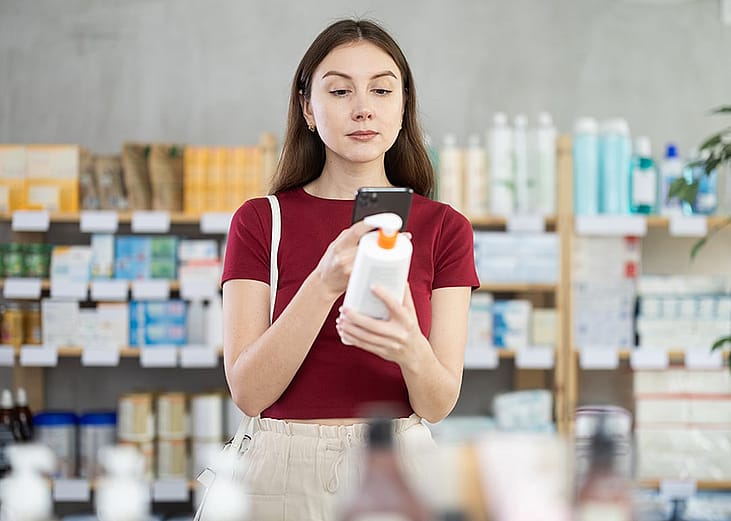
Much like reading a nutrition label before buying something at the grocery store, beauty consumers have started bringing that same mindset to their makeup routines.
Because makeup sits on the skin for hours at a time, many shoppers are becoming more careful about what they put on their faces every day. For consumers with sensitive or easily reactive skin, the appeal often starts with control. A shorter ingredient list can make it easier to understand what they are using and what may not belong in their routine.
Lifestyle has also become part of the equation. A 2023 McKinsey & Company report found that 60% of Gen Z and Millennial consumers say a brand’s environmental and social values directly influence their beauty purchases, pointing to how closely personal care has become tied to the way people choose to live. Products meeting that demand are being asked to reflect more than beauty alone.
The Rise of Skin-First Makeup
Coverage used to be the main measure of a good makeup product, but the standard consumers hold makeup to has grown considerably more personal. This is where skin-first makeup has become such a useful way to describe the moment.
It reflects a preference for products that enhance the skin people already have, with hydration, nourishment, and a finish that looks more natural than covered up. That interest in products that do both has had a real impact on the market.
Skincare sales continue to outpace makeup, particularly among Gen Z, with hybrid products like tinted serums becoming a go-to choice for people who want skin benefits and color in a single step.
Organic makeup has found a natural home within this expectation, and the growing demand has opened a larger conversation around whether organic formulations can truly deliver on performance.
Performance Meets Clean Formulation
Organic makeup has come a long way from its early reputation for sheer coverage and short wear times. Formulation science has advanced considerably, and those advances are showing up in how these products actually perform throughout a full day.
Textures that once felt heavy or unpredictable have given way to lightweight formulas that blend easily and hold up well, without depending on the synthetic ingredients that conventional makeup has long relied on.
Research on the organic skincare market suggests that advances in cosmetic science have helped organic formulations improve how well they perform, while also making them easier and more pleasant to wear.
Consumers who once felt they had to weigh clean ingredients against real results are finding far less reason to choose between the two, and that growing confidence has raised expectations not just for what organic makeup can do, but for how openly brands communicate what goes into making it.
Transparency and Trust in Beauty
Knowing what goes into a beauty product now matters almost as much as what the product claims to do.
A 2024 U.S. study cited by Forbes and attributed to Yuka found that 55% of respondents actively research ingredients online or through apps before making a purchase, showing how seriously shoppers are looking at what they put on their skin. Brands responding to that level of attention have grown far more open about where their ingredients come from and how their products are actually made.
What This Means for the Future of Beauty
Beauty routines have always reflected what people value most at any given moment, and right now, those values are pulling strongly toward simplicity, honesty, and products that feel worth buying for more reasons than one.
According to a 2026 Future Market Insights projection, the global natural cosmetics market, currently valued at $55.4 billion, is projected to reach $96.4 billion by 2036. That kind of growth does not happen unless a very large number of everyday shoppers are actively changing how they buy.
Organic makeup sits at the heart of that change, carried by people who have decided that what goes into a product matters just as much as what it does on their skin. Routines are becoming more deliberate and more personal, and the standards that brands are being held to have risen right along with them.
This story was produced by Ogee and reviewed and distributed by Stacker.