Stacker
1 / 2The next decade
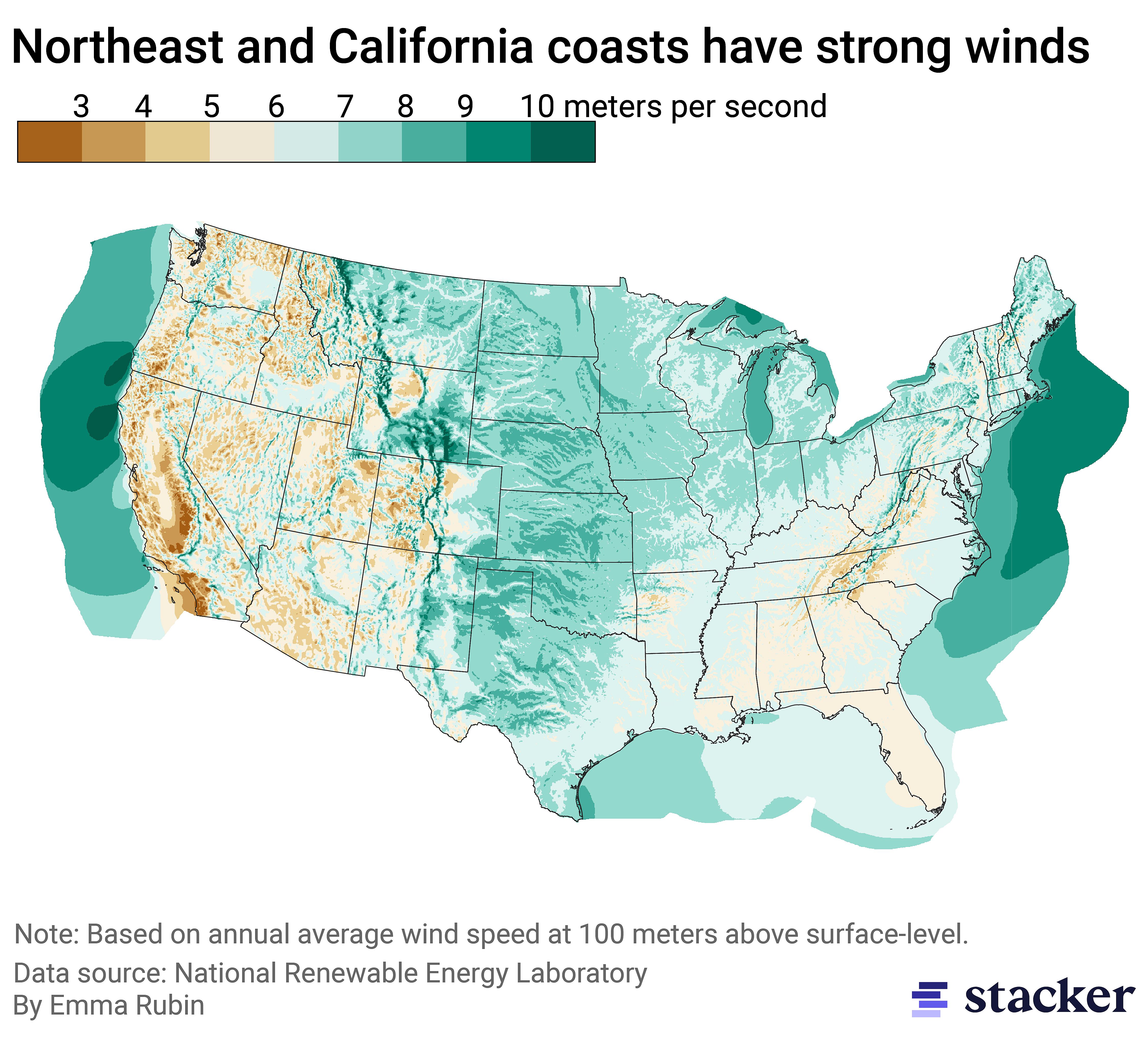
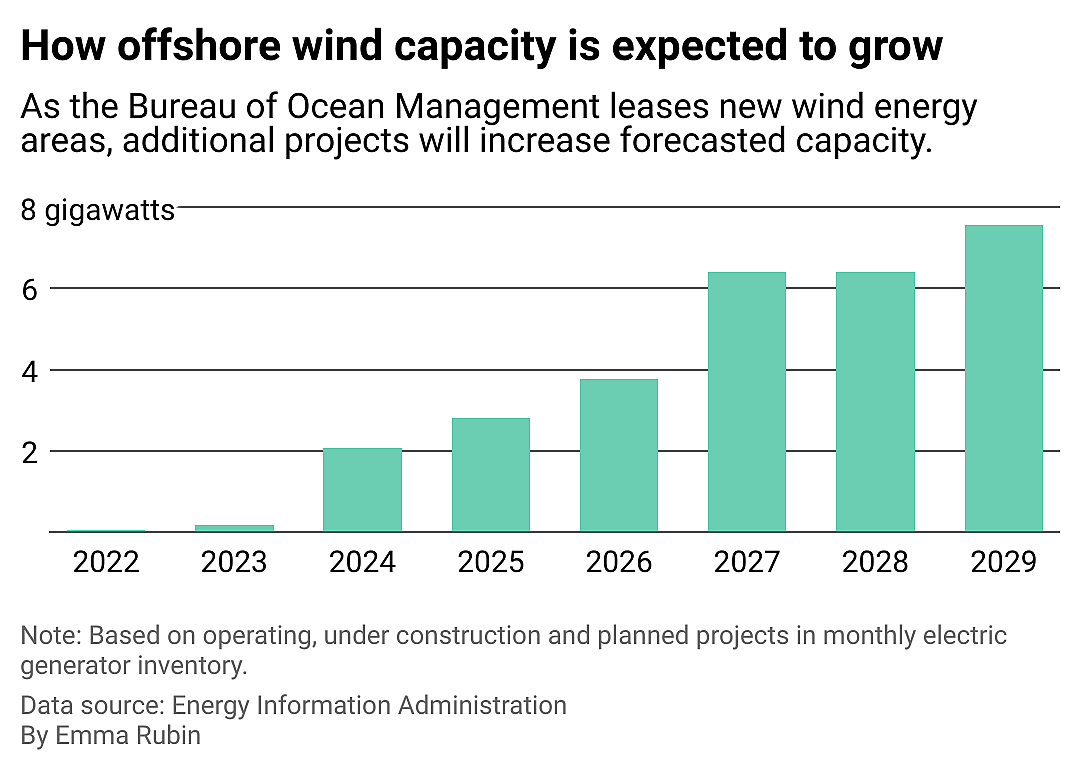
Over the next decade, the capacity of offshore wind farms will grow exponentially, and the Biden administration has set a goal to reach 30 gigawatts of offshore wind energy by 2030.
Globally, offshore wind energy only generated about 12.5 gigawatts of energy in 2022, according to the International Energy Agency, making the administration's goal a significant leap in capacity. Right now in the U.S., there are two pilot offshore wind farms in the U.S. that contribute 42 megawatts to electric grids in Virginia and Rhode Island. There are over 40 gigawatts worth of offshore wind projects in the full pipeline, from initial planning to fully operational stages. Nearly 20 gigawatts were in the permitting review stage as of May 2022.
Approving offshore wind projects is often a lengthier process than that of onshore. Whereas most land-based farms are on private property, the ocean is considered public land, meaning projects are subject to approval from all federal agencies with jurisdiction such as the Coast Guard, the Department of Defense, and the Federal Aviation Administration.
The Bureau of Ocean Management first designates wind energy areas, selected based on energy potential and impacts on the ocean and environment, and assigns leases to developers with whom the Bureau works to navigate the permitting review process. Environmental surveys are then conducted ahead of making wind energy areas available for leasing. Any construction plans submitted are subject to an environmental impact statement performed by the BOEM as mandated by federal law. Current regulations consider bird migration routes, duck-nesting habitats, and other factors which impact the ocean and marine life.