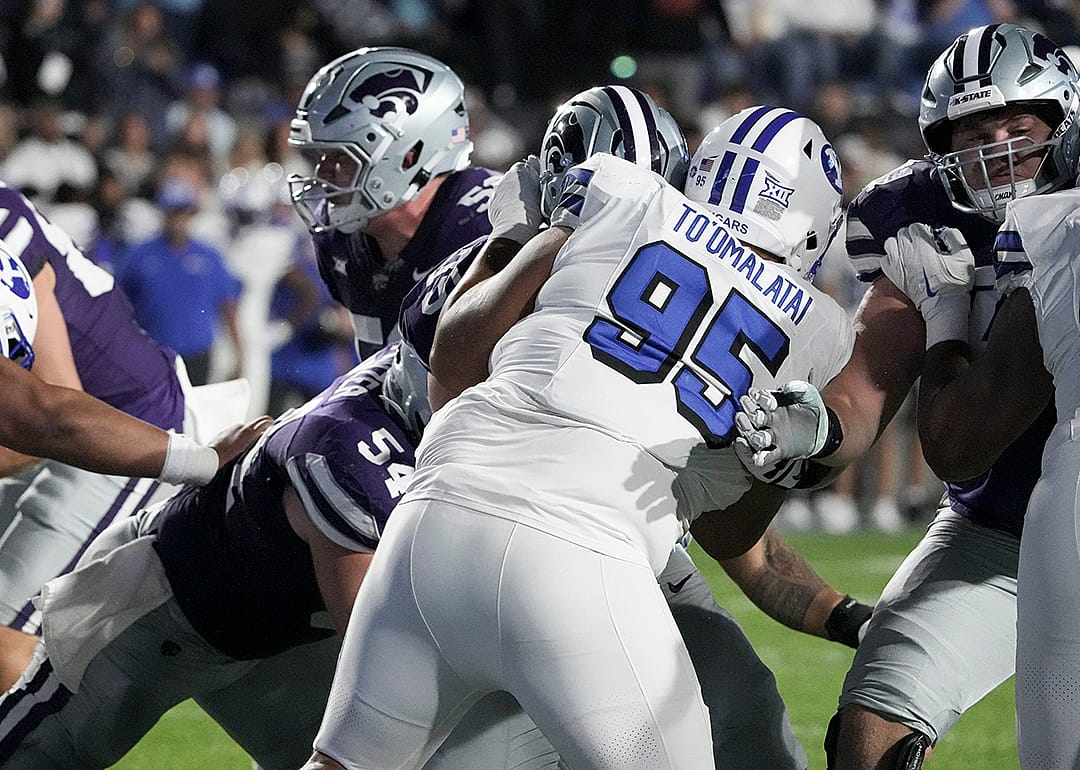
Bethany Baker // The Salt Lake Tribune
1 / 2Losing His Way
As To'omalatai drove across Long Beach, fighting the California traffic, he thought, "How did it come to this?"
He was making his weekly trip to the plasma center. He'd get $100 in return for his donation—a way to supplement his income.
"I had to eat," he said. "I was completely out of it. I don't want to be here."
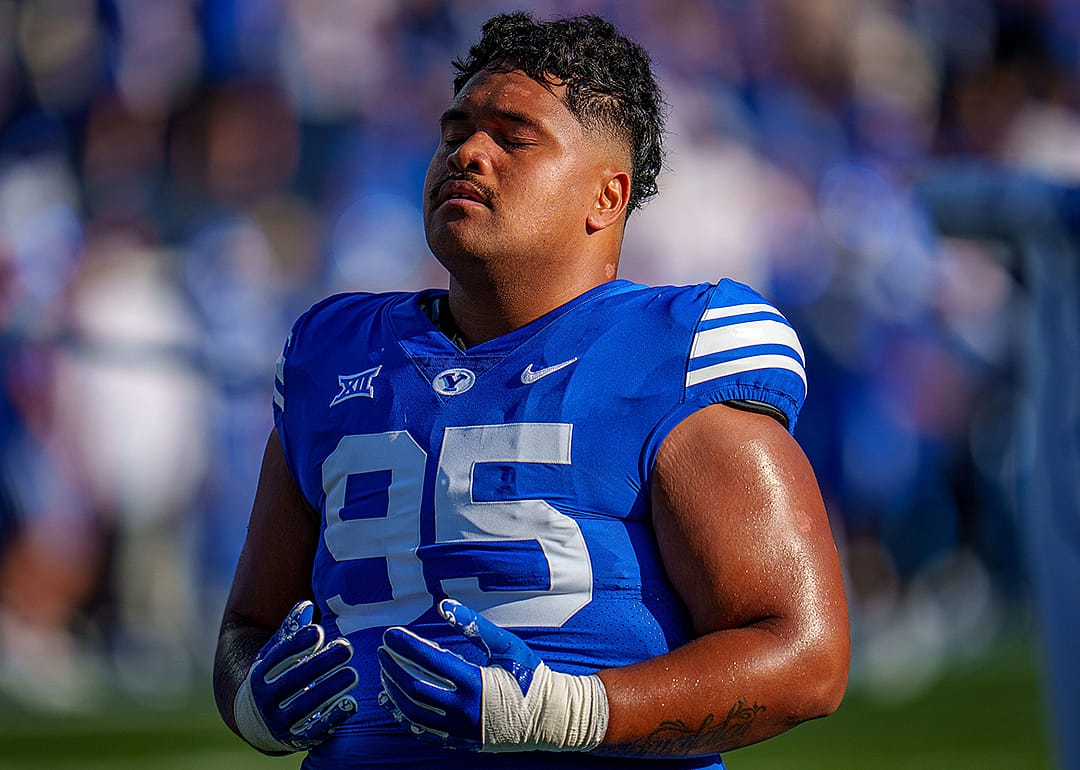
To'omalatai wasn't always that way. As his mother, Wanda, tells it, out of her three boys, it was To'omalatai who was supposed to be the Power Four star.
Growing up in the unrelenting Las Vegas summers, he would be the only one outside plying his craft as others clung to air conditioning. To'omalatai became a basketball and football standout. His hulking figure lent itself nicely to rugby in his spare time.
By his senior year of high school, Notre Dame poked around to ask about his future, Wanda said. Yet no big-time offer ever followed.
Idaho State was his best option. But when he went up to Pocatello for a visit, he took one look around and decided it wasn't for him.
"It wasn't the city I wanted to be in," he told his parents. "It was snowing out there. It's just different. There's not a lot going on. [I decided to] take a gap year."
It seemed like a fine choice. "He wasn't mentally ready," Wanda said.
But nobody accounted for the COVID-19 pandemic.
By 2020, his only offer on the table was a job at Tropical Smoothie. He did that for a bit, until his mental health began to decline.
"I ended up just playing video games and staying with my parents," he said. "I gained a lot of weight. You call it depression."
Visits with his college-bound friends only made it worse.
"They just look at you differently," he said. "I went from recruited, team captain, all this stuff, to just like working a job that I didn't want to work."
He kicked the tires on football again. Mount San Antonio in California called, and he agreed to come out to fall camp. His grandparents lived in Long Beach and he could stay with them. But after three weeks, he backed out.
"Really don't want to be out here," he kept thinking.
He started to spiral.
He was an Amazon truck driver for a bit, working either the morning or late-night shift. When that was done, he tried his hand as a bouncer at a downtown Long Beach bar.
At the same time, his home life started to get off track. His grandparents were active members of the Seventh-day Adventist Church—a Protestant Christian denomination. They instituted a strict curfew, and if he was not home by 1 a.m., he was sleeping elsewhere.
Most nights, that was his car.
"That happened a lot," Wanda said. "There were times where he called, and or my parents would call, like, 'Luke is not home. He's not answering our calls.'"
To'omalatai tried his luck at football a final time. He inquired about playing at Riverside with future BYU quarterback Jake Retzlaff—but they didn't have room for him.
Eventually, he landed at Long Beach City College.
"My husband and I went out there, sat him down with my parents, and laid out the expectations, like, why he was truly there," Wanda said.
Wanda thought it was a miscommunication.
"We explained to him, all you have to do is sleep here, wake up, go do your thing. But Luke, curfew was a thing," she said. "I think for him, he saw it as, 'They don't want me here.' But in reality, it was the rules that he just could not grasp."
He thought he just had to make it one more year. Get an offer and get out. But he failed academically and once again, his plans were put in jeopardy.
"I had doubts within myself," he said of whether he'd play Power Four football.
Then, he got his first interest from Po'uha and the Cougars.
At night, during some of his darkest moments, he started watching interviews of BYU coach Kalani Sitake on YouTube.
That was the man, he thought, he wanted to play for.
That man could turn his life around.