Rula
1 / 1What mental health benefits does insurance have to cover?
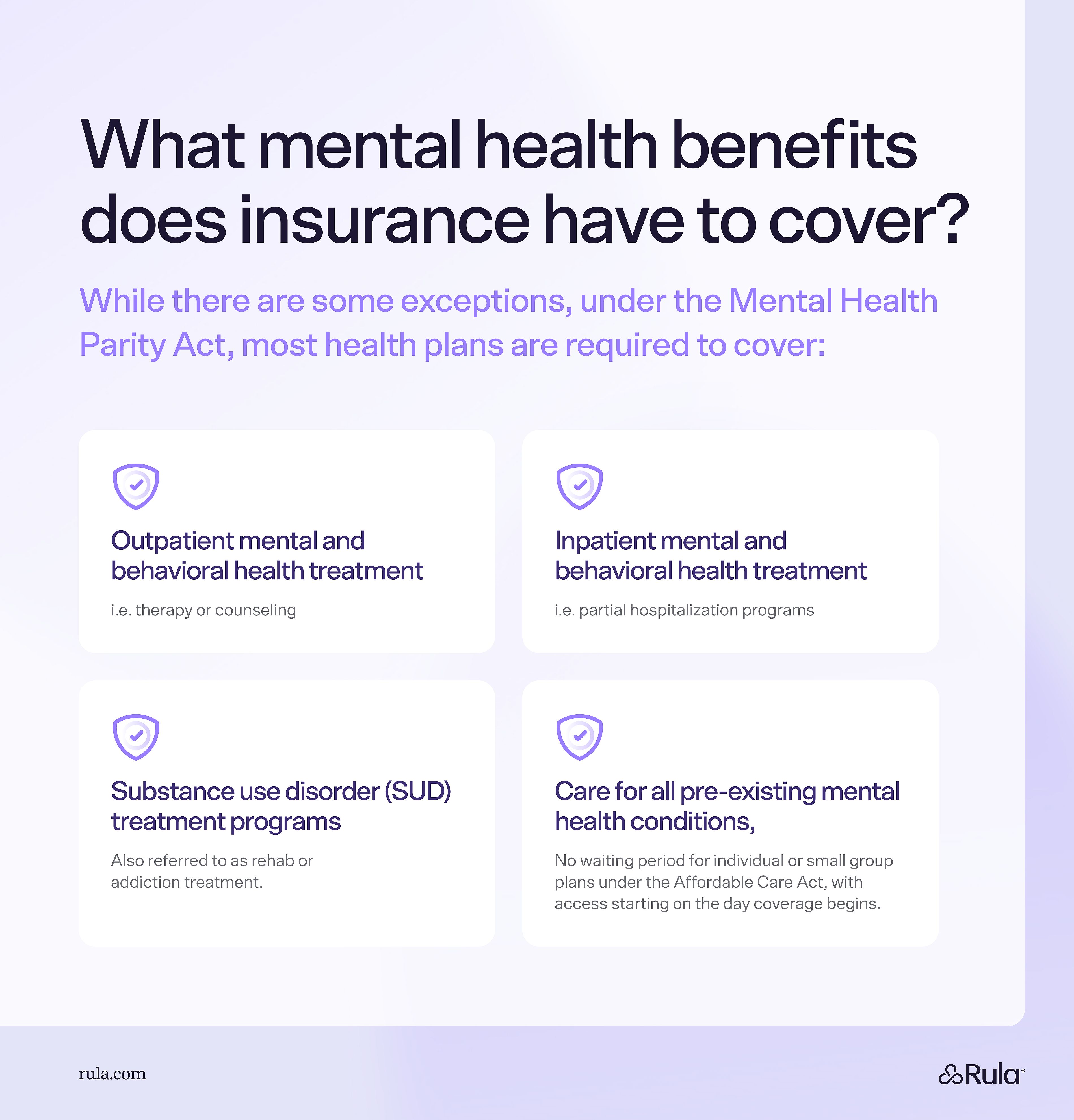
While there are some exceptions, under the Mental Health Parity Act, most health plans are required to cover:
- Outpatient mental and behavioral health treatment (i.e., therapy or counseling)
- Inpatient mental and behavioral health treatment (i.e., partial hospitalization programs)
- Substance use disorder (SUD) treatment programs (also referred to as rehab or addiction treatment)
- Care for all pre-existing mental health conditions, with access starting on the day coverage begins (no waiting period for individual or small group plans under the Affordable Care Act)
Before accessing mental healthcare, it's important to understand your coverage so you can anticipate what costs you might be responsible for.
If you have questions about your benefits, reach out to your insurer and ask for an explanation of your coverage for mental health services. There's usually an 800 number on the back of your insurance card you can call.
How to Tell if Your Insurance Plan Follows Parity Requirements
If your health insurance company has denied coverage for mental healthcare, the following signs could indicate that it's not following the parity law, and you may have the legal right to demand payment or compensation.
- The cost of mental health services is much higher than physical health services under your plan.
- You're entitled to fewer covered mental healthcare appointments than physical health appointments.
- You've been denied coverage for mental healthcare because your plan deemed that it wasn't a "medical necessity." However, the insurer isn't able to provide the criteria it used to make that determination.
- There are plenty of in-network providers for physical healthcare. But your plan has few, if any, in-network mental or behavioral healthcare providers.
- Your plan doesn't cover inpatient mental health, substance use treatment, or intensive outpatient care. But it does cover that level of care for other health conditions.
If you suspect that your health plan isn't following the parity law, start by contacting your insurer to discuss your concerns. They might be willing to give you more details about why your claim was denied.
If you still think your plan might be in violation of parity requirements, contact your insurer's customer relations department to initiate a formal appeal. Follow each step of your insurer's appeals process and be sure to save copies of all the documentation you submit.
If you need additional support, you can also use this guide to help fight coverage denials for mental healthcare from the National Alliance on Mental Illness. You can also ask for help from your healthcare insurers' patient advocate or contact your state's insurance department or the U.S. Department of Labor for assistance.