ㅤ
1 / 2Residents of Some Cities Reported Less Improvement
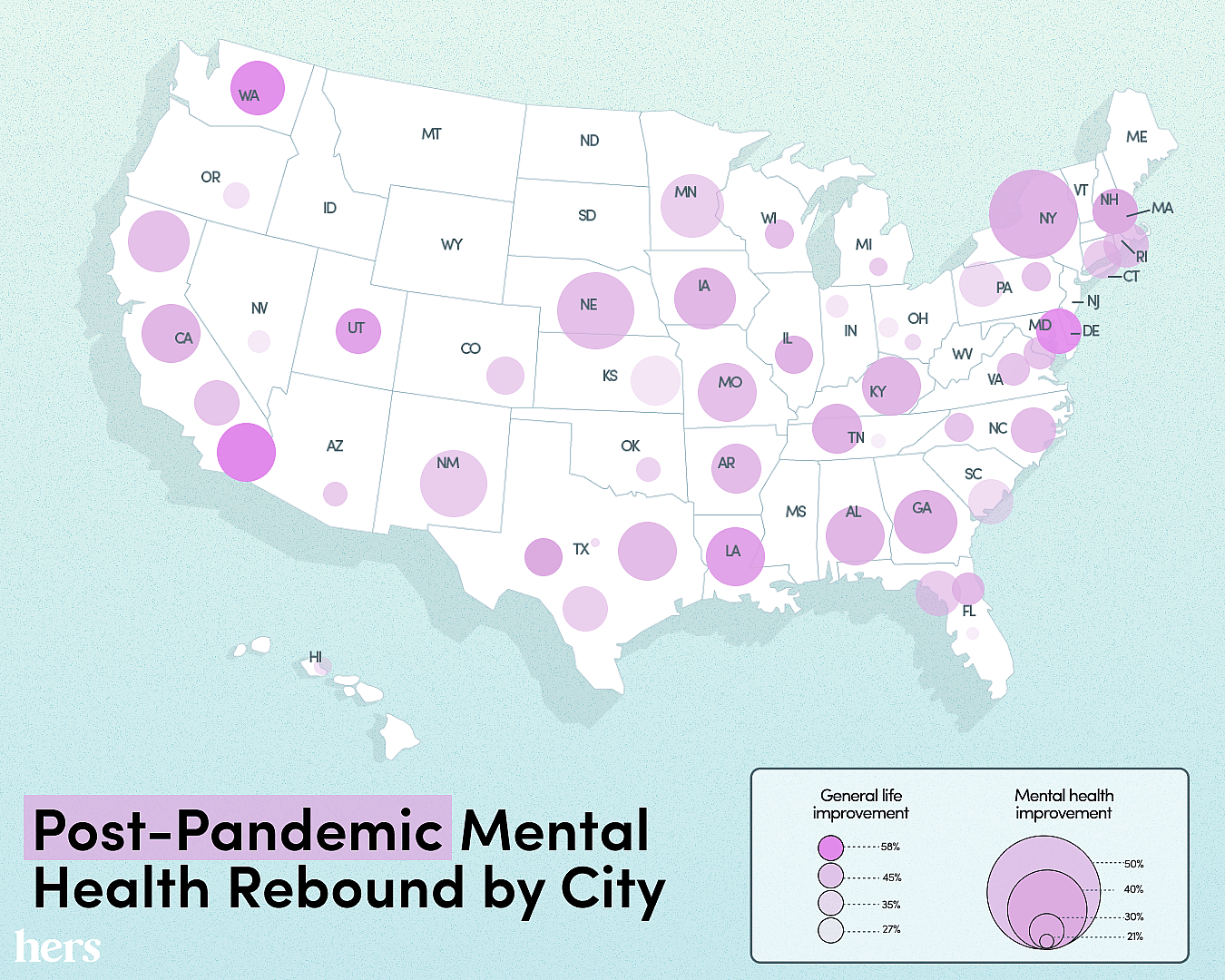
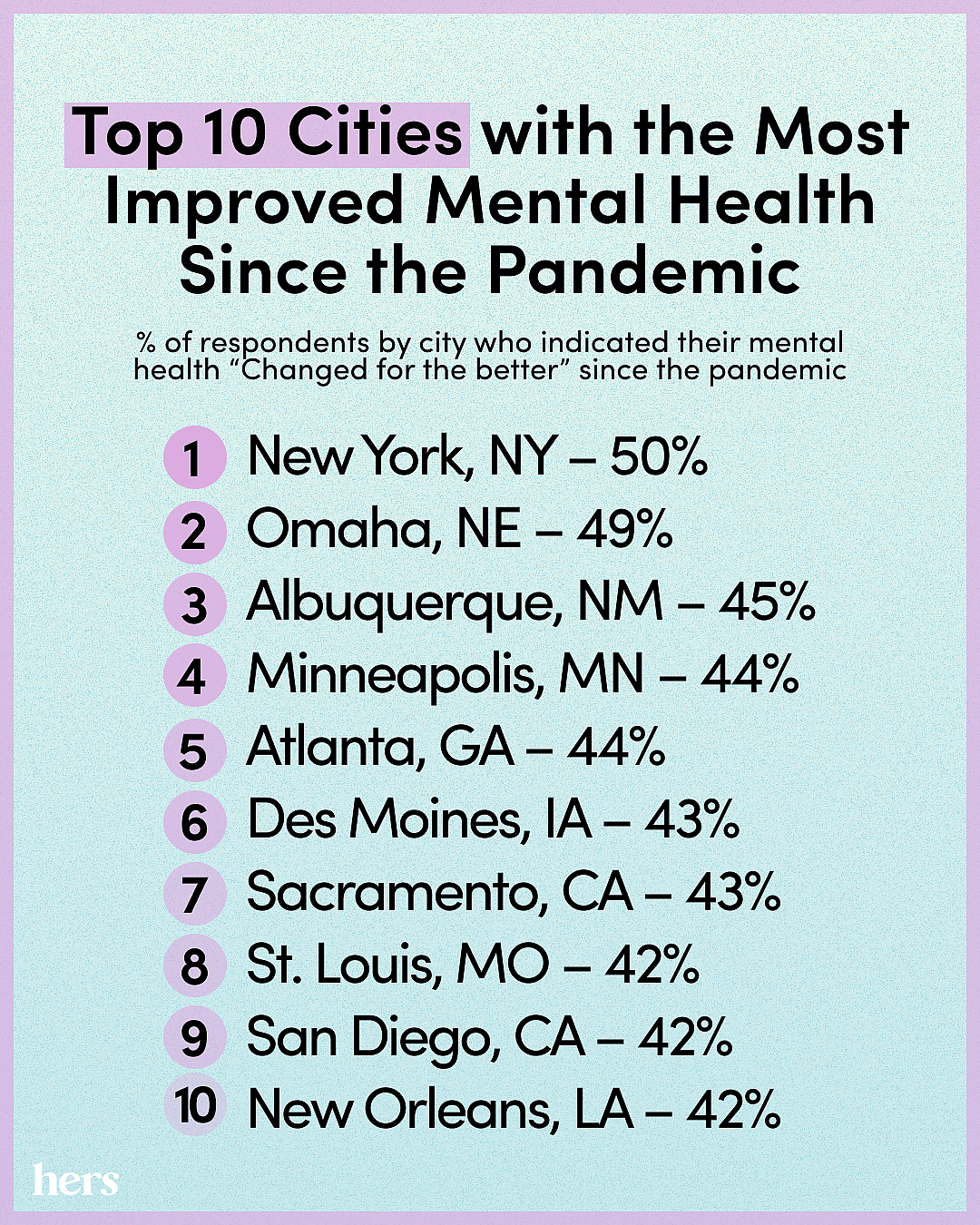
Not all cities fared as well. Only 21% of residents surveyed in San Antonio reported that their mental health changed for the better since lockdown, and Tampa, FL; Nashville, TN; Columbus, OH; and Detroit, MI rounded out the bottom of the list (see below for full city rankings).
New York City by the Numbers: A Closer Look at the Top City With Post-pandemic Mental Health Improvements
For New Yorkers who were surveyed, improved mental wellness was accompanied by several significant upticks in their health and life overall, suggesting a positive correlation between mental wellness and life satisfaction. Specifically:
- 54% say their priorities are more in-check vs. 39% of Americans overall
- 46% say their physical health is better vs. 35% of Americans overall
- 44% say their love life has seen a boost vs. 35% of Americans overall
Mental health isn't just about how people feel emotionally. It's also connected to their physical appearance and self-confidence, their personal relationships and sexual satisfaction, and how they perform at work and school.
Surveyed New Yorkers are also reporting more improvements in their physical appearance. 45% say their body image has improved since the start of the pandemic and 40% say they look better. This compares with 36% and 35% of Americans, respectively.
New Yorkers' sex lives have seen less of an improvement than other cities, however, with only 32% of surveyed New Yorkers saying sex is better than before the pandemic, compared to 34% of the country. The New Yorkers surveyed by Hims & Hers also reported that their job satisfaction pre- and post-pandemic was about the same as the rest of the country.
Mental Health by Demographic: The Generations, Genders, and Other Groups With the Biggest Post-pandemic Mental Health Improvements
Beyond mental health improvements by metropolitan areas, there were notable differences in post-pandemic mental health by demographic. Let's take a look at surveyed respondents by other demographics who indicated their mental health "changed for the better" since the pandemic.
Specifically:
- Generation Z saw the biggest improvement in mental health post-pandemic. 44% of Gen Zs said their mental health changed for the better since the start of the pandemic. (This contrasts previous research that found Gen Z self-reported more mental health negative outcomes compared to other generations.) 42% of Millennials said their mental health had improved post-pandemic, but only 28% of Gen Xers and Baby Boomers indicated improvement.
- Men saw more mental health improvements post-pandemic than women, and dads saw more improvement than moms. 42% of men reported that their mental health had changed for the better since the pandemic vs. 34% of women, and 46% of dads said the same vs. just 36% of moms.
- LGBTQ+ respondents and People of Color (POC) both report their mental health is better as compared to their non-LGBTQ+ and non-POC counterparts. 44% of LGBTQ+ respondents say their mental health has improved vs. 37% of non-LGBTQ+ respondents; and 41% of POC respondents say they've seen improvements vs. 33% of non-POC respondents.
- Married couples saw a bigger lift in mental health than singles or non-married couples in monogamous relationships. 41% of married respondents said their mental health had changed for the better as compared to 36% of both singles and couples in monogamous relationships.
- Millennial men fared the best. 47% of Millennial men said their mental health has changed for the better as compared to 35% of Millennial women and 38% of Americans overall.
- Gen X and Boomer women reported the least improvement in their mental health. Only 26% of women 45+ said their mental health had improved post-pandemic as compared to 38% of the total American population.