US Banks & Branch Offices
1 / 4So who are the ALICEs? Working but struggling.
The term ALICE was coined by the United Way in 2009 to describe the growing segment of people who earn above the poverty line but still can't afford essential household expenses. According to United For ALICE, these individuals and families often fall through the cracks and are unable to qualify for government assistance yet unable to build financial security.
ALICE households struggle with the rising cost of living, stagnant wages, and job instability. Their budgets are often stretched thin, leaving them vulnerable to unexpected expenses like medical bills or car repairs. Many ALICE workers hold jobs in essential industries—retail, health care support, child care—but their wages don't match the cost of basic necessities. ALICEs can be anyone from a supermarket cashier, waiters, and waitresses to a child care worker.
Many struggle to afford homes in major cities or save for basic necessities at the levels they expected, like Melissa Hedden of North Carolina. Hedden was struggling to make ends meet, but the COVID-19 pandemic and the reemployment checks she received provided much-needed financial stability. She was able to go back to school and become the valedictorian of her GED class, even while helping her children through online school.
When the checks stopped coming, however, the picture changed dramatically. She ended up in a series of Airbnb rentals and hotels and dropped out of her program in the fourth semester. Her daughter was also suspended from public school because Hedden could not afford a routine physical to get her daughter's annual medical records updated.
Hedden told Business Insider that $1,000 a month for a year would make such a difference. That money could set her back on the path toward a good education. She added, "It would mean not having to cry because I don't know how to tell my daughter that I don't know if we're gonna be here in two weeks."
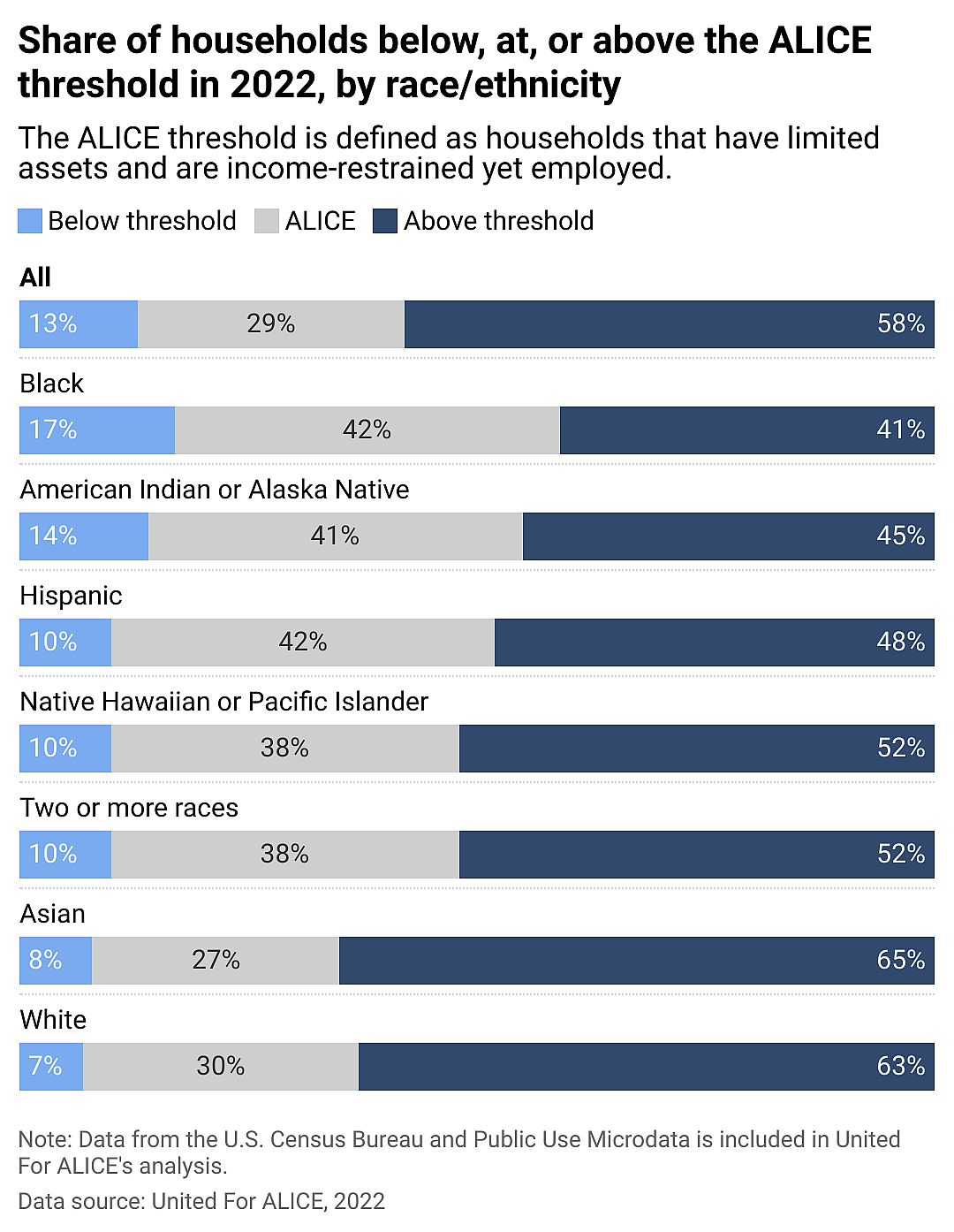
Census Bureau data shows that ALICE thresholds vary by location, with housing and child care costs pushing more families into financial precarity. However, about 29% of U.S. households fall under the ALICE description. Without savings or assets to fall back on, these households remain at high risk for long-term economic hardship.