Rula
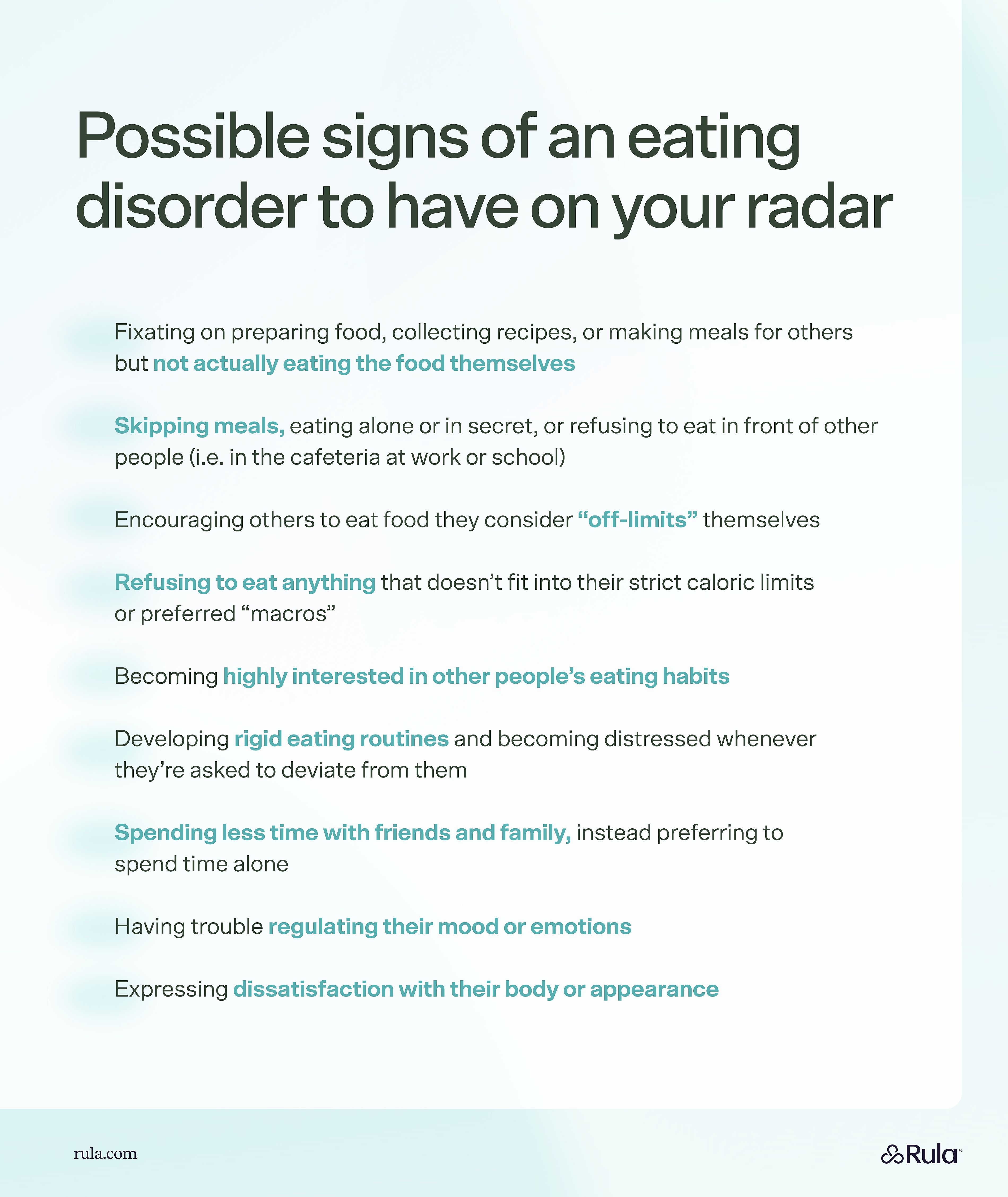
1 / 1Possible signs of an eating disorder to have on your radar
Occasionally forgoing breakfast or ordering a salad instead of a steak for dinner doesn't necessarily mean someone has an eating disorder. But if a person exhibits an ongoing pattern of any of the following behaviors, it could signal that they're living with an eating disorder and may need professional help.
- Fixating on preparing food, collecting recipes, or making meals for others but not actually eating the food themselves
- Skipping meals, eating alone or in secret, or refusing to eat in front of other people (i.e. in the cafeteria at work or school)
- Encouraging others to eat food they consider "off-limits" themselves
- Refusing to eat anything that doesn't fit into their strict caloric limits or preferred "macros"
- Becoming highly interested in other people's eating habits
- Developing rigid eating routines and becoming distressed whenever they're asked to deviate from them (i.e. if they order their food with the sauce on the side and their server forgets the request, they won't eat the meal)
- Spending less time with friends and family, instead preferring to spend time alone
- Having trouble regulating their mood or emotions
- Expressing dissatisfaction with their body or appearance
Why eating disorders may go unnoticed
There are many reasons why an eating disorder might go unnoticed. People can go to great lengths to conceal unhealthy behaviors from their loved ones, and changes can take place gradually.
Additionally, some disordered habits have become normalized in our culture. For example, most people will attempt to lose weight at some point in their lives. Going on a diet isn't the same thing as having an eating disorder, but the difference isn't always clear. We receive so many mixed messages about what it means to be healthy, and that can make eating disorders harder to detect.
What to do if you think you've spotted an eating disorder
If you suspect that you have an eating disorder, professional support is essential to your recovery. A therapist can help you address the underlying concerns that may be contributing to your eating disorder, learn new coping skills, and collaborate with your other providers (i.e. your doctor or nutritionist) to ensure you receive integrated care as you work to heal your mind and body.
And if you think a friend or family member might have an eating disorder, know there are things you can do to help. While it isn't always easy to bring up sensitive topics, the following tips can help you prepare for these important conversations. Sharing your concerns with your loved one and offering support can help keep them safe and potentially save their life.
- Educate yourself. Learning more about the signs, symptoms, and causes of eating disorders can help you have a more informed conversation with your loved one. It can also help you better understand their experiences.
- Choose a time and place. Before speaking with your loved one, consider the environment. Find a private, quiet space where you won't be interrupted and a time when neither of you will feel rushed.
- Expect resistance. If your loved one isn't ready to talk about their eating habits or listen to your concerns, you can still offer support in a nonjudgmental way. Let them know that you'll be there to listen when they're ready to talk and you care about their safety. You can also ask them if it would be OK for you to check in again in a few days.
- Suggest professional help. If your loved one is open to it, suggest they meet with a therapist or enter an eating disorder treatment program. You can also offer to help them find a provider, transport them to and from appointments, or do anything else that would make it easier for them to access care.
- Be mindful of compassion fatigue. Watching someone you care about struggle with an eating disorder can be an emotionally draining experience. So, throughout this time, prioritize your own self-care to ensure you don't experience compassion fatigue. Taking good care of yourself will give you more capacity to support your loved one.