Konstantin Zavrazhin // Getty Images
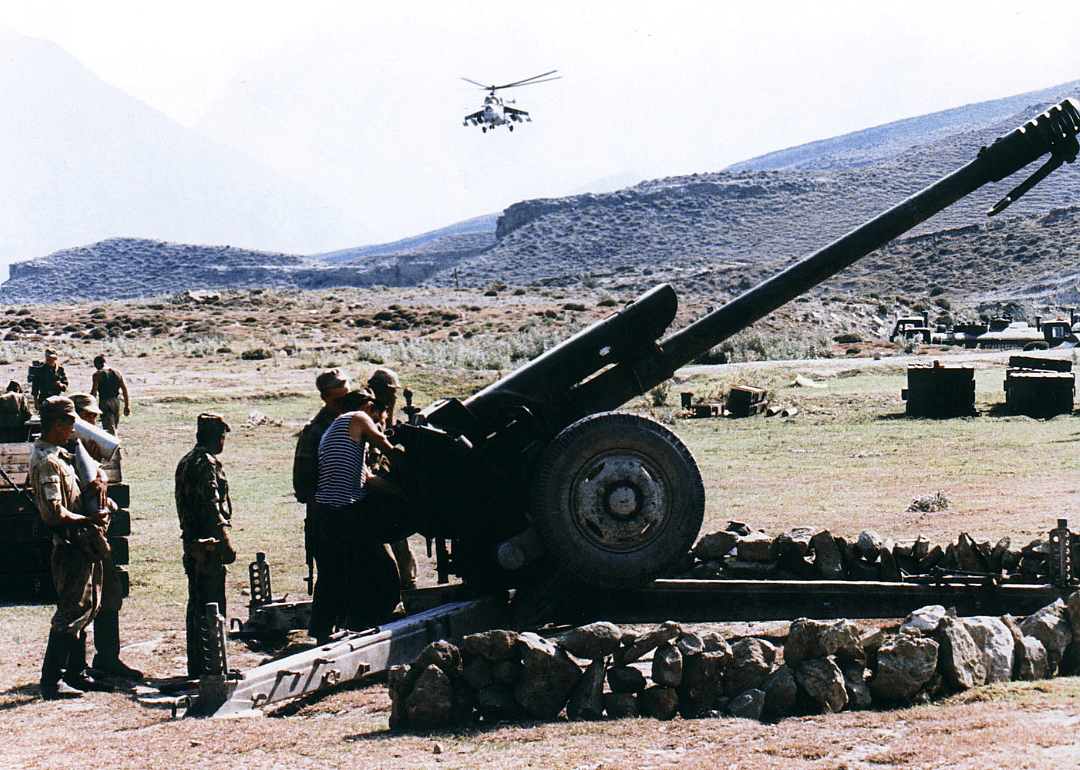
1 / 51999: War of Dagestan
The conflict between Russia and its contested republic Chechnya had already been raging for several years when Yeltsin began to transfer power to Putin. The First Chechen War, which lasted from 1994 to 1996, was a struggle for independence from Russian rule, fought by the majority-Muslim republic; however, the peace treaty that ended the First Chechen War did not settle the sovereignty dispute for long.
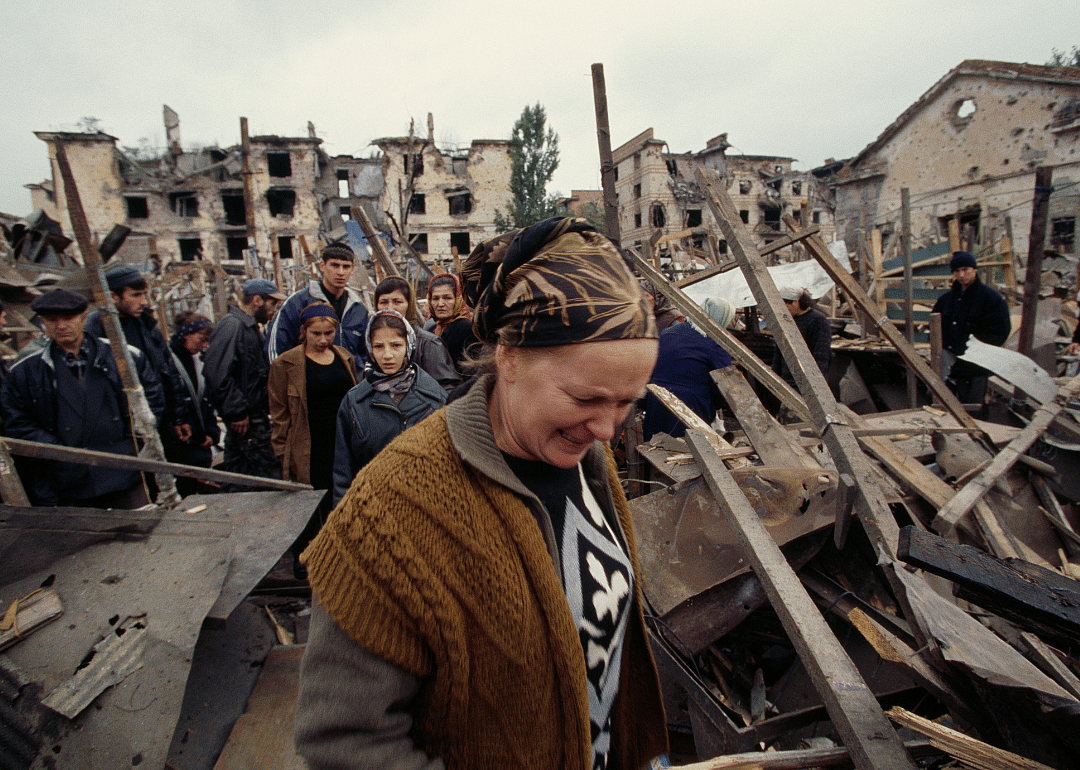
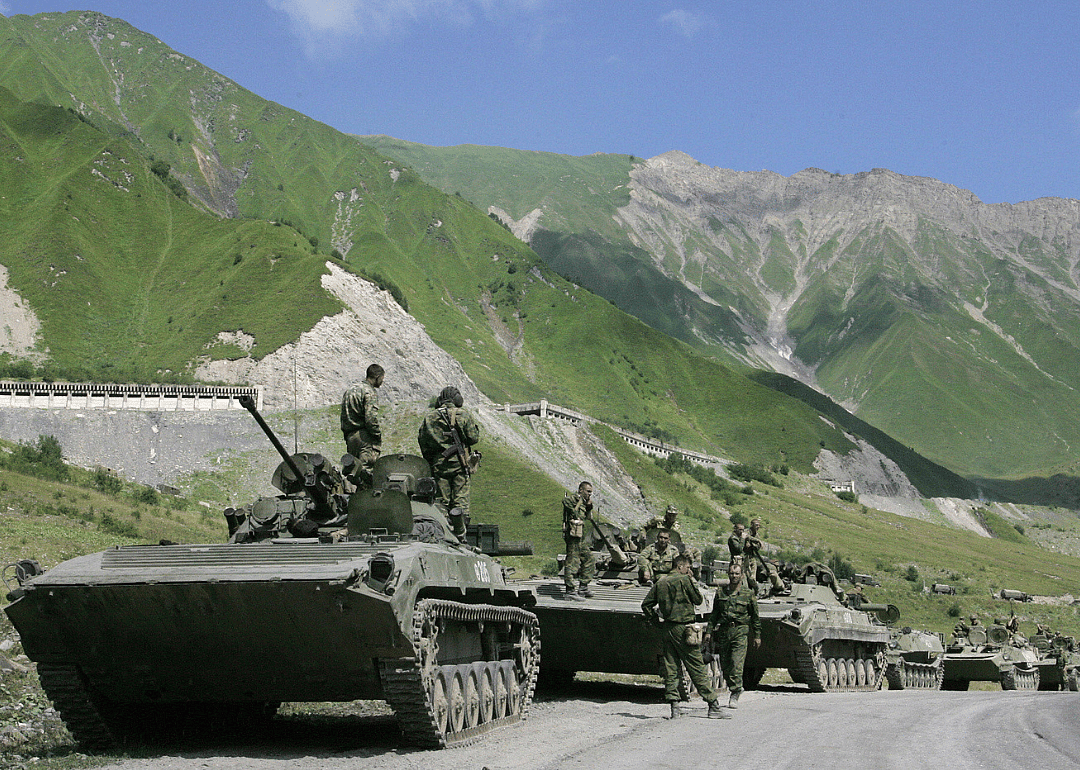
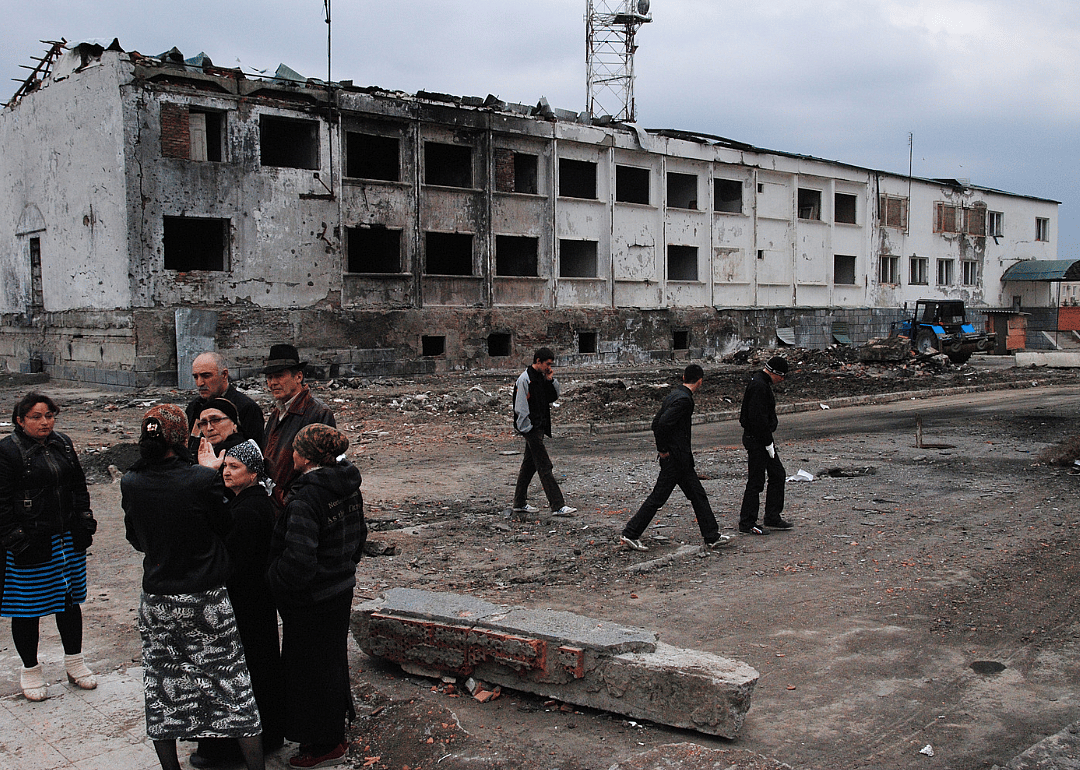
In 1999, shortly before Putin was appointed Russian prime minister, Chechen pro-independence fighters moved into Dagestan, another Russian republic, and declared sovereignty there. Russia retaliated, sending troops to Chechnya. The newly appointed Putin ordered Russian forces to level the Chechen capital of Grozny, and by early 2000 the city was reduced to rubble.
Thousands were reported killed during the siege and bombings, and accusations of Russian troops massacring civilians added to the stark fatality count. The United Nations called it "the most destroyed city on Earth."
While conflict had already been fomenting in the region, speculation over the nature of Putin's sudden rise to power has endured in the decades since he became prime minister and president. A month after Putin became prime minister, several bombings in different parts of Russia leveled multiple apartment buildings, killing hundreds of civilians. Putin declared that Chechen terrorists were to blame for the bombings and used the events to justify launching a large-scale invasion of Chechnya—an event that would kick off the Second Chechen War.
Little evidence emerged to back up Putin's version of events, leading some to doubt the "official" version as presented by Putin and his government.