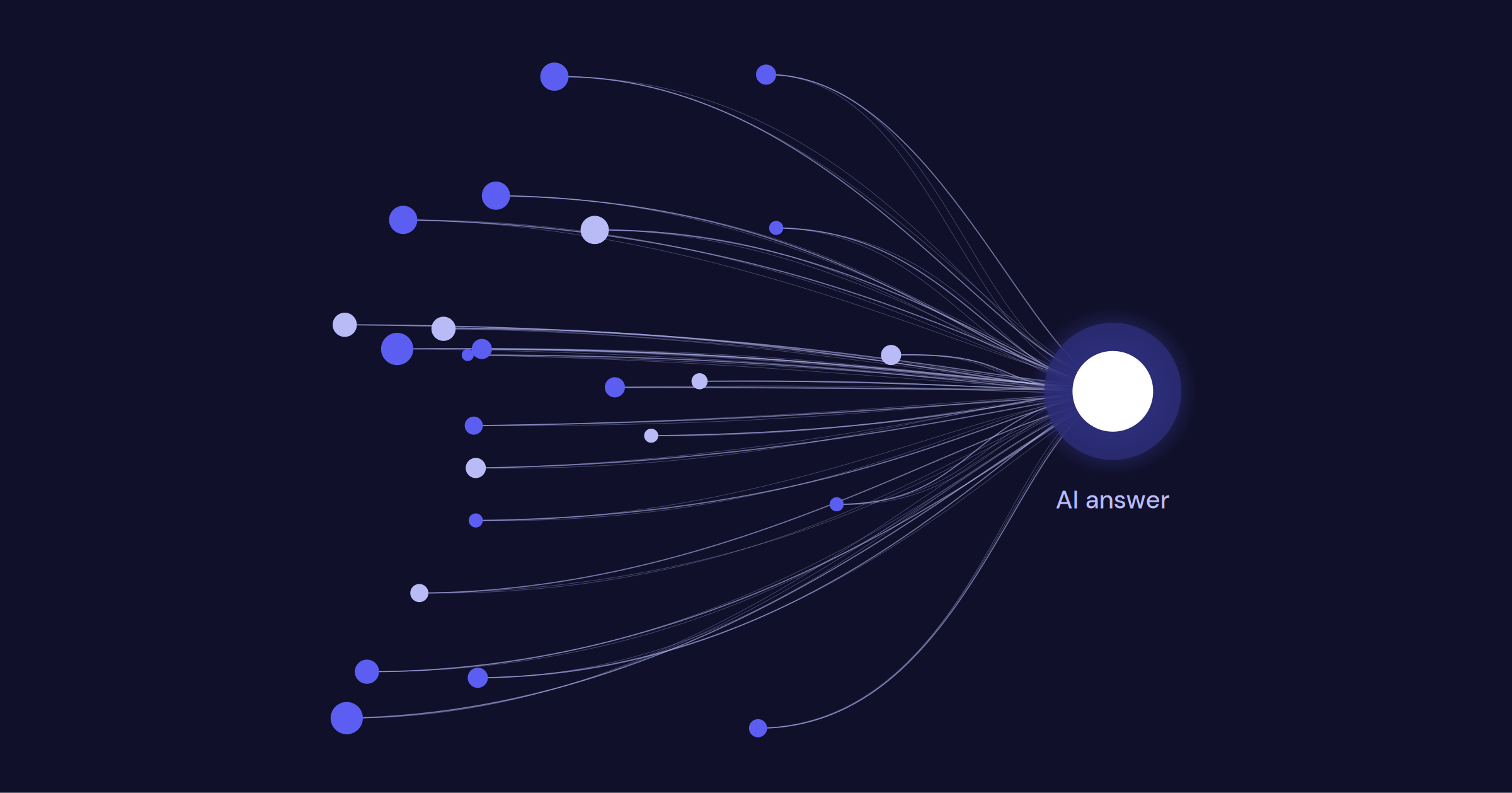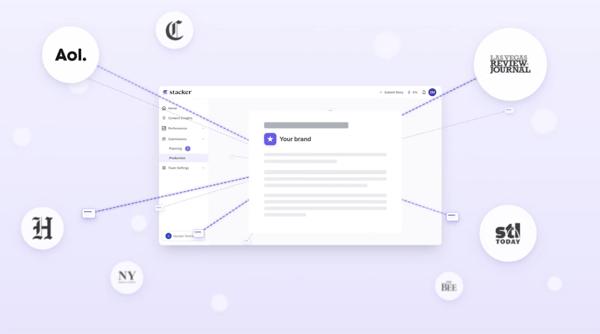

Multiple studies (including Muck Rack's research and Stacker’s own analysis) have recently found that when it comes to building AI visibility, it’s important for brands to appear on sites that LLMs deem credible.
For brands using an earned distribution model like Stacker, that means that placement quality matters more than placement volume.
Domain rating, or DR, is a score that SEO analytics leader Ahrefs assigns to domains in order to rate the quality of a domain’s backlinking profile. DR is an industry-accepted way to evaluate the authority profile of the sites that are picking up your content. LLMs don’t calculate DR, but it's a good way to predict AI citation performance because it can serve as a proxy metric for broader authority signals accounted for by both Ahrefs and LLMs.
We looked at which content categories have earned the most high-authority pickups since the second half of 2025 to understand the implications for AI visibility.
We also included some practical takeaways that content teams can use to maximize their visibility potential while building out their strategy.
Methodology
Our analysis covered more than 6,200 stories distributed on Stacker’s network and zeroed in on the story categories that had the most pickups by publishers with a DR of 50 or higher.
DR grades a website’s authority on a logarithmic scale of 1-100, with higher numbers going to the more authoritative sites. It’s similar to other domain quality ranking metrics like Moz’s Domain Authority (DA) metric. The simplest way to understand DR is that the more links that point to your site, the higher your DR score — and the more weight those links carry for SEO and AI search.
And as a domain’s DR increases, so does the likelihood of being cited by AI.
Which story types get the most pickups on high-authority sites?
We found that when it comes to high-DR pickups, Transportation and Personal Finance outperformed the rest of Stacker’s categories by a wide margin. High-performing stories in the Transportation category tend to cover topics like auto insurance and car-buying.
Meanwhile, popular stories in the Personal Finance category cover things like tax filing, budgeting, retirement, and other everyday money decisions.
These are all popular topics among the news publications in the Stacker network (and among the consumers turning to LLMs for their research).
The table below shows the top-performing stories by average DR50+ pickups.
Stories in these categories tend to be heavy on data and built around original analysis. They also often answer evergreen questions — things like “How much money do I need to earn?” or “What type of insurance do I need?”
Though Education had a lower number of average pickups by DR50+ publishers, it had the largest proportion of high-authority pickups. This indicates that when Education content does land, it lands on authoritative sites.
Why does this matter for AI visibility?
Our analysis also found that stories in categories with higher DR50+ pickup rates tended to have stronger co-citation rates in AI. Co-citation — where an AI platform is citing both the brand and the distributed content in its response — is valuable because it indicates that distribution is reinforcing a brand’s existing AI visibility.
We saw this pattern in stories from customers like Redfin ("The most neighborly cities in the US") and TurboTenant ("What happens when rent is sent to collections?"), which fell in the categories highlighted in the table above and saw many instances where the brand was cited along with the Stacker network pickup. This makes sense because these stories leaned in to data and research, which AI engines value when deciding which sources are trustworthy.
It's important to note that this pattern implies correlation, not causation, and that not every high-DR category story earns a significant number of AI citations. Some stories in categories with lower numbers of DR50+ pickups also outperform expectations when the content is high-quality and differentiated.
But if a story does get a large number of high-DR pickups, it’s likely to see better citation rates than if it did not.
What does this mean for your content strategy?
Brands investing in earned distribution have a few things they can take away from this:
- In addition to pickups, look at the percentage of pickups your stories earn on DR50+ sites. A relatively low percentage could mean that your content is earning volume but not the authority signals that lead to AI citations. Ensure that your story angles are differentiated enough to earn the attention of high-authority publishers.
- Data-driven, evergreen content performs well across categories, both in terms of high-authority pickups and citations. When planning your content calendar, consider what kind of proprietary analysis you can create that will still be relevant to searches several months down the line.
- Create content that fits a variety of relevant categories and thus increases engagement over time. Your brand likely has the ability to lend expertise to categories that are adjacent to the space where you operate. Diversify your content, but only where you can maintain credibility.
- Look at high-authority distribution as a long game. Individual stories with strong pickup rates are helpful for exposure, but consistent pickups compounding over time are what create the credibility that AI platforms rely on for citations.

Madeline Stone is the Content Manager for Editorial & Insights at Stacker. She was previously a longtime business and tech journalist at Business Insider and a content and communications consultant for tech startups.