Climate desks are shrinking across the industry right now, at the exact moment local and regional newsrooms need more coverage, not less. For a nonprofit newsroom built on the idea that journalism should be freely shared, that gap is the whole point of the mission. The harder problem is reach: how do you get real reporting into communities that don't have a climate reporter of their own, especially the ones least likely to go looking for it?
That was Floodlight's challenge before Stacker. The nonprofit investigative newsroom covers climate accountability, and its entire model runs on collaboration: every story it produces is free to republish, because getting the reporting in front of readers matters more than keeping traffic on its own site.
60 newsrooms in 2024 to 562 newsrooms in 2025 and 2,200+ pickups across 47 states.
That's what one year on Stacker did for Floodlight's reach.
A Mission That Depends on Reach, Not Just Reporting
Before Stacker, Floodlight's syndication strategy was built entirely on personal relationships.
Rosie Gillies, Floodlight's Director of Audience and Development, would email individual newsrooms directly, asking if they'd republish a story tied to their coverage area. That approach could land real placements, but it had a ceiling and it provided no visibility into the hyperlocal newsrooms Floodlight most needed to reach, the ones covering communities without a climate reporter on staff at all.
Two problems compounded the challenge.
-
Manual outreach couldn't scale to reach hyperlocal newsrooms one at a time.
-
Floodlight's funders needed proof that the journalism was spreading well beyond Floodlight's own site.
As a nonprofit, breadth isn't a vanity metric. It's the evidence a small team needs to show the people funding its work that the mission is actually happening.
"I could try and email hundreds and hundreds of local newsrooms, but that's just impossible — the real value that Stacker provides for us is it connects us with newsrooms that we had no idea existed," Gillies says.
Turning One Relationship at a Time Into a Network
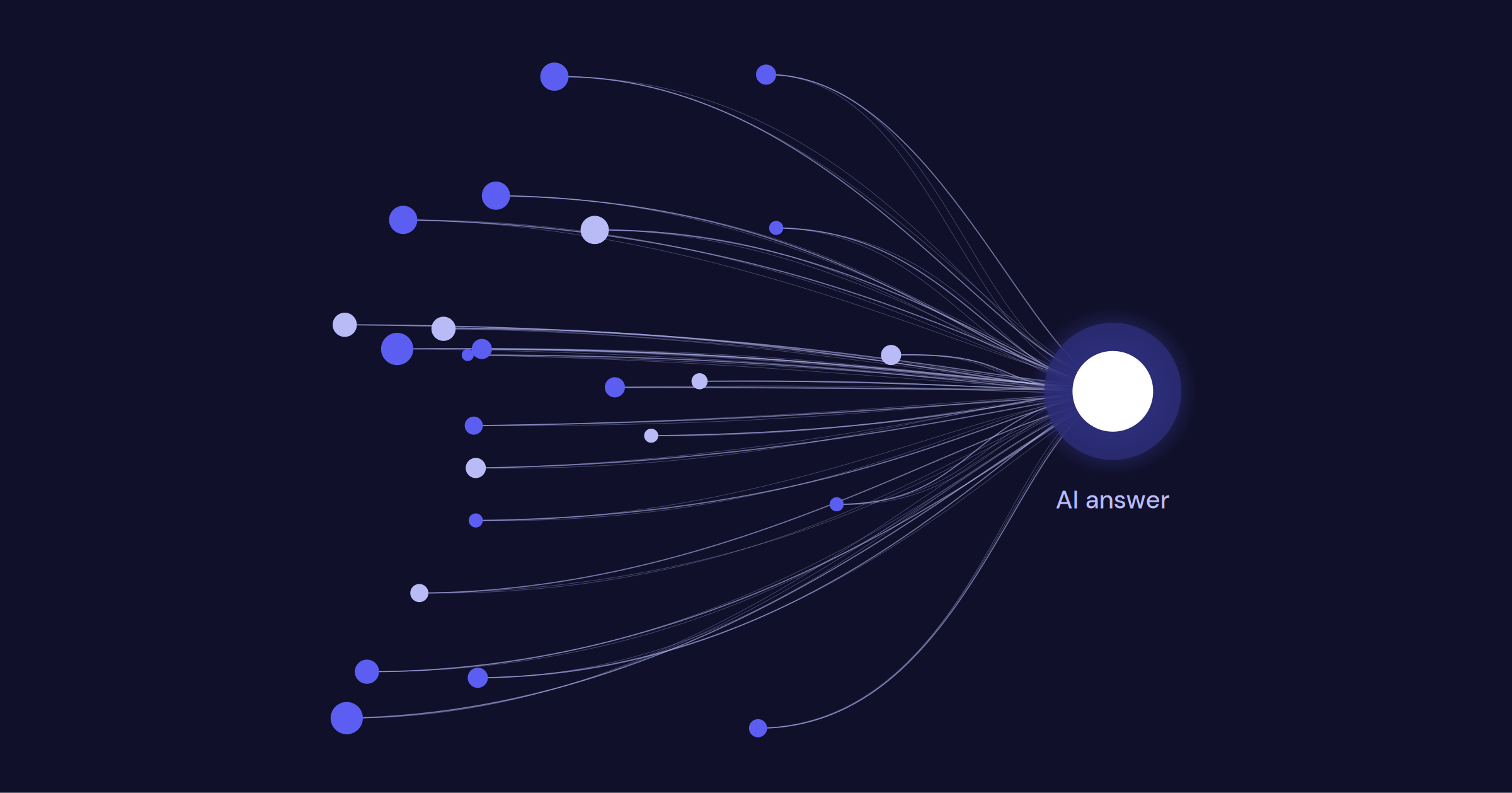
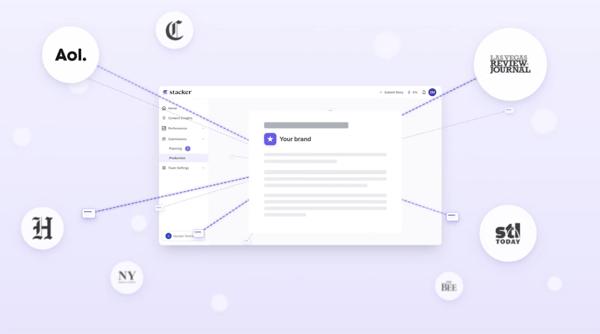
Stacker gave Floodlight a way to reach hundreds of newsrooms without adding headcount nor compromising the editorial integrity that's central to its mission. Every story submission goes out to a vetted network of local, regional, and national outlets, and Floodlight gets a live view down to the map, the publisher, and the domain rating of exactly how far each story has traveled.
For a small team, ease of use mattered as much as reach. Gillies found Stacker's portal intuitive from day one, with little ramp-up needed to submit stories and track performance across the network.
Breadth as the core KPI
Floodlight doesn't optimize for total views or the prestige of a placement. It optimizes for where the work lands, because reaching audiences without their own climate coverage, especially in places more likely to be climate-skeptical, is the actual mission. Floodlight's own analysis of its 2025 pickups found that more than 80% of the newsrooms republishing its stories were located in states historically less receptive to climate journalism.
"It shows we're preaching beyond the choir," Gillies says.
That statistic is the clearest evidence Floodlight has that its model works: hyperlocal reporting doesn't have to stay hyperlocal. A story about one specific place can resonate with readers in dozens of other towns, cities, and states that have never met a climate reporter.
560 Newsrooms and Counting
Floodlight signed up for Stacker in June 2025 and was fully in rhythm with the platform by September.
When Gillies reported year-end numbers to her team in December, the shift was dramatic: from 60 newsrooms republishing Floodlight's work in 2024 to 562 individual newsrooms across 47 states in a single year on Stacker, generating more than 2,200+ total pickups and an estimated 148,100+ views. Nearly three-quarters of those pickups landed in historically hard-to-access geographies and mission-critical zip codes, putting climate reporting directly in front of the audiences Floodlight most hoped to reach.
The numbers reshaped internal buy-in, too. Floodlight's broader team had been skeptical that another distribution tool would move the needle. When Gillies shared the year-end results, that skepticism flipped immediately.
"It's been confirmation of our theory that climate stories can be hyperlocal and about one tiny place, but they can be resonant with people in so many other towns and cities and states... We call it being locally relevant but nationally resonant," Gillies says.
What Floodlight's Growth Says About Journalism's Path Forward
Floodlight's story is bigger than one newsroom's distribution numbers. As newsroom budgets shrink and climate desks disappear, the supply of original, human-reported journalism is shrinking with them, right as small and local newsrooms are asked to fill more coverage gaps with fewer resources. Breadth is how that reporting survives the gap: not by every newsroom hiring its own climate reporter, but by the reporting that already exists reaching the communities that need it.
For any nonprofit or mission-driven newsroom asking the same question Floodlight asked, whether the work is actually reaching the readers it was written for, the answer isn't more headcount.
It's a distribution network built for reach at scale.
See the full story: Read the Floodlight case study.
Photo Illustration by Stacker // Canva