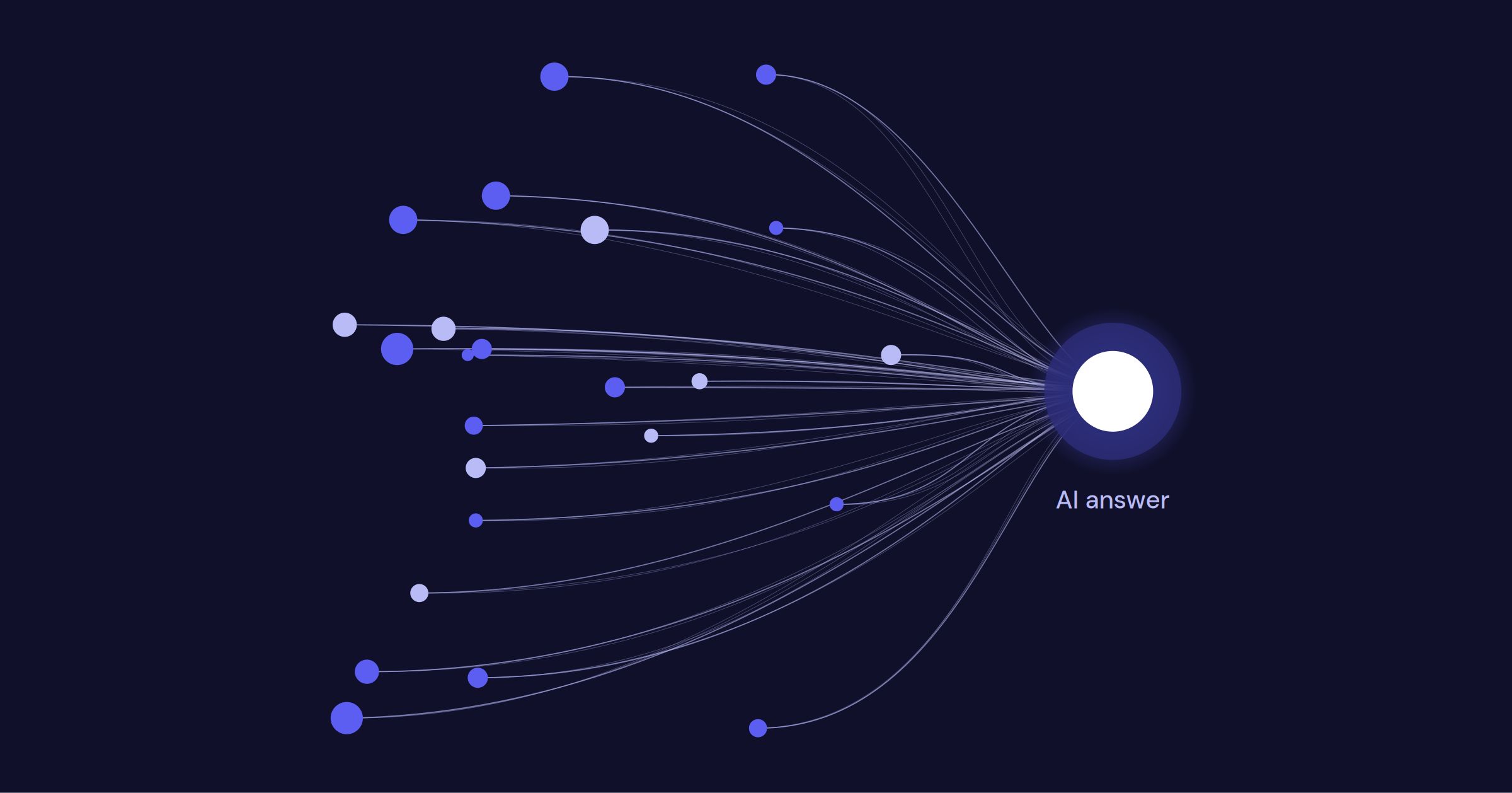

As more people begin their search journeys on AI platforms like ChatGPT, Claude, or Google Gemini, brand teams increasingly want to know: How are we showing up there?
For our inaugural AI Trust Report, we analyzed more than 3.9 million citations across six AI platforms, using data from our partner Scrunch, to understand how often brand content is cited by AI platforms.
We found that AI platforms are treating brand content as at least as authoritative as journalism. Brand sites were cited in 29% of the responses we tracked, while editorial sites were cited in 21%.
The brands that get cited the most do a few things consistently:
- They publish original data.
- They answer specific consumer questions in a straightforward way.
- They get their content onto domains that AI already trusts.
Each AI platform seems to have its own citation philosophy. Some lean on academic research, government sources, and editorial, while others favor platforms like YouTube, Reddit, and LinkedIn.
We also found that the picture of which sources get cited by AI varies widely by topic area. For example, in the Money category, the FTC topped the list, but in Small Business, fintech brands Ramp and Brex came out on top.
Our analysis also showed that 641 distinct Stacker network domains were cited by AI between May and August 2026. Of those, 290 were cited for Stacker stories they had picked up, and the rest were cited for their own content. In other words, Stacker distribution puts brand content on sites that AI already trusts.
Download the 2026 AI Trust Report to see the top 10 sources for each story category, how citations varied by platform, and the trends that held true across every vertical we studied.
Madeline Stone is the Content Manager for Editorial & Insights at Stacker. She was previously a longtime business and tech journalist at Business Insider and a content and communications consultant for startups.