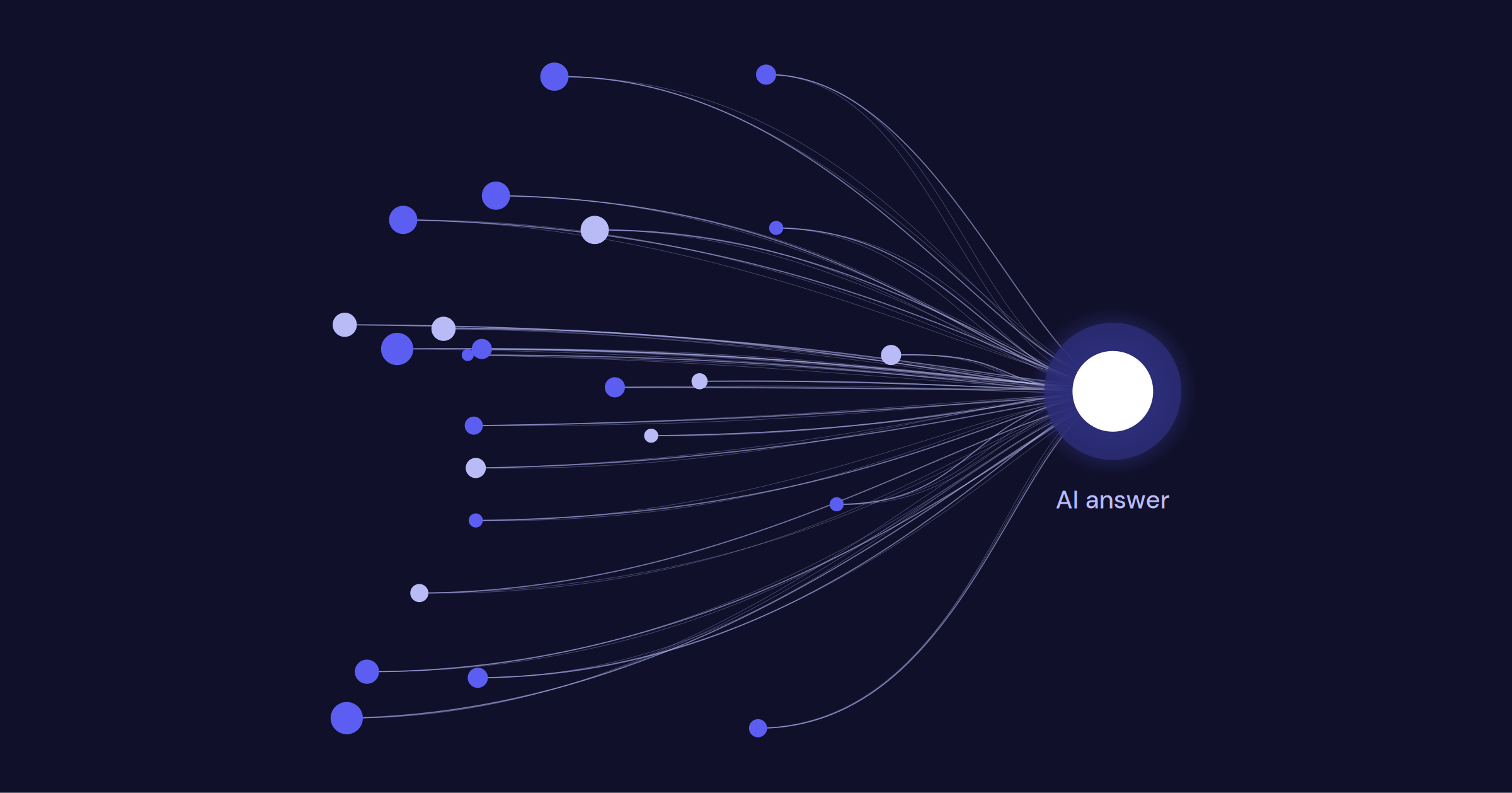

There’s a fundamental shift that’s happening at the operational level of content teams as the focus of brand discovery moves from SEO to GEO. Whereas SEO could largely be won and hard to move, GEO presents a different story. There’s no real moat that gets built just because your content is authoritative or your site is ranking well. A single strong piece of content, or even occasional content, is not enough to build a GEO moat for a brand and secure its place in AI answers.
One piece will only serve you for a month, at best.
Most brands are now wise enough to know that a short-lived strategy to “win” GEO is a myth because AI mentions or citations every so often don’t mean much in the long run.
What this does present, though, is an opportunity. This opportunity comes because, unlike with SEO in crowded industries, GEO makes it possible to knock front-runners off their “page 1” perches. There’s the possibility that a smaller brand can crush in content and make their way into the audiences that they care about– that is, as long as they’re following the new rules of the game.
Content that breeds success in GEO offers high value to the reader and is regularly published. Paired with consistent earned media coverage, it signals how and why your brand is an authority. And credibility compounds in AI models over time.
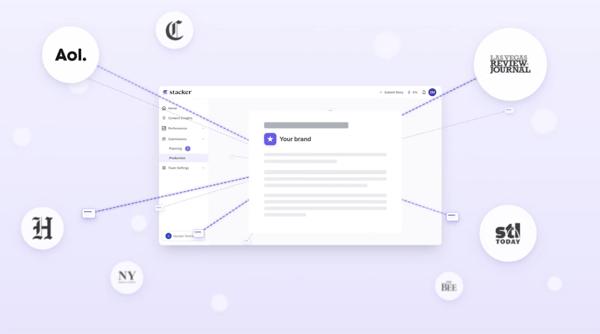
So the moat that exists here is less about one great piece or ample backlinks to support what you’re doing. A GEO moat relies on consistent content with clear purpose and strategy to back it up. Distribution levers like Stacker can be one piece of making that content travel.
The Rules Have Changed
Getting your brand to consistently surface in AI answers is an always-on project that requires consistently publishing quality content, driven by LLMs' recency effect.
LLMs need to corroborate brand storytelling just like editors do. This is where LLMs turn to other corners of the internet to see who else can verify information and where earned media enters the equation.
Pushing out a single piece doesn't guarantee you'll consistently show up in AI search results, even if it's well-researched and authoritative. Yes, annual reports or long-standing research can be great for initial results, but as new reports and research emerge, LLMs are biased to surface recent content.
Appealing to LLMs increases your odds of having your content seen beyond your domain name. So the goal is not accomplished with just publishing. You need to also surface in GEO results, which requires an ongoing engine.
In times like these, when brands are fighting for discoverability amongst endless advice, there is no time to take a misstep by buying into a myth.
Myth #1: One strong piece of content is enough to build credibility in AI
AI engines are dynamic, meaning that they are always ingesting new content and learning from it. AI models are also often updating and the contexts of search queries change. Old content can easily dry out and go undetected by LLMs.
Getting cited once for a prompt means your job has only just begun.
Myth #2: Being visible in AI answers means you’ve arrived
Being visible in AI-generated answers doesn’t build a moat. It only provides a snapshot of that current moment– not what will surface tomorrow, or possibly even later that day.
What’s more, visibility varies across AI models, and most consumer searching still happens on Google — so AI citations alone don't tell the full story. A single blog or earned media article might include your brand in the conversation, but you won't keep getting invites unless you're regularly contributing fresh content that helps consumers and builds trust. Brands need to sit with the churn in AI answers and plan for it, by creating the compounding engine that LLMs reward.
Myth #3: A citation spike can carry your GEO strategy
The brands that maintain AI visibility over time, like Paylocity, do it through content ecosystems. Like journalists, they use multiple authoritative sources in their articles, providing consistent signals to LLMs that they are trustworthy. They also prioritize publishing across more than just their own platforms, rather than relying on a single well-optimized article.
AI models reward trust signals, not tricks. GEO can’t be hacked by stuffing keywords or buying backlinks.
LLM models surface sources that demonstrate consistent expertise, structured data, and credibility over time. That takes a portfolio of content, not a single piece.
So, how do you actually amplify your content engine in a sustainable way that actually provides your brand with the security of a moat?
Truth #1: Competitors are catching up constantly
Unlike a Google ranking that can be stable for months, AI answer sets are in constant flux. A gap in your content strategy is an open door for competitors to displace you. Brands with strategies and systems around GEO and earned media are winning the game. Getting published repeatedly means building long-standing relationships and reputation, and, the fact of the matter is, most companies don't have the infrastructure to do that alone.
Truth #2: The real moat is compounding authority
The winning GEO strategy mirrors good brand strategy: show up consistently, across topics and formats, so the model learns to associate your brand with the answer, instead of just a single query.
Leveraging Stacker to Build Your Moat
Trust can be hard to define, though it's central to the way media and AI models gauge credibility and authority. To the Harvard Business Review, building trust requires “maximizing your competence (credibility), dependability (reliability), and safety (intimacy) while minimizing selfish focus (self-orientation).”
Applying that definition to brand content in the era of AI, I think this means that trust is built by:
- Maximizing your mentions (authority),
- Publishing frequency (reliability),
- Safety (reputation),
while minimizing self-oriented content in favor of brand journalism that provides real value to readers.
This trust isn’t something that can be built over night, or even within a quarter. And for many businesses, that’s a problem. There’s not enough time to build a business, a content engine, and maintain relationships that are going to get you cited consistently.
That’s where Stacker comes in. The relationship piece.
Transparently (and we’ve said it before), our competitors could recreate the technology that Stacker uses to amplify brand journalism across publisher networks. What they can’t recreate though, is the relationships that we’ve built with newsrooms all throughout the country. We help fill that gap for brands that, quite frankly, need to be spending their time elsewhere.
The network we built can help you build your sustainable brand-building moat, too.
GEO isn't a checkbox — it's a long game, and one that you should have a partner in.

Feature Image Credit: Shutterstock / Canva