
There’s an infrastructure that underlies writing for SEO and GEO that doesn’t necessarily make your content better or change the quality of what you’re saying, but if you forgo it, you’re leaving opportunities for brand visibility on the table.
Some of Stacker's clients have improved brand visibility in the AI era by strategically employing semantic descriptors. Here's what they are, why they matter, and how to put them to work.
What is a Semantic Descriptor?
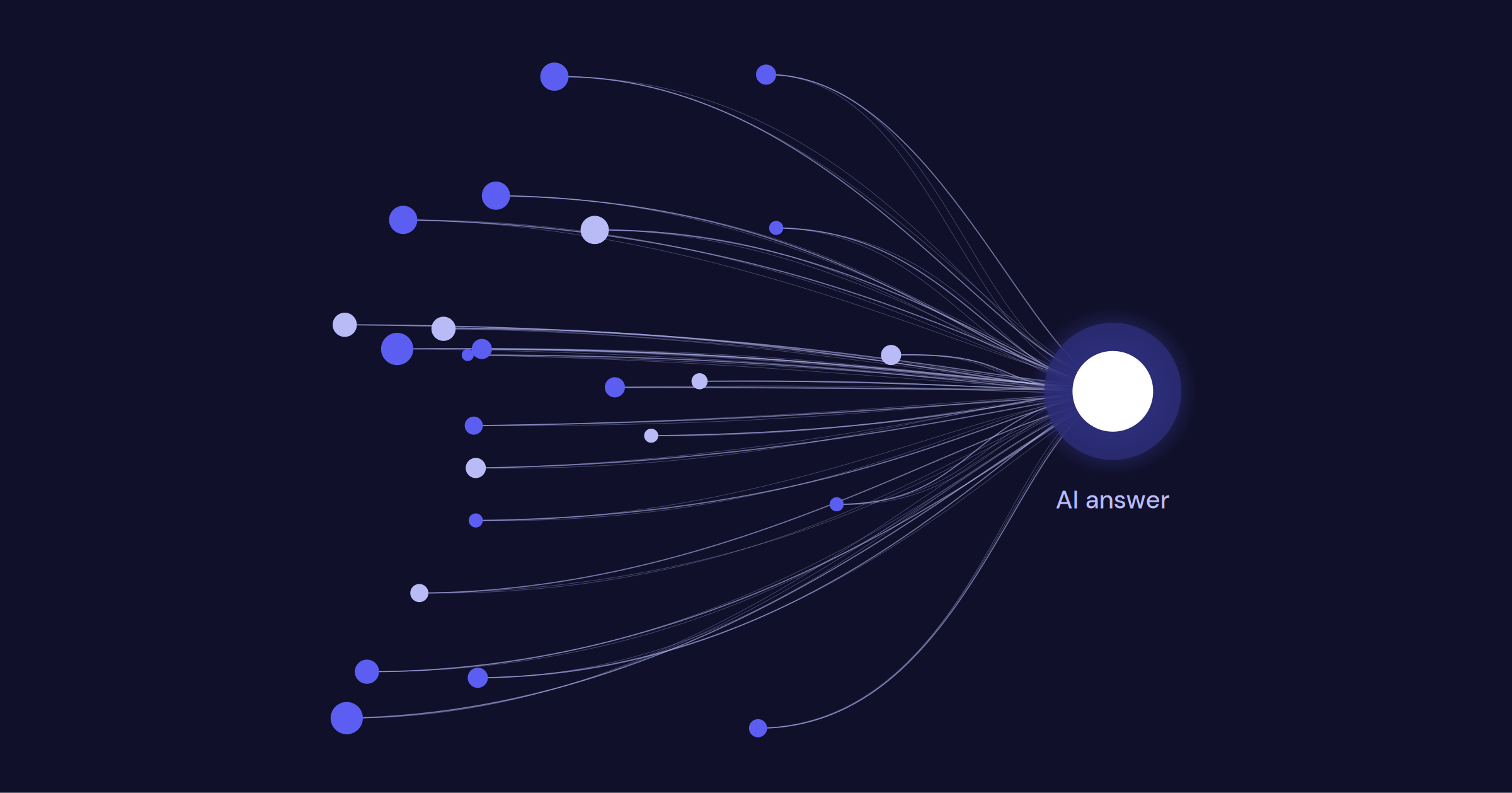
Semantic descriptors are synonyms, related concepts, and contextual signals that help AI search engines understand how your content connects to broader topics, and to the intent behind a user's search.
Think of them less as a checklist and more as the natural vocabulary that surrounds a topic. For a primary keyword like telehealth, semantic descriptors might include:
- Synonyms & variations: virtual care, online doctor visits, remote healthcare, digital health services, e-health
- Related concepts: patient portal, electronic health records, prescription delivery, insurance coverage for telehealth, HIPAA-compliant video visits
- Entities: platforms like GoodRX, Teladoc, MDLive, or Amazon Clinic; conditions commonly treated remotely (UTIs, anxiety, chronic disease management)
- Questions users ask: "Can I see a therapist online through my insurance?", "Is telehealth covered by Medicare?", or "How do I set up a virtual doctor's appointment?"
Together, these signals tell LLMs, and the people searching, that your content is a comprehensive, trustworthy resource on the topic, rather than just a page that repeats one phrase.
How are Semantic Keywords Different From Primary or Target Keywords?
Target keywords describe what the topic is. Semantic keywords explain why and how.
Traditionally, keyword strategies focused on single phrases: rank for "telehealth," check. But optimizing for semantic keywords means building an interlocking network of content that AI can navigate to truly satisfy user intent.
For telehealth, a target keyword gets someone to your page. Semantic keywords, things like "mental health virtual visits," "follow-up care online," or "no-insurance telehealth options", are what keep them there and signal to LLMs that your content is substantive.
Latent Semantic Indexing vs Semantic Keywords
Latent Semantic Indexing (LSI) is an older concept from the 1990s: terms that share context with your main keyword and frequently appear alongside it in search results. LSI is rooted in statistical co-occurrence, essentially, "these words show up together a lot."
For telehealth, an LSI approach might have flagged words like "doctor," "appointment," and "prescription" simply because they appeared near "telehealth" frequently in indexed documents.
Semantic keywords moved search strategy forward. They still use statistical signals, but layer in meaning and user intent. Instead of just noting that "prescription" co-occurs with "telehealth," a semantic approach understands that a user asking "Can a telehealth doctor prescribe antibiotics?" has a specific, answerable need and that content addressing it directly will perform better. The result is richer, more dynamic context rather than a static keyword list.
In the age of GEO, understanding user intent is even more important.
What Do Semantic Keywords Look Like in Practice?
Here's how a semantic keyword map might look for a brand like GoodRx with a primary keyword of "telehealth":
- Synonyms: Virtual care, online urgent care, remote doctor visit, digital health
- Related concepts: Prescription refills online, mental health apps, insurance copay for virtual visits, same-day telehealth
- Entities: Teladoc, MDLive, GoodRx Care, CVS MinuteClinic Virtual, Medicare telehealth coverage
- Informational questions: "How does telehealth work?", "Is telehealth safe?", "What conditions can be treated via telehealth?"
- Commercial/investigative: "Best telehealth services for mental health," "telehealth vs. in-person visit cost comparison"
- Transactional: “Book a telehealth appointment," "sign up for GoodRx Care"
A page that naturally incorporates terms across all these categories signals to AI that it's a complete resource, instead of a thin page optimized around a single phrase.
Why Are We Talking About Semantic Keywords Now?
LLMs marked a welcome shift in search. They reward content that mimics how people actually reason and speak, and penalize what SEO practitioners used to call "keyword stuffing" or high keyword density strategies. LLMs classify these as "thin content": formulaic pages that are less likely to satisfy a real user's need.
Semantic keywords flip that incentive. Brands are finally rewarded for creating content that is genuinely useful to humans — and that usefulness is exactly what makes it more readable to the LLMs surfacing it in AI-powered search.
Why do Semantic Keywords Matter for My Content?
For brands, semantic keywords drive both visibility and thought leadership. LLMs prefer pages built around semantic breadth because they signal:
- Content quality: natural language use, not keyword padding
- Topical authority: depth and coverage that demonstrates expertise
- Better UX: content that answers real questions in a logical order
Page structure matters here, too. Using clear H2s and H3s and leading with a "bottom-line up front" (BLUF) approach, similar to the inverted pyramid in journalism, means your page answers the key question immediately and provides supporting context after. For a telehealth page, that might mean opening with "Telehealth lets you see a licensed provider by video or phone, often within hours, without leaving home" before diving into how it works, what it costs, and which conditions it treats.
Addressing search intent is the other side of the coin. Semantic keywords allow a single page (or a content cluster) to capture users at every stage of the funnel:
- Informational: "How does a telehealth visit work?" or "What is remote patient monitoring?"
- Navigational: "GoodRx telehealth login" or "Teladoc member portal"
- Commercial/Investigative: "Best telehealth services for anxiety," "telehealth vs urgent care — which is cheaper?"
- Transactional: "Book a virtual doctor's appointment now"
Covering all four intent types gives users multiple entry points into your content and keeps them engaged longer, both of which LLMs reward.
For a deeper-dive into semantic keywords, Semrush provides a great explainer on how your content is already ranking and how to build out your strategy, and Answer Socrates breaks down how to optimize for semantics without sounding like a robot and provides examples, plus offers a free tool that creates semantic phrases from your main keyword.
Semantic descriptors are the connective tissue between your content and the way AI understands it.
Brands that build this infrastructure now will have a compounding visibility advantage as AI-powered search continues to evolve. Whether you're a healthcare brand mapping out telehealth content or scaling thought leadership across categories, the strategy is the same: write for humans, structure for machines, and let semantic breadth do the rest.