Julija Sh // Shutterstock
1 / 2What are drones and sidewalk delivery vehicles?
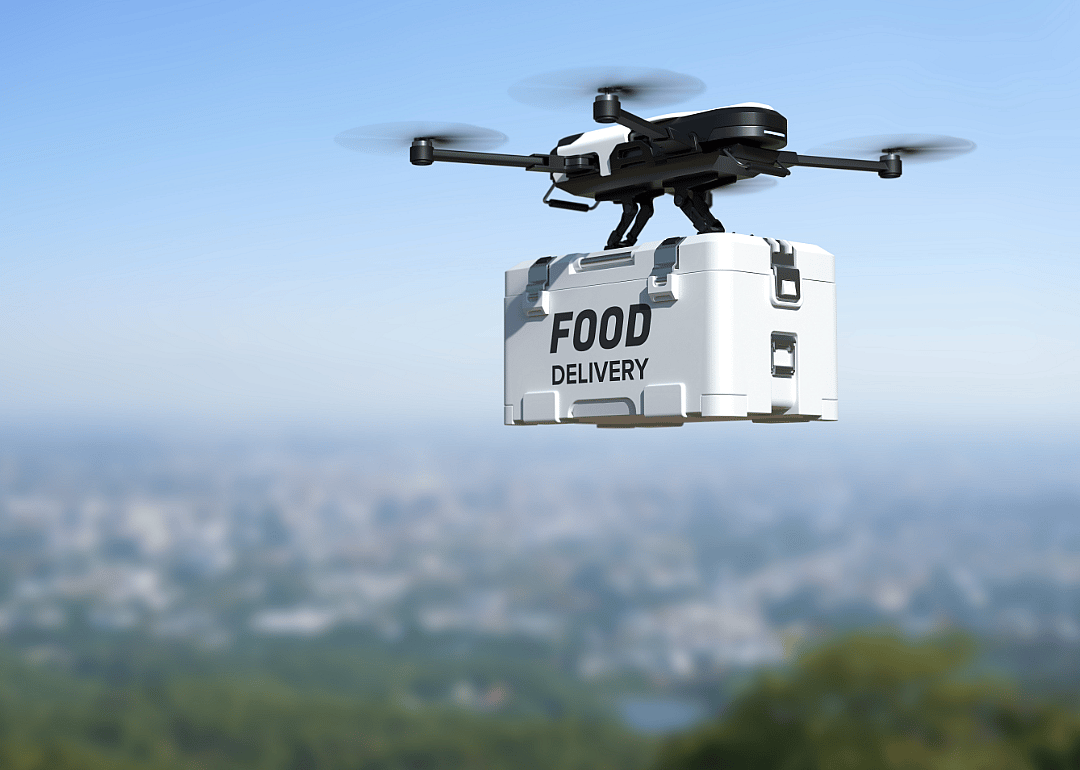
The robots most commonly used in the food delivery industry are aerial drones and wheeled autonomous delivery vehicles that travel along sidewalks to reach customers.
Drones are classified by how they generate lift—with fixed wings, rotors, or a combination—by how they're used, such as food delivery, and what equipment they have on board, including batteries and cameras.
In the U.S., the Federal Aviation Administration regulates drone use. The agency requires pilots to be certified—and bans drones within five miles of airports.
For many years, the FAA stood in the way of companies seeking to use drones for deliveries, but in 2019, the agency agreed to allow uncrewed delivery flights beyond the pilot's line-of-sight by UPS and Wing Aviation, owned and operated by Google's mothership Alphabet. Since then, the agency has approved drone delivery operations for several companies, including Amazon and Walmart.
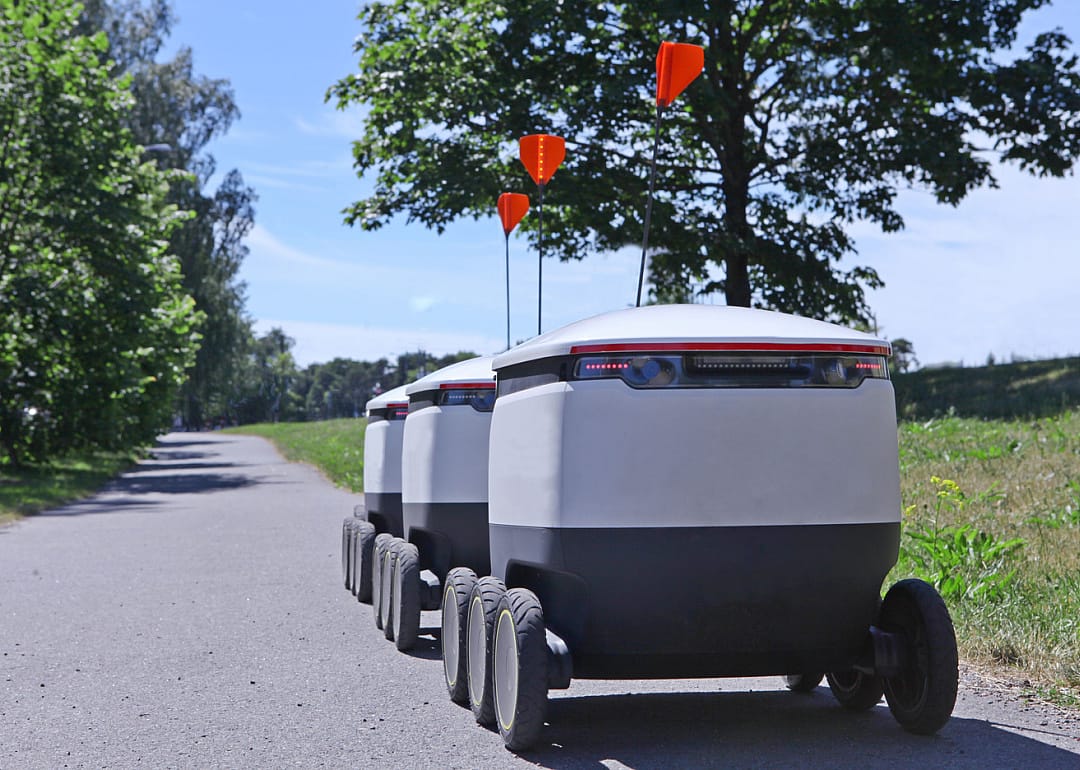
According to a study published by the Harvard Kennedy School in 2022, autonomous delivery vehicles are not the future. They're already here. Self-driving machines about the size of a large cooler are already traveling down our sidewalks and crosswalks to deliver various packages.
Policymakers question how these vehicles will work and interact with people and other vehicles in already congested and chaotic urban environments. The Harvard researchers believe these vehicles "offer the promise of less congestion and greener shipments," but also "raise concerns about safety and use of road and sidewalk infrastructure."
While the debate continues, the manufacturers of these robots continue to advance their technology, including using machine learning to improve navigation, efficiency, and safety.