Fadi Kheir
1 / 2'We're trying to really hold the space for the audience to have as fruitful of an experience as possible during the concert.'
When vocalist Sarah Elizabeth Charles starts singing the first tunes of "Conscious Mind," some listeners close their eyes to focus on her crystal clear, soulful voice. "Love the world" is the refrain. Charles and her husband, pianist Jarrett Cherner, finished writing their album Tone during the pandemic. "Trying to cultivate loving kindness and mindfulness during these trying times," Charles remembers. "And then sharing that loving kindness outward into the world. We could never have known at the time how well it would fit into this space now."
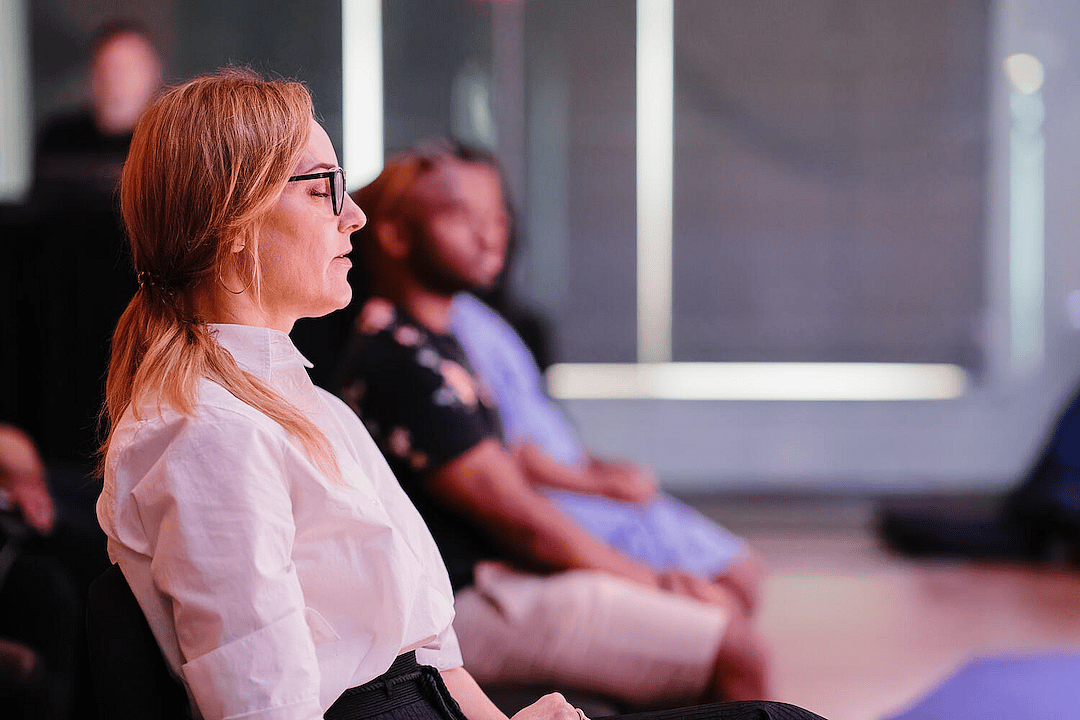
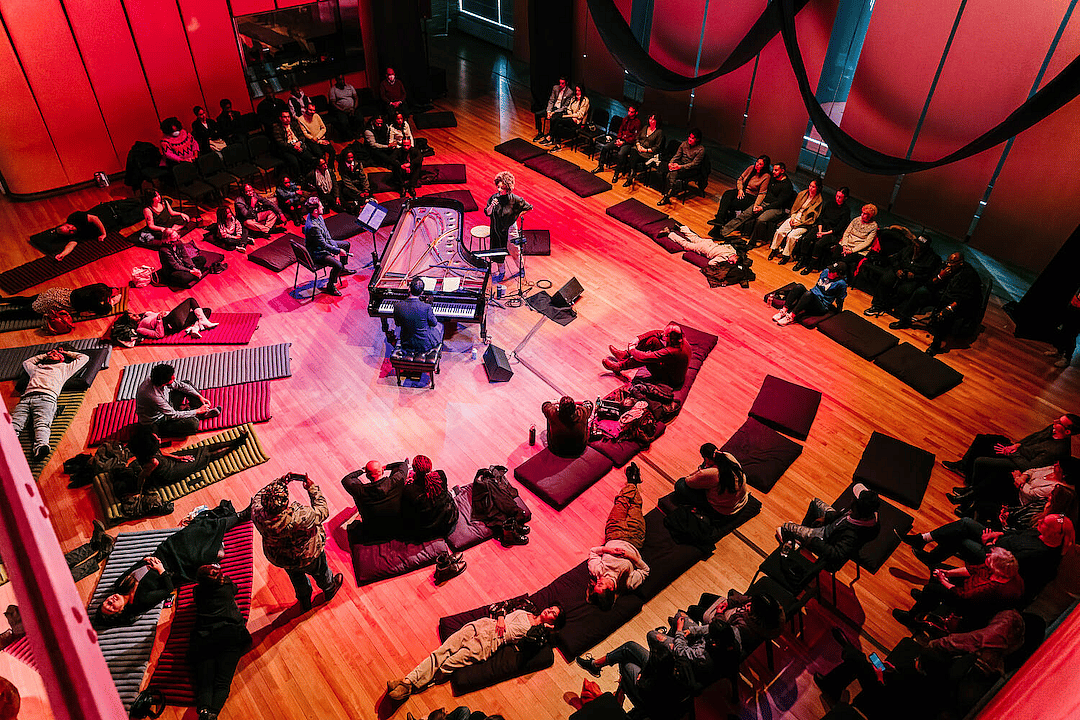
Both the artists and the attendees say they experience the Well-Being Concerts quite differently from your typical performance. Instead of watching the artists on an elevated stage, the attendees are on the same level and form a circle around the performers. "It feels much more connected," is how Charles describes the difference. "We're trying to really hold the space for the audience to have as fruitful of an experience as possible during the concert. It's a really cool way to dig into the meaning of the content."
Carnegie Hall piloted the Well-Being Concerts this spring mainly for health care providers and people impacted by the justice system. The response was so enthusiastic that the Weill Institute expanded the series for this season.
It hosted the first Well-Being Concert of this season on November 11 for health care workers at New York City's public hospitals, because of the "acute challenge for the health care world in the last few years," Johnson explains. "We've all been so fragmented and pulled in a million directions, the events are meant to offer relief." The audience was capped at 100 people to create a sense of intimacy.
Both Johnson and strategic advisor Ian Koebner take care not to stigmatize or exclude any attendees. "We take an expansive approach because we're all swimming in very stressful, isolating waters, and we can all stand to be supported more deeply," says Koebner, who also hosted the first Well-Being Concert. At the beginning, he invites the audience to breathe mindfully and introduces a very simple form of mindfulness meditation, though he avoids using the word meditation so as to not feed into any preconceived notions.
"As soon as I walked into the room, I felt my heart rate going down," one attendee noted after a performance. "I felt my breathing coming back. And it just continued throughout the event…When I left, there out on the street, everything was a bit brighter and calmer and nicer."
One nurse said after the event, "I wasn't aware it was possible to be in a space that felt so peaceful in this city."