How congestion pricing makes cities more livable
This story was produced by Reasons to be Cheerful and reviewed and distributed by Stacker Media.
How congestion pricing makes cities more livable
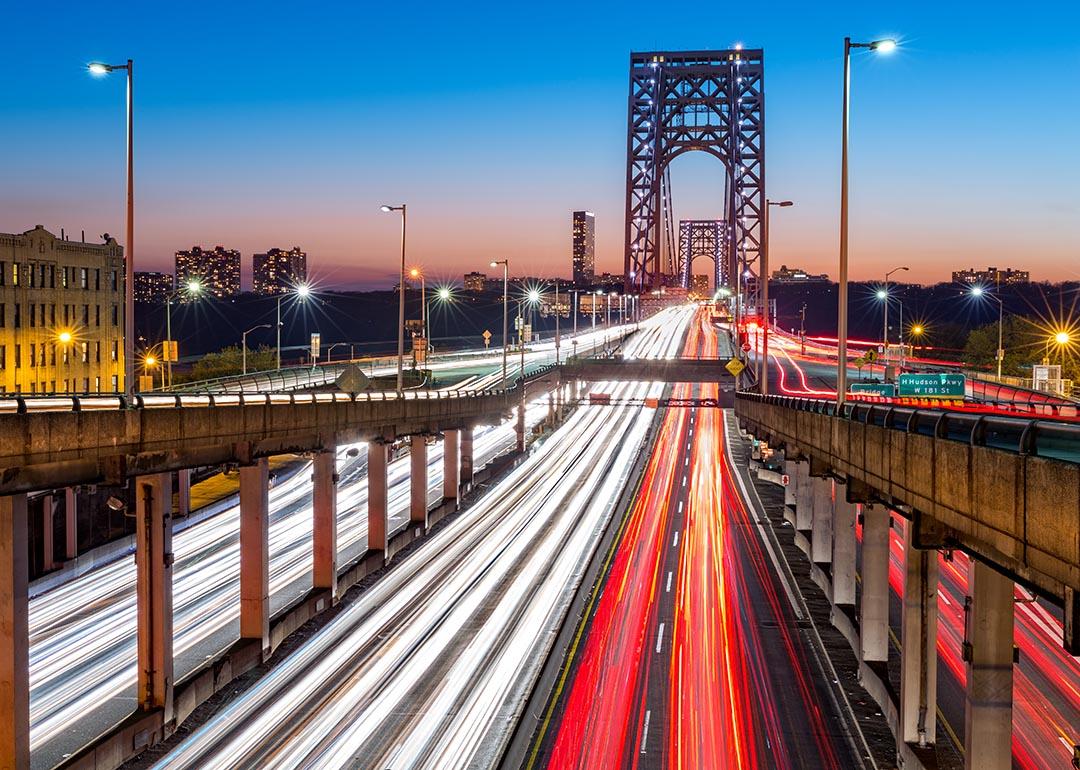
"The city seen from the Queensboro Bridge is always the city seen for the first time, in its first wild promise of all the mystery and the beauty in the world," F. Scott Fitzgerald wrote nearly a century ago. And in the century since, the view from the bridge has changed drastically. For one, New Yorkers driving into Manhattan today have a lot more time to take it in.
New York's roads are busier — and more congested — than ever, Reasons to be Cheerful reports. Even as subway and bus ridership remain woefully below their pre-pandemic levels, the Metropolitan Transit Authority and Port Authority's 15 bridges and tunnels saw some 457 million paid vehicle crossings in 2023, an all-time high.
All that traffic comes with a cost — to drivers, pedestrians, transit-riders and the environment alike. And until June 5, it appeared that New York was finally going to put a price on it. Nearly two decades after then-mayor Michael Bloomberg first pushed for the idea, New York was set to begin charging cars $15 to enter Manhattan's central business district (below 60th Street) at peak hours, with smaller charges during off-peak times.
Then, Gov. Kathy Hochul — once a vocal supporter of congestion pricing — made a surprise last-minute announcement: The program, slated to begin June 30, would instead be postponed indefinitely, Hochul said, citing fears that congestion pricing would "create another obstacle to our economic recovery" after the COVID-19 pandemic.
While New York would have been the first American city to implement such a charge, cities around the world — from Singapore to Stockholm — have been putting a price on congestion for decades, and the evidence from abroad is clear: Congestion pricing works.
Turning the tide in Stockholm
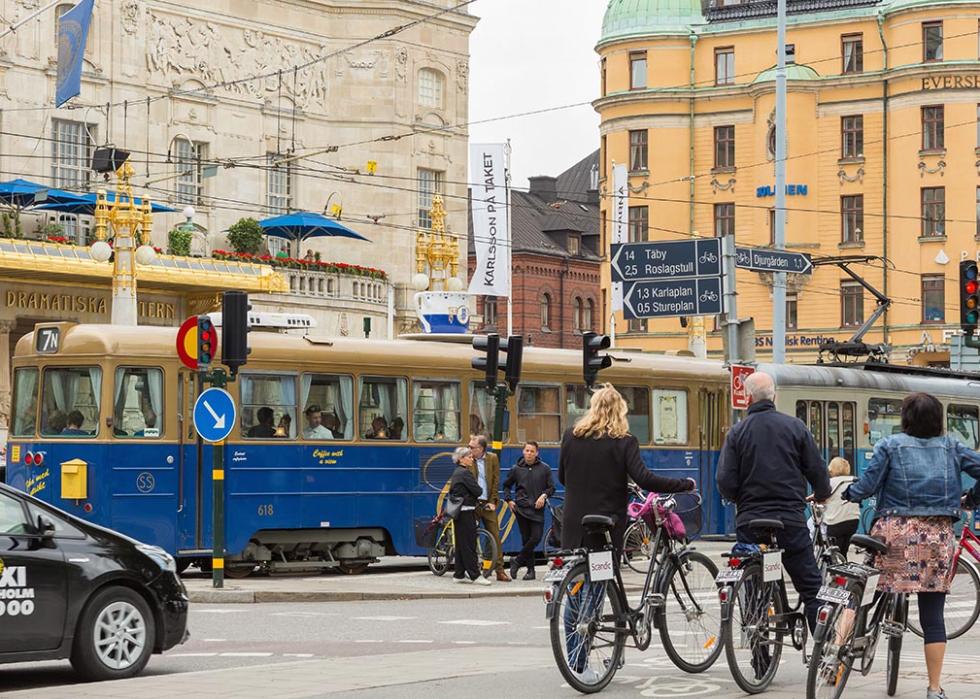
In just a few short decades during the mid-twentieth century, cars conquered the 750-year-old city of Stockholm. As early as the 1980s, various schemes for reclaiming the city's fourteen islands from gridlock had been proposed, but politics kept getting in the way and plans never materialized. In 2002, as part of political compromise, a divided Swedish parliament began to work toward a long-desired goal: a trial run of congestion pricing in Stockholm, with a public referendum on the policy to follow.
On Jan. 3, 2006, the trial began. Watching it unfold, Jonas Eliasson, a life-long transit researcher (and enthusiast) who has served as director of transport accessibility at the Swedish Transport Administration since 2019, was excited — and worried. Neither emotion was unwarranted.
Congestion pricing had succeeded before. In 1975, Singapore pioneered its Area Licensing Scheme, a precursor to its modern Electronic Road Pricing system in which drivers are tolled automatically based on their location, type of car, and the time of day. In 2003, London began charging drivers for entering its city-center — an idea first proposed in the 1950s. By 2006, there were 33 percent fewer car trips into central London than in 2002, 25 percent more bus trips and 49 percent more bicycle trips. Congestion, pollution and traffic accidents all fell in tow.
Eliasson was aware of these benefits, but he still feared that politics would squash Stockholm's program before its results were realized. The trial (whose start-day had been delayed by, again, politics) was slated to last just seven months. "Having a congestion pricing trial meant building up all the technical stuff in the business district, the gantries and the cameras and everything, and just for a trial," says Eliasson. "I thought that in order to make congestion pricing acceptable, we would have to spend the revenues in a really salient, tangible way. And at the time, we didn't have that."
Eliasson was wrong, and happily so. Despite negative media coverage and public suspicion, the tide of approval turned on congestion pricing in Stockholm almost as soon as it was implemented. "I think that what surprised everyone was that the effects on traffic were just so visible. From day one, you could see the benefits with your naked eye," says Eliasson.
Road traffic into Stockholm's central district fell by 20 percent almost as soon as the program began, as drivers swapped their individual trips for carpooling and alternative means of transit. The streets grew quieter, and air pollution decreased by 12 percent — all from a maximum charge equivalent to just $2. In September of 2006, congestion pricing was made permanent by a majority vote, and by 2011, the policy saw nearly 70 percent public support.
"Almost immediately, the debate changed from 'Will it work?' to 'Okay, now, we know that it does work. Can we tweak it in some way? Should we have higher charges or lower charges? What should we spend the revenues on?'" says Elisson.
Even as Stockholm grew to love congestion pricing, cars didn't disappear altogether from the city center. But congestion pricing doesn't have to get every car off of the road in order to work. "A congestion pricing scheme is not trying to get most people to change their behavior. It's trying to get some people to change their behavior," says Lewis Lehe, assistant professor of transportation systems at the University of Illinois Urbana-Champaign.
Traffic, Lehe explains, is a non-linear phenomenon: A road operating at 70 percent capacity will operate just as well at 95 percent capacity. Exceeding the road's capacity, even by just a handful of vehicles, can grind a road system to a halt. "A small reduction in traffic flow can have a surprisingly large effect," says Lehe.
New York's dream deferred
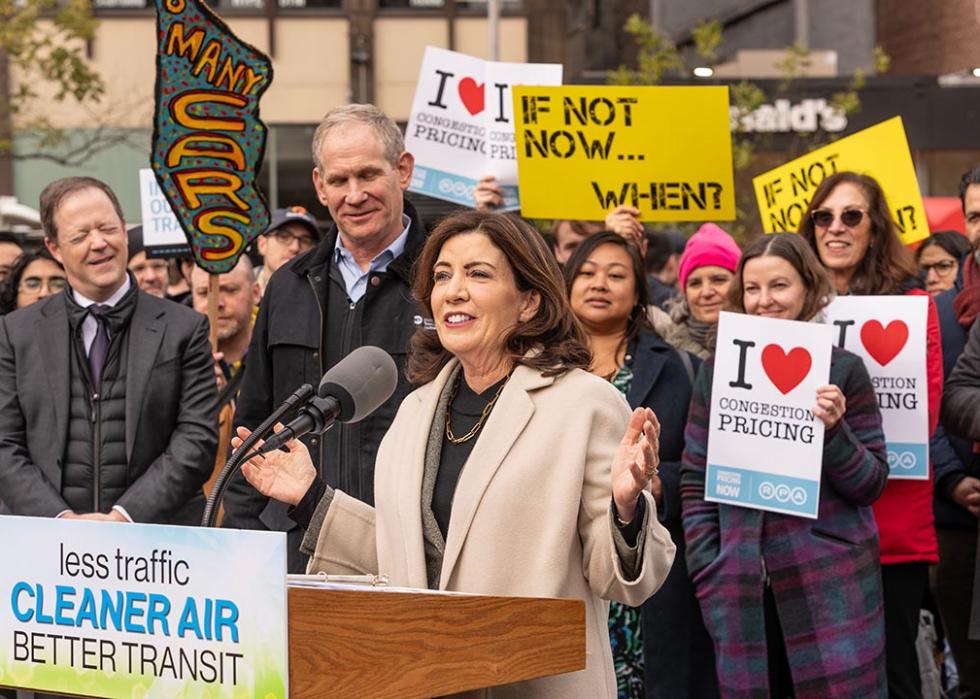
On June 5, with just over three weeks until the slated start of the program — and despite years of legislative toil, 4,000 pages of environmental review, $500 million in already-spent implementation costs, dozens of already-scheduled investments contingent on congestion funding and the explicit go-ahead of the New York state legislature and MTA board — Gov. Hochul announced that congestion pricing would be indefinitely paused.
As Stockholm demonstrates, congestion pricing is most unpopular just before it is implemented — when the costs have been widely publicized and political enemies made, but the benefits have yet to be realized. The governor, in a video released June 5, cited the possibility of "unintended consequences" as a rationale for putting the program on hold. "Hard-working New Yorkers are getting hammered on costs, and they, and the economic vitality of our city, must be protected," Hochul said. (Sources close to the governor have also said that fear of political backlash ahead of November's elections was a primary motivator of the decision.)
New York is unique among American cities. Of the 1,000 census-designated labor market areas in the U.S., Manhattan is the only one in which the majority of commuters make their journeys by means other than cars.
Just four percent of outer borough residents — and just two percent of low-income outer borough residents — drive into Manhattan for work, and the median income of car commuters into Manhattan is 20 percent higher than that of subway and bus riders. Moreover, the congestion toll at peak hours would cost just $1 more than commuting via an interborough express bus, and at off-peak hours, the $4 fare would still be cheaper than a round trip on the subway.
In order to fill the fiscal gap created by the pause, Hochul has floated the idea of an additional payroll tax on New York City businesses. That would shift the burden from drivers, many of whom travel from outside the city or state, to businesses within the city, now stuck with both the fiscal and environmental burdens of congestion while funding a transit system that serves three states and over a dozen counties.
While a toll may have initially been unpopular, congestion pricing, by reducing delays and travel times, has benefits to offer even for drivers. In 2022, the average Big Apple driver spent 117 hours in traffic. "As long as you have a scarce quantity — be it road space or anything else — then you're paying for it somehow. You're either paying for it with your time or you're paying for it with money," says Eliasson. "Money can be collected and then spent on something else, whereas time that you're spending in a queue, it's really lost, you can't recoup it in any way."
New York had big plans for the estimated $15 billion in revenue congestion pricing was projected to bring in: funding long-overdue investments in the city's transit system, both to service and accessibility.
Of course, economics is not the only concern. Both critics and supporters of congestion pricing acknowledge that there are some vehicular trips into Manhattan that are unavoidable, particularly for New Yorkers with disabilities. "Some people don't have the option, and it is not always feasible for some people to take transit," says Sarah Kaufman, director of the New York University Rudin Center for Transportation Policy and Management, who notes that the congestion pricing scheme would have exemptions for those with disabilities, and that accessibility upgrades for subway stations are among the projects that would receive congestion funding. "But for people who are making a conscious choice to drive rather than take transit, this is meant to address that choice and account for the negative externalities that they are imposing on other people."
Thus, to most New Yorkers, an influx of funding — a nearly 30 percent increase in the MTA's capital budget — would bring with it critical improvements in accessibility, service and quality of life. "Every single day, the majority of New York City — several million people — are depending on public transit to get us where we need to get to," says Danny Pearlstein, director of communications and policy for Riders Alliance.
"If you go to people on Fulton Street in Brooklyn where the A and C lines are scheduled for $1.3 billion, and ask them, 'Hey, how do you feel about delays in upgrades?' People aren't gonna be too happy about that," says Pearlstein. "Congestion pricing cannot happen soon enough."