The RealReal
1 / 2Counterfeit seizures on the rise
There are many reasons why counterfeit items slip through the cracks. Big platforms like Amazon sell a diverse range of goods from vitamins to clothing to cleaning products all over the world, with each country and municipality having different regulations for different categories of products. As a result, the process to vet these products has to be equally as detailed.
"They monetize every single transaction on their platform, either in terms of a cut of the monetization or in terms of the data," Ramesh Srinivasan, a professor at the department of information studies at the University of California, Los Angeles, told Stacker. "If you're monetizing counterfeit sales, you then have at least a material responsibility tied to the benefits that you're getting from such sales."
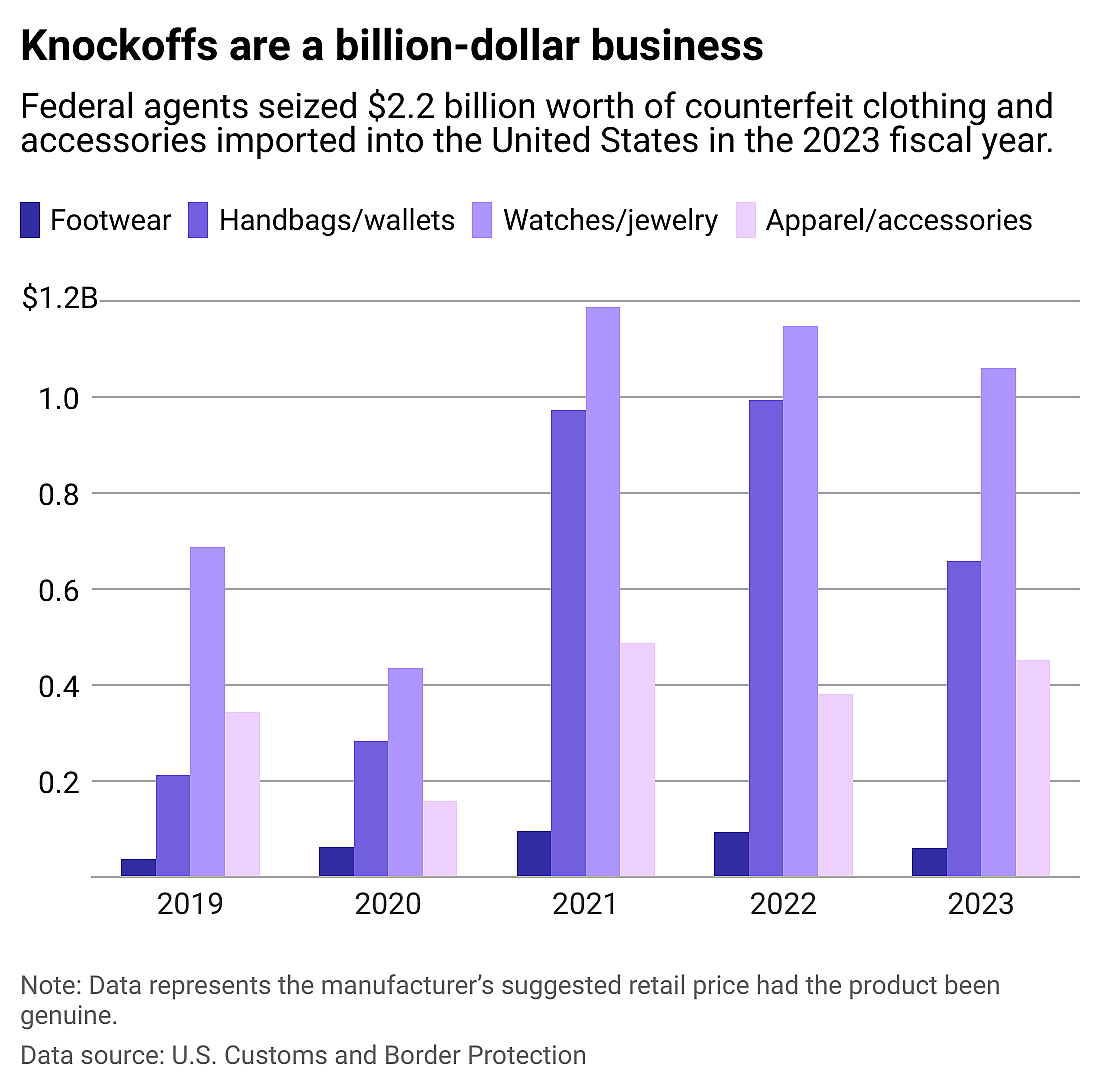
The Customs and Border Protection agency, which is in part responsible for enforcing intellectual property rights and upholding trade laws, seized $3.33 billion worth of counterfeit goods in 2021—during the throes of the COVID-19 pandemic. In 2023, that number dropped to $2.76 billion, which is still a 111% increase from 2020.
Items found to be in violation of trade and intellectual property rights mostly hail from China, Hong Kong, India, and the United States, according to a 2023 Customs and Border Protection report. When ranked by value, popular counterfeit items include handbags and wallets, jewelry and watches, and apparel.
Globally, counterfeits represented up to 3.3% of world trade in 2016, according to the latest study available by Organisation for Economic Co-operation and Development and EU Intellectual Property Office. According to their study, globalization, the increased importance of intellectual property in helping boost sales, and low levels of governance are all contributing to the rise of counterfeits. COVID-19 only exacerbated those factors, filling in the need for essential goods as supply chains were disrupted.