WorkTango
1 / 2Typical training days dropped substantially for managers, especially among the longest-trained
On-the-job training is a requirement for a little over half of U.S. management occupations. Meanwhile, Gallup data collected in 2023 shows that nearly 3 in 5 hybrid-virtual workplace managers weren't given any insights on how to be effective in those settings after the pandemic disrupted traditional ways of working.
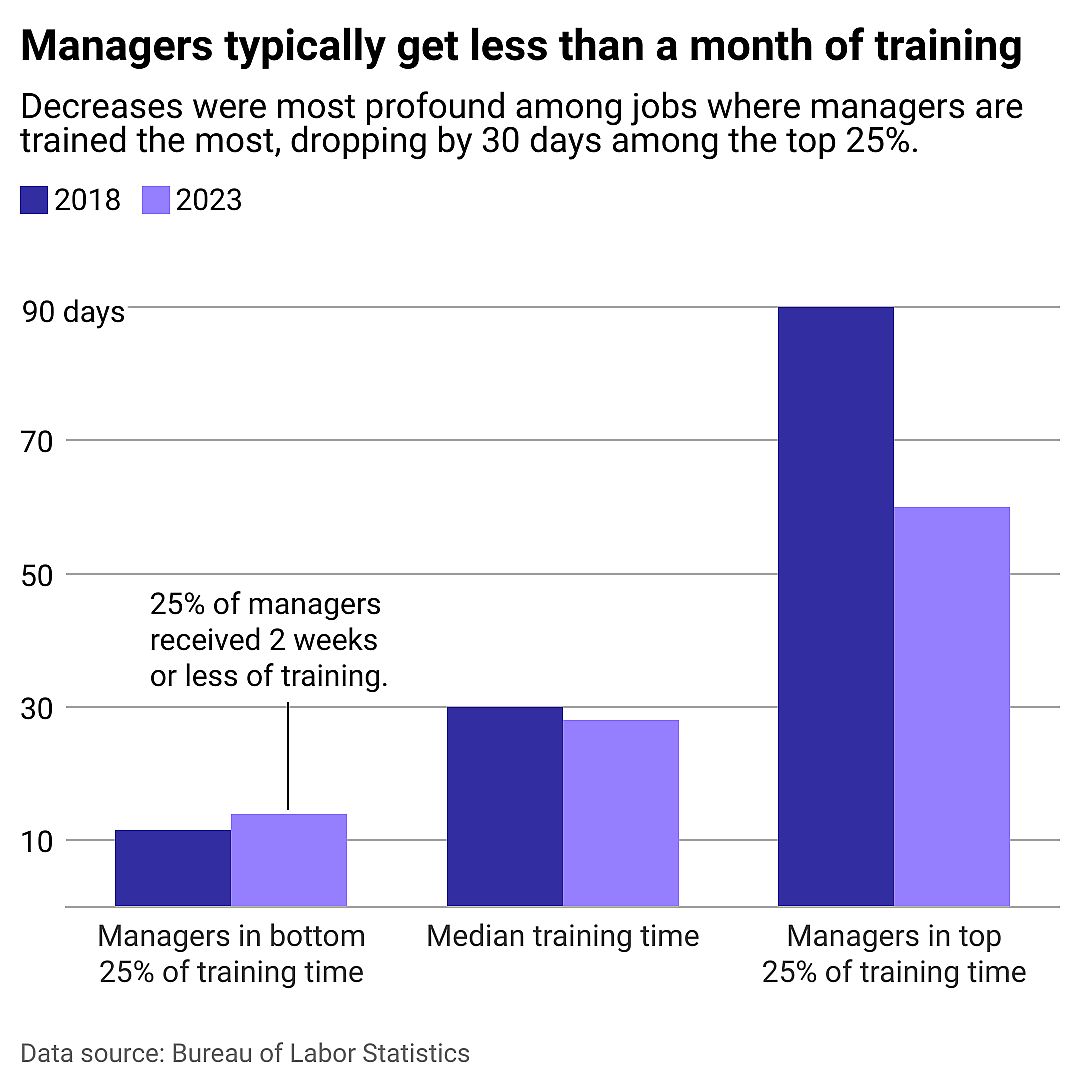
Over the last five years, the average manager training dropped by 19 days, compared to a four-day drop among all workers. Much of the decline occurred among managers who typically received the most instruction. In 2018, the top 25% most highly trained managers received 90 days of on-the-job training. And as of 2023, that number of days has dropped by a third.
Typically, this would refer to chief executives, who receive over three times the amount of training compared to other management occupations. Rising numbers of "accidental managers"—a term made for those who are promoted because they are popular, good at their jobs, or happen to be available—may contribute to this decline. The CMI study found that most U.K. managers fall into this bucket, including a quarter of senior leaders.
The median number of training hours also dipped, but not as dramatically. At the same time, the least-trained managers actually reported receiving slightly more training days in 2023 than in 2018, signaling some improvement among those otherwise receiving the least preparation.
In general, people have less confidence in their bosses than they did a few years ago. Gallup's data shows that only 1 in 5 employees strongly trust the leadership within their organizations, with a similarly small share reporting they have confidence that their leaders can manage emerging challenges.
Compared to early 2020, workers say they are less sure of what's expected of them and feel less cared for by their supervisors or other coworkers. They also receive less recognition for their efforts, reduced encouragement to develop their skills, and fewer opportunities to learn and grow, according to Gallup data.
With less training and support from organizational leadership, managers may have trouble providing these critical encouragements to their teams. During uncertain or challenging economic times, company leadership may cut middle managers or assign them more administrative, menial, or contributor-level work, minimizing the time they have to forge critical interpersonal connections or provide the encouragement, communications, and motivation that more directly engage their teammates.
Managers themselves feel this burden, lacking confidence in their abilities and trust in their teams as they increasingly say they don't have their own superiors' trust. A third plan to quit their jobs in the next year, CMI research shows. A 2023 survey by Gartner found that 1 in 5 managers would rather not have the position.