Experian
1 / 321 large cities added 100,000 or more residents since 2016
Adding a full football stadium's worth of people to a city will inevitably change the local economy, and these "Boom Cities" are most likely to benefit from the economic growth that comes from a growing population. The presence of more workers, in turn, induces more economic activity and new home construction, major drivers of any local economy. This virtuous economic cycle attracts even more residents to the city and surrounding area in the forthcoming years.
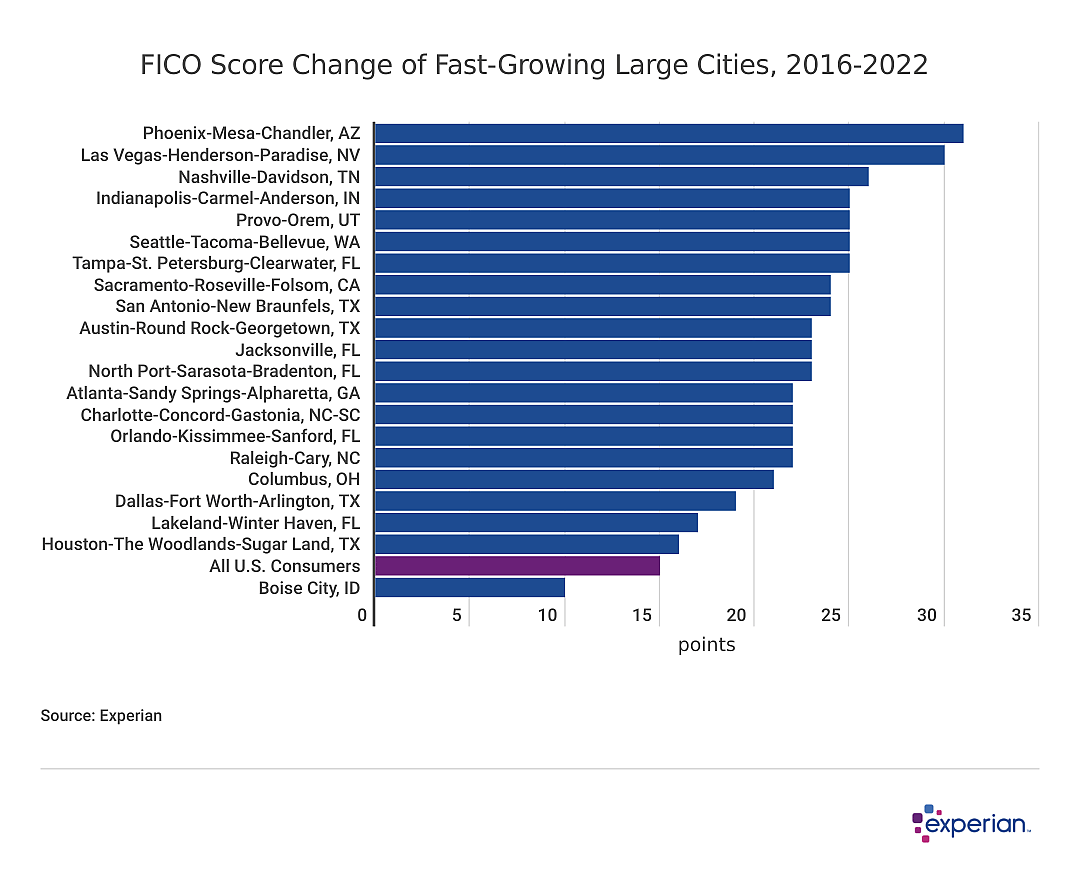
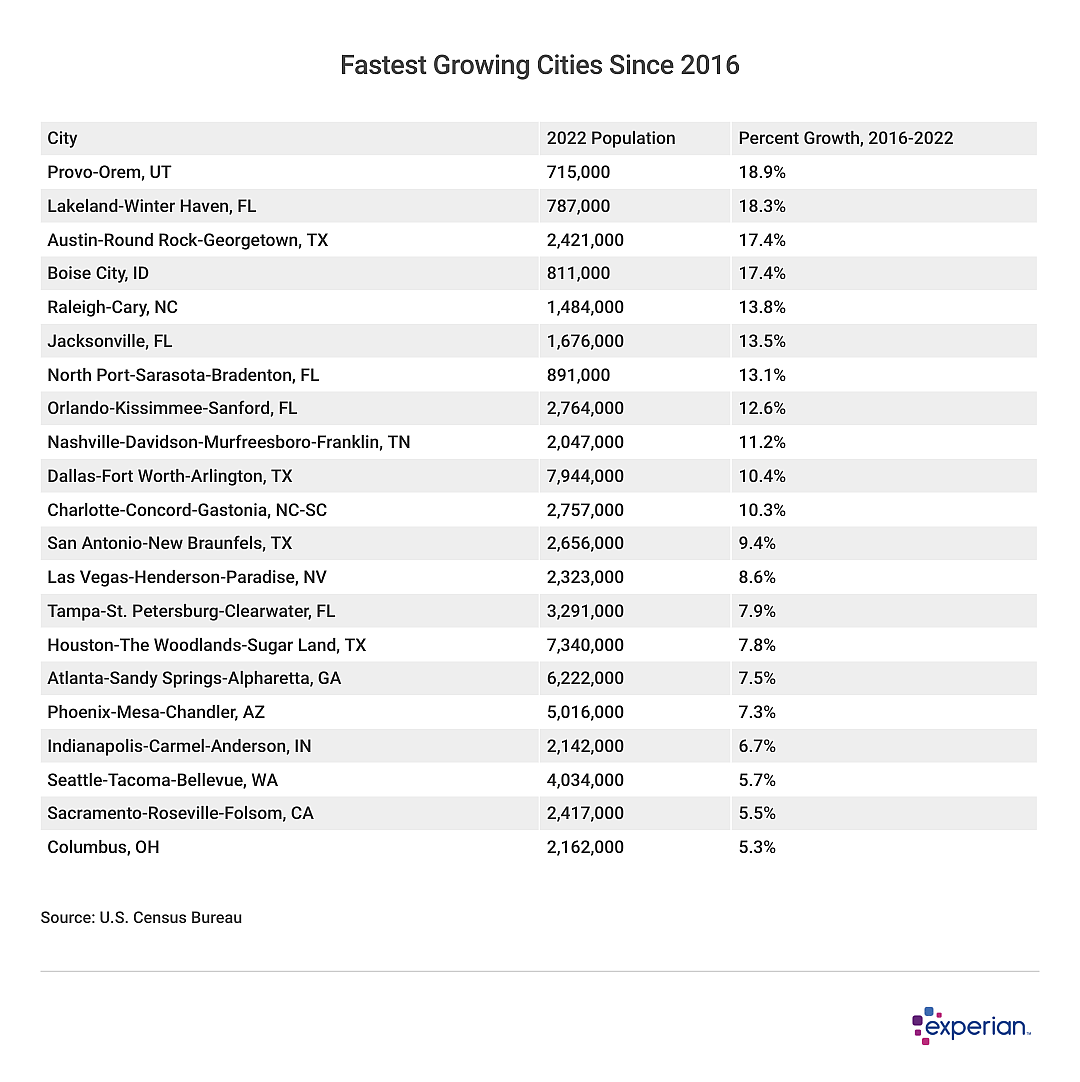
Below are the 21 U.S. cities that added 100,000 or more people to their local populations, as measured by metropolitan statistical areas, and grew by 5% or more since 2016. The list contains some familiar names and perhaps a few surprises. The usual suspects that have been growing for years include Las Vegas, Phoenix, and the largest Texas cities of Dallas, Houston, San Antonio and Austin. Meanwhile, other cities may be more surprising for some, such as Lakeland, Florida, and Columbus, Ohio, each of which added more than 100,000 newcomers in recent years.
- Out of all the Boom Cities, "little big cities" are growing the most. Most of the fastest-growing cities—those that grew by 15% or more since 2016—were also the smallest of the big cities included here. Provo, Utah; Lakeland, Florida; and Boise, Idaho still have populations of fewer than 1 million residents in their respective metropolitan areas, but that won't last long at their current growth rates. Since 2016, Provo grew by 18.9% to 715,000, Lakeland by 18.3% to 787,000, and Boise by 17.4% to 811,000. Only Austin, Texas, grew that quickly while already having more than 2 million residents in 2016.
- Go South by Southwest, young person. No large cities in the Northeast grew at a 5% or greater rate since 2016, according to Census data, and the only two Midwestern cities on the list, Columbus, Ohio, and Indianapolis, border Southern states.
- Follow the new home construction. There's a shortage of residential housing throughout the U.S., including in the 21 U.S. Boom Cities. But at least new residential construction is high in most of the cities. Of the 21 fastest-growing cities, 13 are also among the metros building the most residential units in 2022, according to census data.