How federal COVID-19 educational aid was awarded to every state
This story originally appeared on HeyTutor and was produced and distributed in partnership with Stacker Studio.
How federal COVID-19 educational aid was awarded to every state
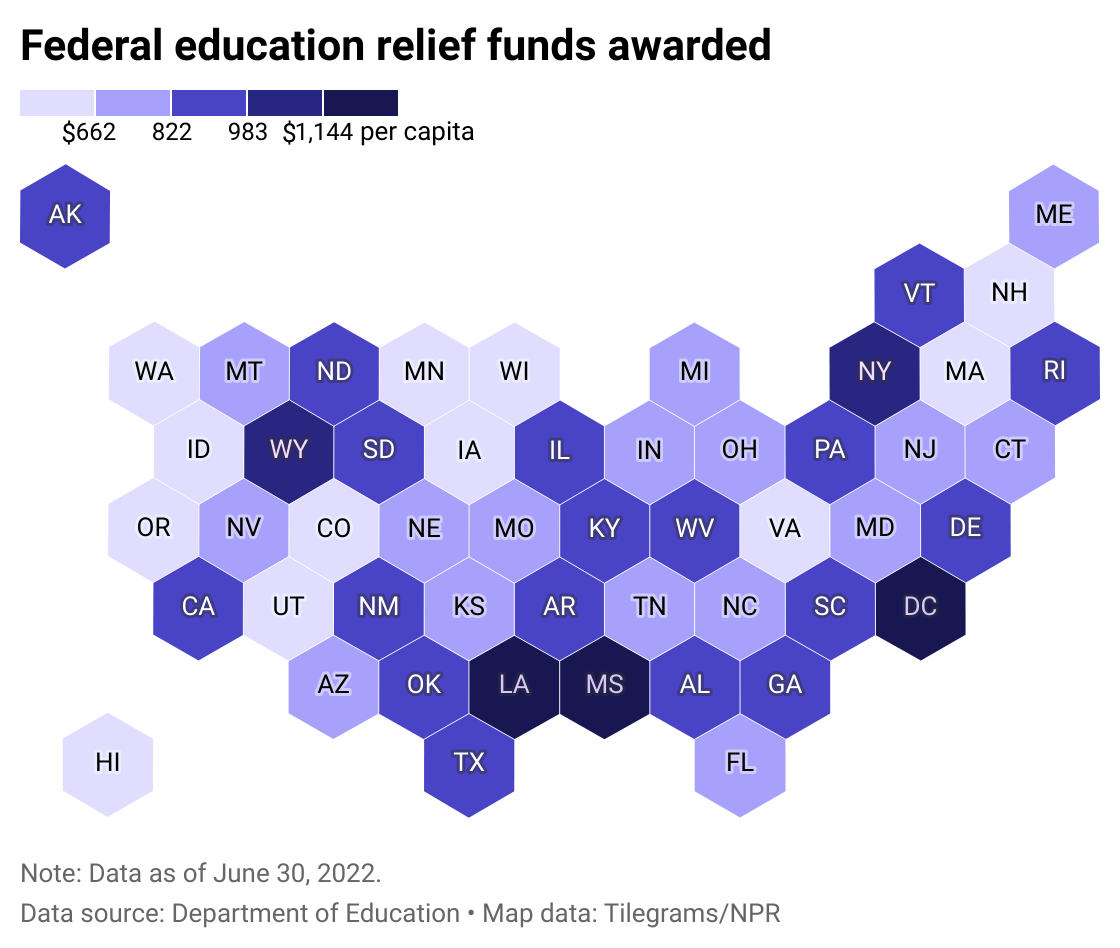
During the COVID-19 pandemic, the federal government allocated $274.2 billion to help schools and students recover from the mass disruption in educational operations and development forced by remote learning models and other pandemic-related precautionary measures and methods. Approximately $189.5 billion of these funds were made available in three waves via the Elementary and Secondary School Emergency Relief Fund. A further $84.7 billion was released via a series of funds attached to further COVID-19 relief action, namely the Coronavirus Aid, Relief, and Economic Security Act, the American Rescue Plan, and the Coronavirus Response and Relief Supplemental Appropriations Act.
Citing data from the Department of Education, HeyTutor broke down what every state received from educational relief funds passed through the CARES and CRRSA Acts and the American Rescue Plan. Each of these funds have unique markers and requirements for distribution, but all exist for the same purpose: to help schools, their staff, and their students regain the educational ground lost during the pandemic.
Keep reading to learn how COVID-19 educational aid was allocated across the nation.
The present concern now is whether the need will outlast the funds
Schools are required to spend all of their designated funding allotments by September 2024, but students may still require help after that.
A July 2022 study by educational nonprofit group NWEA found that elementary school students might not catch up with their studies for at least three years; as for middle-school students, that could well stretch to five years. Those most harmed by the pandemic—among them Hispanic, Black, and Native American students, and students from low-income homes—are likely to need the most time to get back on track. Many entered kindergarten already behind some of their classmates because of existing disparities; the pandemic only worsened those differences.
Students who spent the least time in remote learning fared the best, according to the study. High-poverty schools spent more time learning remotely than those in low-poverty districts; consequently, low-poverty schools have less of a burden in regaining lost ground. But all schools, to some degree, are suffering the radiative effects of a nationwide disruption that will take years to correct—more years perhaps than school systems will be able to support that recovery.
Elementary and Secondary School Emergency Relief Fund
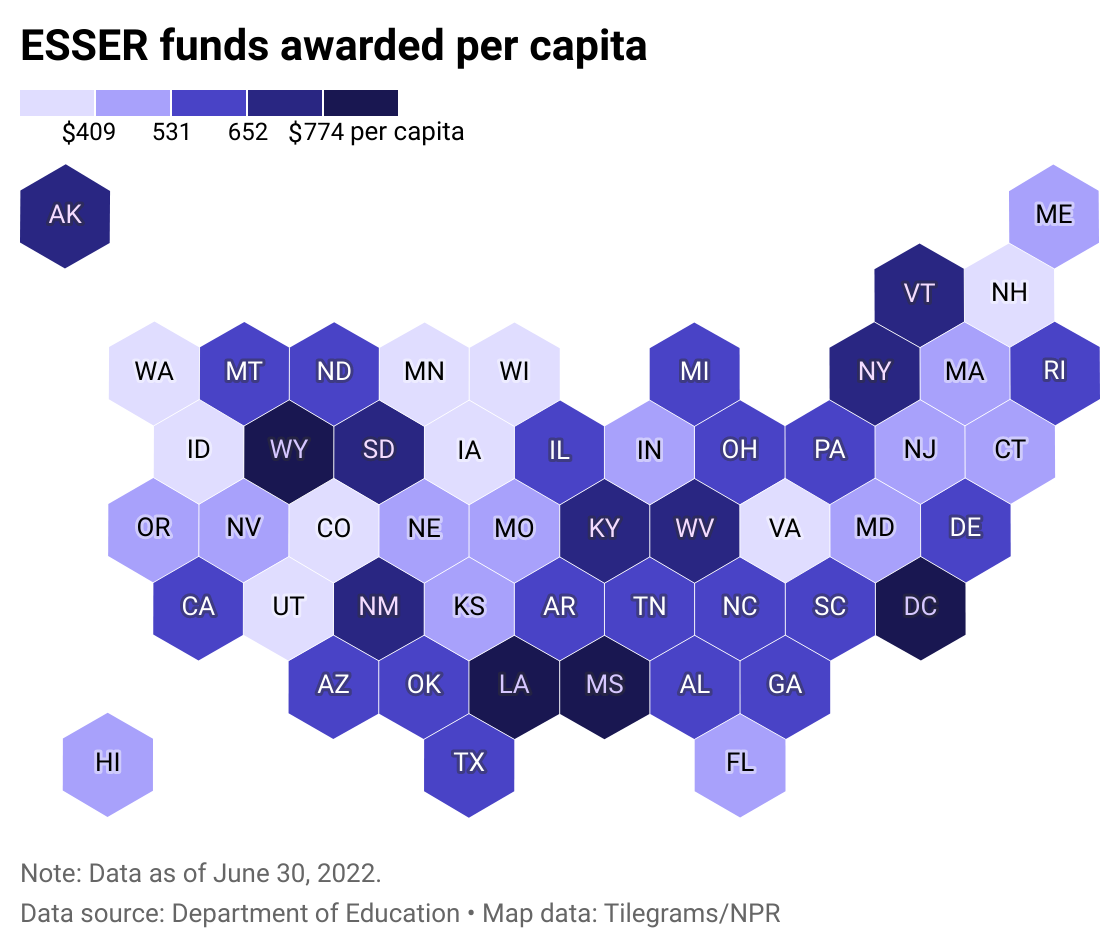
Funds distributed via ESSER came from three sources: the CARES Act in March 2020, which allocated $13.2 billion; the Coronavirus Response and Relief Supplemental Appropriations Act later that December, which provided a further $54.3 billion; and the American Rescue Plan, which allocated $122 billion. All funds were made available to schools upended by the pandemic, forced to close, and limited to online learning. Each wave of funds enabled schools to reopen safely—by buying personal protection equipment or improving ventilation systems, for example—and helped students recover from disruptions to their education through summer school programming, tutoring, and other supplementary programs.
Federal guidelines allow for virtual tutoring, some of which use live video or artificial intelligence. Critics say online tutoring remains untested compared to in-person sessions with a tutor, but the new tutoring services counter that they can offer 1-to-1 attention anywhere. A March 2021 report from the Association of School Business Officials International that looked at how schools had begun to use funding from ESSER I and II distributions found that a large portion was spent on PPE, teacher wages, cleaning supplies, and technology and learning management systems for remote learning.
According to a federal notice, funds provided by the American Rescue Plan in March 2021 were allowed to be used against pre-award costs incurred, such as the hiring of counseling, nursing, or other support staff; the establishment of learning enrichment programs; the installation of HVAC systems; and ensuring the payment of faculty salaries and benefits.
Governor's Emergency Education Relief Fund
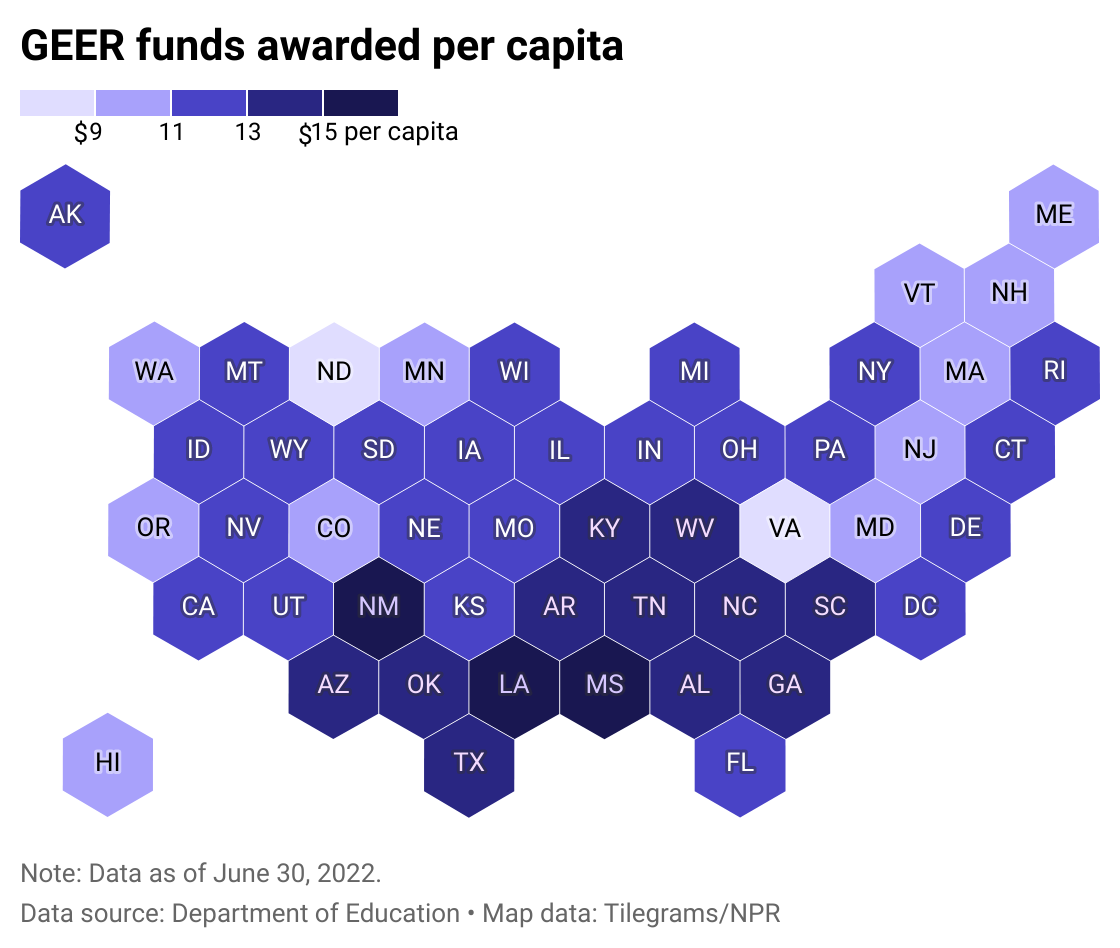
Educational institutions received another allotment of coronavirus pandemic assistance through the Governor's Emergency Education Relief Fund, whereby Congress set aside $3 billion of the $30.75 billion allotted to the Education Stabilization Fund via the CARES Act. A further $1.3 billion was provided to the GEER Fund grant by the Coronavirus Response and Relief Supplemental Appropriations in December 2020. This money was distributed based on each state's population of individuals ages 5 to 24, and the relative number of students as designated under the Elementary and Secondary Education Act of 1965.
In Maryland, Gov. Larry Hogan directed $10 million to community colleges for workforce development courses and continuing professional education for government or industry certification or licensure. In Pennsylvania, $28 million went to postsecondary institutions and providers of adult basic education to resume operations safely.
Emergency Assistance to Non-Public Schools
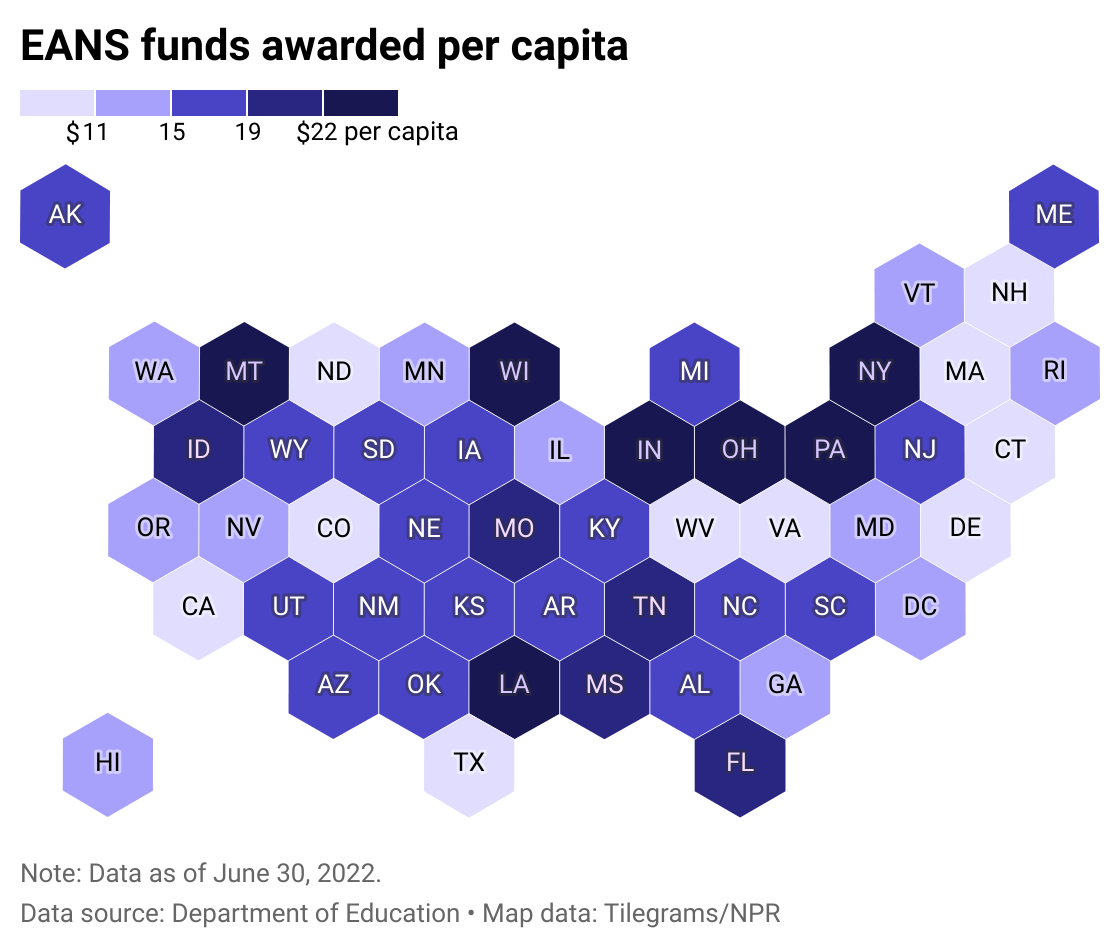
The Coronavirus Response and Relief Supplemental Appropriations Act of 2021, and then the American Rescue Plan, provided $2.75 billion for the Emergency Assistance to Non-Public Schools, enabling governors across the country to offer assistance to nonpublic schools. The American Rescue Plan, however, specified that these schools enroll a significant percentage of low-income students and that they must be "most impacted by the qualifying emergency."
To that end, New Jersey's Department of Education suggested possible uses for the money including "redeveloping instructional plans for remote or hybrid learning or to address learning loss" and leasing space to maintain social distancing. In Washington D.C., the Office of the State Superintendent of Education set up a website to aid nonpublic schools in understanding the parameters to qualify for funds and enabling easy application. The office noted that the funds are meant to help nonpublic schools reopen safely, measure and address significant learning loss, and otherwise mitigate the effects of COVID-19.
Higher Education Emergency Relief Fund
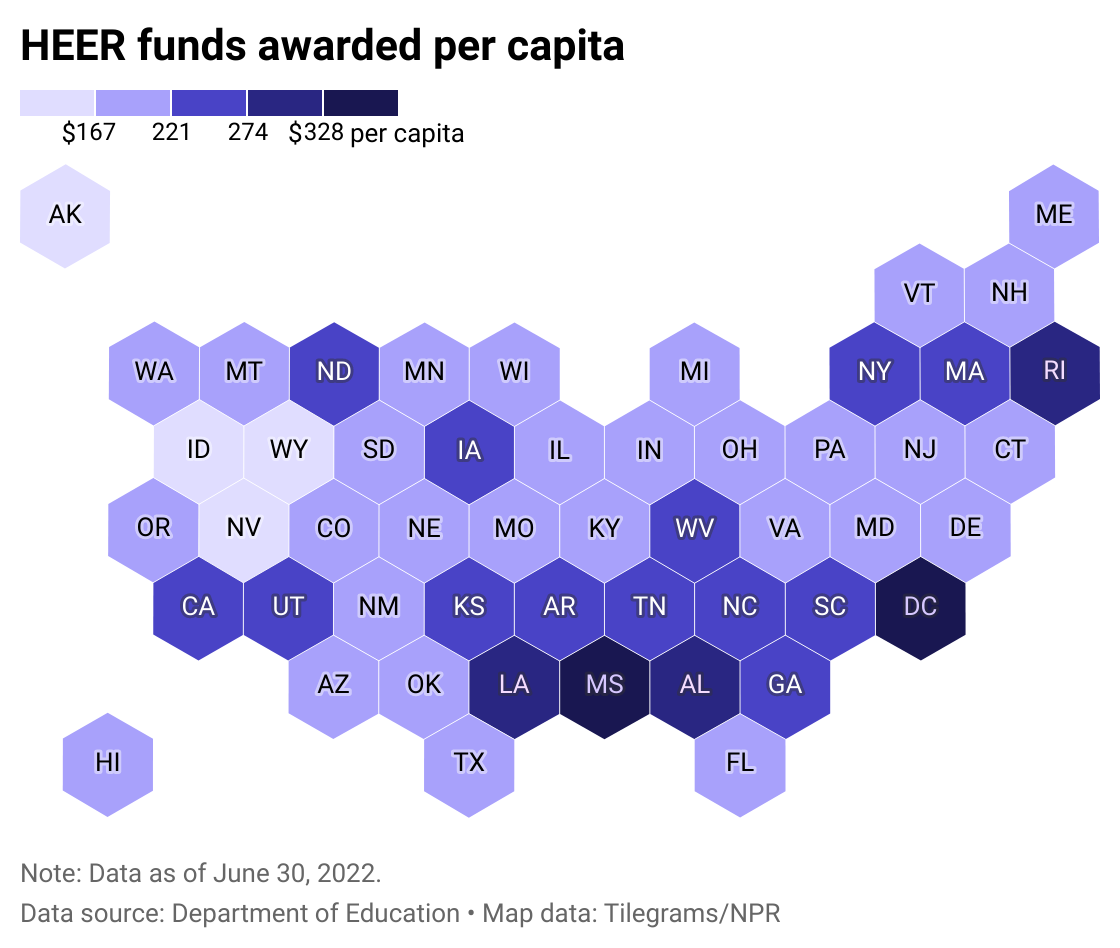
The American Rescue Plan, signed in March 2021, provided almost $40 billion to public and private nonprofit colleges and universities. The grants went to schools with the greatest need, among them community colleges and rural schools. The focus was on diverse student populations and low-income students, determined by the eligibility for Pell Grants. Colleges whose enrollment declined also were eligible for money, as were those with endowments of less than $1 million.
Almost 90% of one round of funding (dispersed in July 2022) went to historically Black colleges and universities, minority-serving institutions, community colleges, rural institutions, and institutions serving large populations of low-income students. The pandemic left some smaller schools scrambling to stay open, forcing them to lay off faculty and curtail majors. Some of the funds were to be spent on students' basic needs, including food, housing, and child care.
Further Higher Education Emergency Relief funds were made available through the CARES and CRRSA Acts.