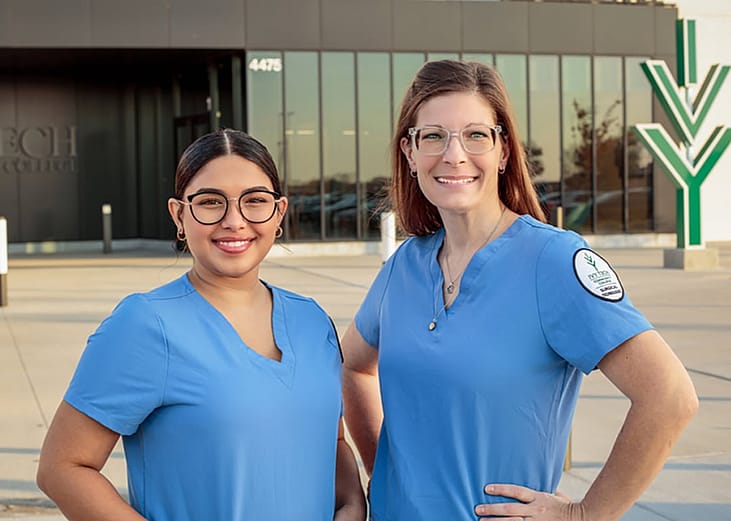
Demand for health care services is on the rise.
In the wake of the COVID-19 pandemic more than five years ago, most Americans tend to hold negative sentiments about both their mental and physical health. Per a March 2025 survey from Gallup, around 25% of adults say their mental health is less than excellent or good, while around 70% say the same of their physical health. This marks a significant decline from 2019, prior to the pandemic.
People are also getting older and living longer. As baby boomers age, they need more medical care to accommodate health problems such as chronic conditions. At the same time, many of the doctors who can treat these patients are reaching retirement age. The Census Bureau reported in June 2025 that people aged 65 and older made up about 18% of the U.S. population in 2024. By 2036, the Association of American Medical Colleges estimates the country will be short 86,000 physicians.
With these numbers in mind, Vivian Health gathered information about health programs across the nation, looking to data from the Bureau of Labor Statistics to outline the timelines, prerequisites, and potential jobs and earnings for six different educational programs in health care.
The health care field encompasses a wide array of professions, such as pharmacy, optometry, medical transcription, EMT, and paramedics. Other careers in health care include dietitians and nutritionists, dentists, and podiatrists, along with many others. Some careers in the health care field require only minimal schooling, such as a diploma or certification.
If you're interested in a career in the health care industry, continue reading to learn more about possible jobs in this field.
Anthony Souffle/Star Tribune // Getty Images
1 / 6Medical doctorate
- Time to complete: 4 years
- Typical prerequisites: Bachelor's degree
- Typical job: Physician ($239,200 median annual earnings)
A medical doctorate is one option for students interested in the health care field. Medical school involves myriad training, including courses in psychology and biochemistry, and rotations later in the program. A physician must finish about three to seven years of residency training and become licensed in the state where they plan to practice. There are various kinds of doctors, such as family medicine physicians and emergency medicine physicians.
Nursing degree (associate or bachelor's)
- Time to complete: 2-4 years
- Typical prerequisites: Diploma or GED
- Typical job: Registered Nurse ($93,600 median annual earnings)
Another possible path for students wishing to enter the medical field is pursuing a nursing degree. Students can earn an associate degree, a bachelor's degree, or a diploma through a nursing program. Students in these programs can expect to take classes such as microbiology, psychology, and anatomy. A registered nurse must be licensed and can also get certified in a particular specialty, such as gerontology or ambulatory care.
Radiologic technology degree (associate or bachelor's)
- Time to complete: 2-4 years
- Typical prerequisites: Diploma or GED
- Typical job: Radiologic technologist/technician ($78,980 median annual earnings)
Students may wish to pursue a radiologic technology degree, which they can earn through an associate's or bachelor's degree. This program includes classes in image evaluation and pathology. In the majority of states, a radiologic technologist or technician must be certified or licensed. The career is expected to see 6% growth between 2022 and 2032.
Health information technology (certification or associate)
- Time to complete: 9 months-2 years
- Typical prerequisites: Diploma or GED
- Typical job: Health information technologist/medical registrar ($67,310 median annual earnings)
A certification or associate's degree in health information technology is another educational path students can take. Courses in the program include medical terminology and medical ethics. A health information technologist or medical registrar might need a certification for this type of work. The job outlook for this career has a notable estimated growth of 16% between 2022 and 2032.
Diploma in practical nursing
- Time to complete: 1 year
- Typical prerequisites: Diploma or GED
- Typical job: Licensed practical/licensed vocational nurse ($62,340 median annual earnings)
Some prospective students may wish to earn a diploma in practical nursing. An LPN/LVN program includes classes such as nursing fundamentals and pharmacology, and students receive monitored clinical experience. Licensed practical nurses and licensed vocational nurses provide basic health care treatment to patients, such as monitoring vital signs and maintaining medical records.
Medical assisting (diploma or associate)
- Time to complete: 10-20 months
- Typical prerequisites: Diploma or GED
- Typical job: Medical assistant ($44,200 median annual earnings)
A diploma or associate's degree in medical assisting is another possible educational path. Medical assistants perform administrative and clinical duties, such as scheduling appointments at the front desk and taking patients' vitals in the exam room. A medical assistant may need to be certified, and the job outlook for this career is estimated to grow 14% between 2022 and 2032.
Story editing by Shannon Luders-Manuel. Copy editing by Kristen Wegrzyn. Photo selection by Lacy Kerrick.