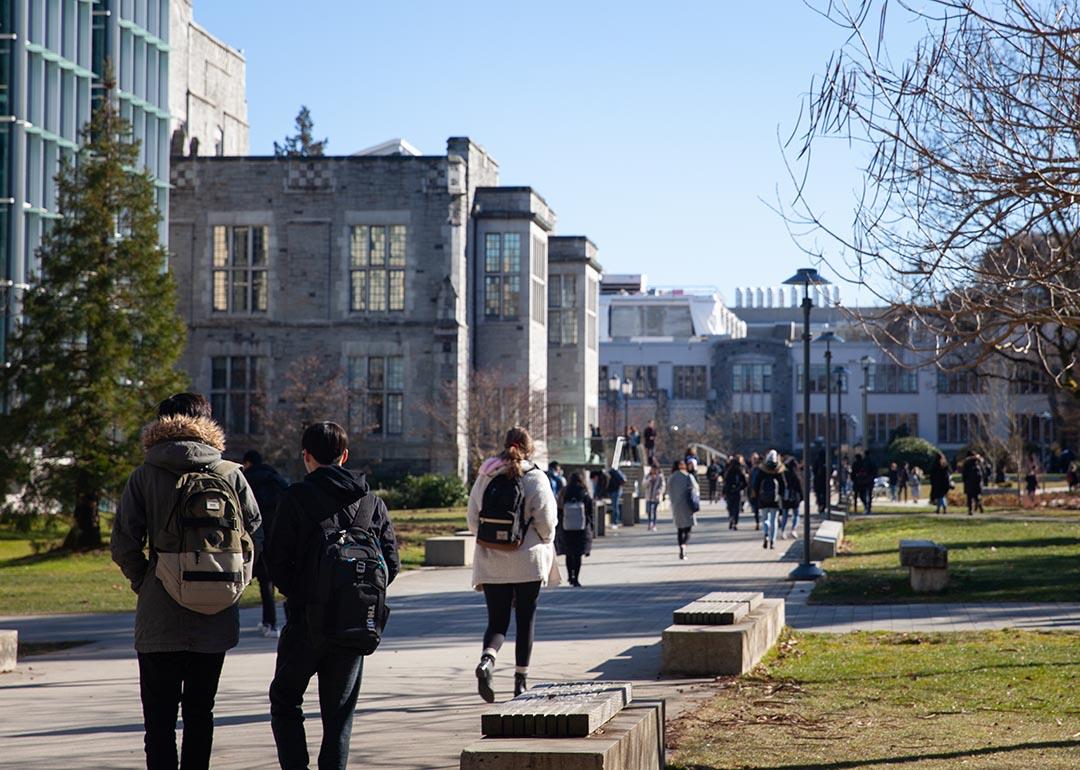
Just one-third of students say college is worth the cost
This story was produced by BestColleges and reviewed and distributed by Stacker Media.
Just one-third of students say college is worth the cost
College tuition continues to increase at a breakneck pace, with some schools charging over $100,000 a year in 2024-2025. When a degree is necessary for many high-paying jobs, is it also a luxury?
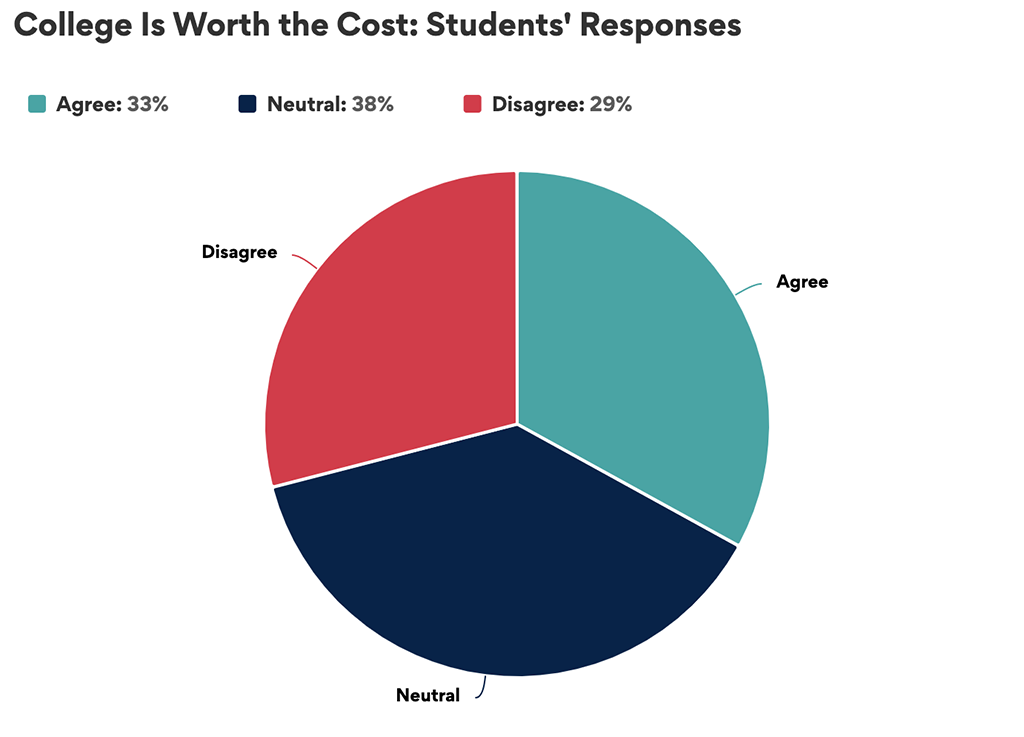
Of the 1,000 currently enrolled undergraduate and graduate students BestColleges surveyed, only one-third (33%) say college is worth the cost. Twenty-nine percent say it's not worth the cost, and 38% are on the fence.
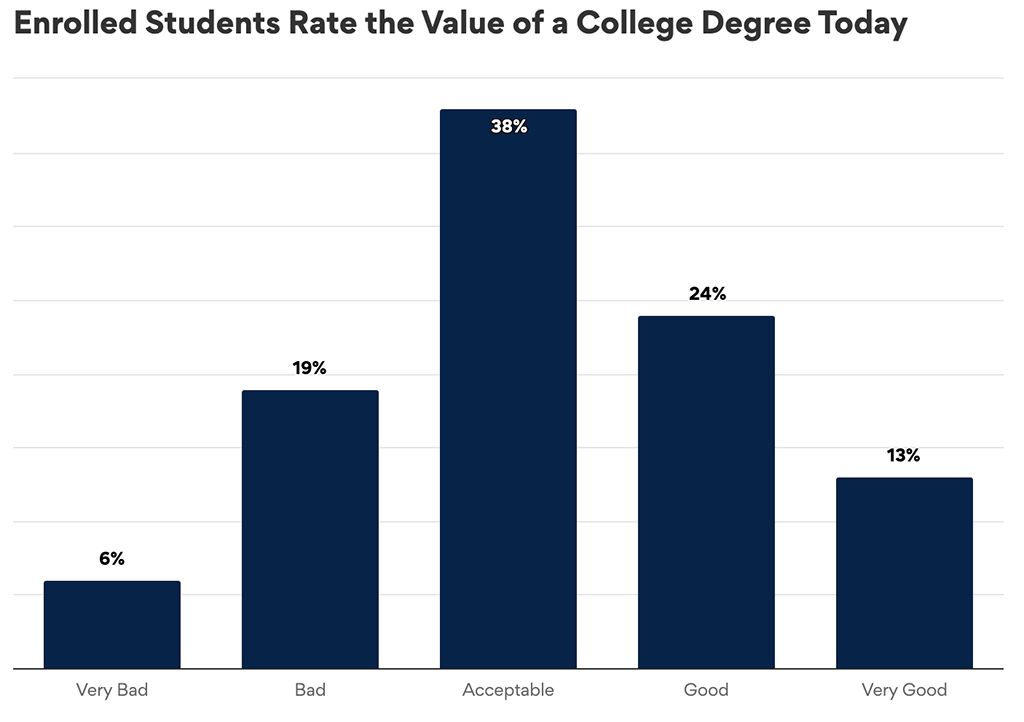
Additionally, while students are more likely than not to say the value of a college degree is at least acceptable, 1 in 4 (25%) calls the value of a college degree "bad" or "very bad."
Value of College Declining for Some Students
Students' faith in the value of a college degree appears to have declined in recent years. In a 2022 BestColleges survey, roughly half of current and prospective students (47%) said college was worth the cost.
Younger students are more likely to doubt the value of college. Just 30% of Gen Z students vs. 46% of millennials say college is worth it.
Online Students More Positive About College ROI
However, online students are more likely than their campus counterparts to say college is worth the cost (43% vs. 30%).
Online degrees can be affordable, flexible options that allow students to keep working while enrolled. In the past five years of tracking student satisfaction in BestColleges' Annual Online Education Trends Report, online students have increasingly reported a positive ROI from their degrees. In 2023, 97% of online students expected a positive ROI.
Is College for Everyone?
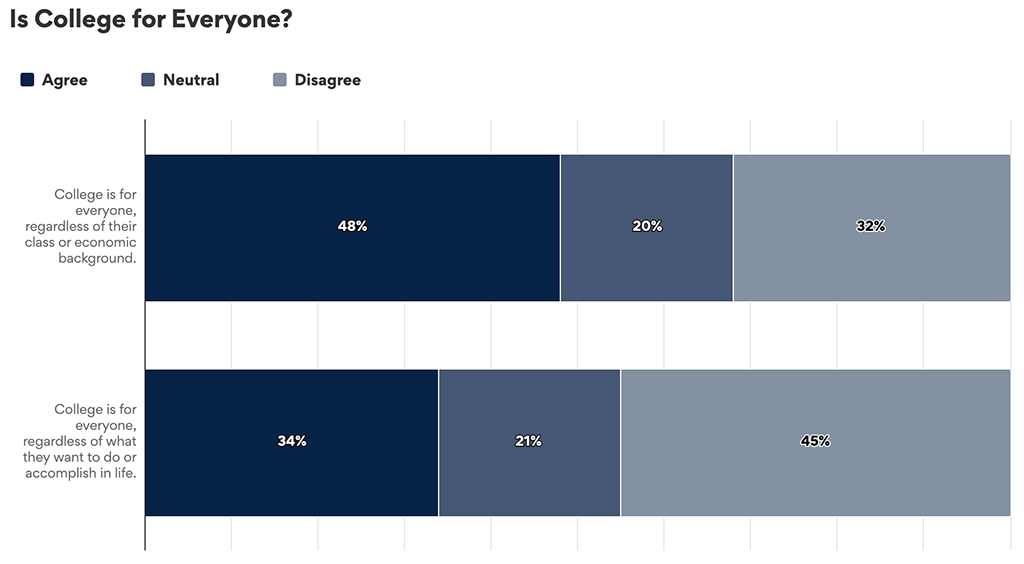
Just under half of students (48%) say college is for everyone, regardless of their class or economic background. About one-third of students (32%) disagree, and 20% are neutral.
Around 1 in 3 students (34%) say college is for everyone, regardless of what they want to do or accomplish in life. Nearly half (45%) disagree, and 21% are neutral.
Fewer Students Believe College is for Everyone Than in 2022
These findings represent a decline from 2022 polling, when 65% of current and prospective students said college was for everyone, regardless of their class or economic background (a 17 percentage point difference from 2024 results). In 2022, 56% said college was for everyone, regardless of what they want to do in life (a 22 percentage point difference from 2024).
Gen Z students are also less likely than millennials to say college is for everyone.
Only 45% of Gen Z students vs. 61% of millennials say college is for everyone, regardless of class or economic background. About one-third of Gen Z students (31%), compared to half of millennials (53%), say college is for everyone regardless of what they want to do in life.
Also, online students are more likely than on-campus students to believe college is for everyone: 54% of fully online students vs. 46% of fully on-campus students say college is for everyone regardless of class or economic background. Four in 10 fully online students vs. 31% of on-campus students say college is for everyone regardless of what they want to do or accomplish in life.
Humanities Majors Feel the Pain
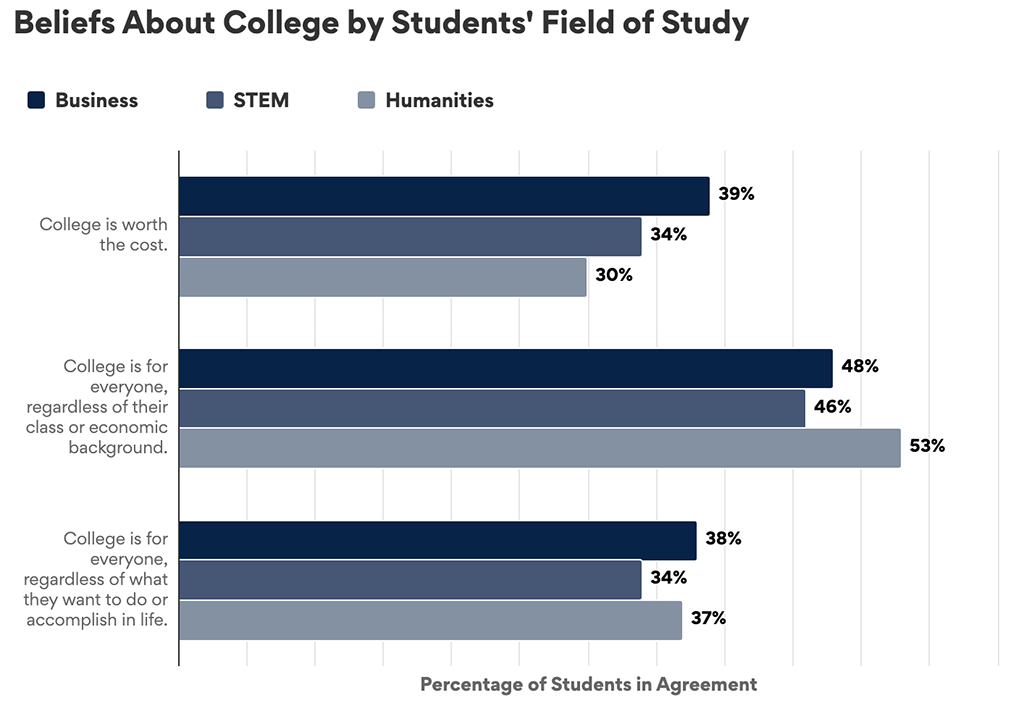
Humanities students generally express bleaker opinions about the cost of college but still believe it's for everyone.
These students are less likely to say college is worth the cost (30%) compared to STEM (34%) and business students (39%). However, humanities majors (53%) are also more likely than STEM majors (46%) and business majors (48%) to say that college is for everyone, regardless of their class or economic background.
Salary Expectations Play a Role in Satisfaction
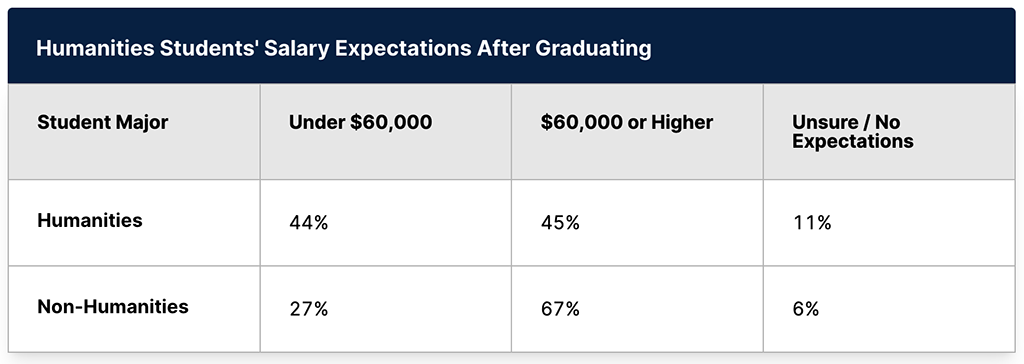
Humanities students may be less likely to believe college is worth the cost because they predict lower financial outcomes from their degrees.
These students are less likely than others to expect post-graduation salaries above $60,000 (45% vs. 67%). For reference, the National Association of Colleges and Employers reports that the average starting salary for new college graduates was $61,870 in 2022.
Students studying humanities were nearly twice as likely as other students to say they had no or uncertain expectations for their salary after graduation (11% vs. 6%).
Program Preparation Is Important in All Degree Programs
Additionally, humanities majors are the least likely to agree that their degree program is adequately preparing them to enter or advance in the workforce (54%), compared to STEM (66%) and business students (64%).
Humanities and liberal arts programs are often the first axed when colleges face budget pressures and dwindling enrollment.
It can be tempting to deny the value of these degrees — or any college degree — in light of tuition inflation and mounting national student loan debt. To ensure college is not a luxury, students' message is clear: Something has got to give.
Methodology
This survey was conducted from March 20-28, 2024, and was fielded by Pure Spectrum. Survey participants included 1,000 respondents nationwide who were currently enrolled in an on-campus (52%), online (16%), or hybrid (32%) undergraduate or graduate degree program. Respondents were 18-62 years of age, with the majority (77%) ages 18-24, and currently pursuing an associate, bachelor's, master's, doctoral, or professional degree. The respondents for the survey were screened by various quality checks, including systems like Relevant ID, and responses were manually reviewed to ensure consistency and accuracy.
In this report, STEM majors include biological and physical sciences, computer and information sciences and support services, engineering, health professions, mathematics, nursing, and statistics. Humanities include communication, journalism, and related programs; humanities and liberal arts (e.g., philosophy, religion, history, English, languages, arts); education; psychology, sociology, and social sciences; and criminal justice, law enforcement, fire science, and related protective services. Business majors included business, management, marketing, and related services.