
These are the best jobs of 2025, according to Indeed
This story was produced by Indeed and reviewed and distributed by Stacker.
These are the best jobs of 2025, according to Indeed
The job market continues to evolve rapidly, shaped by transformative technological breakthroughs, shifting economic conditions, and the ongoing demand for skilled professionals.
Whether you're exploring new opportunities or planning your career path, Indeed put together a list of the best jobs for 2025 to help you identify the high-demand roles offering the most promise in today's dynamic job market.
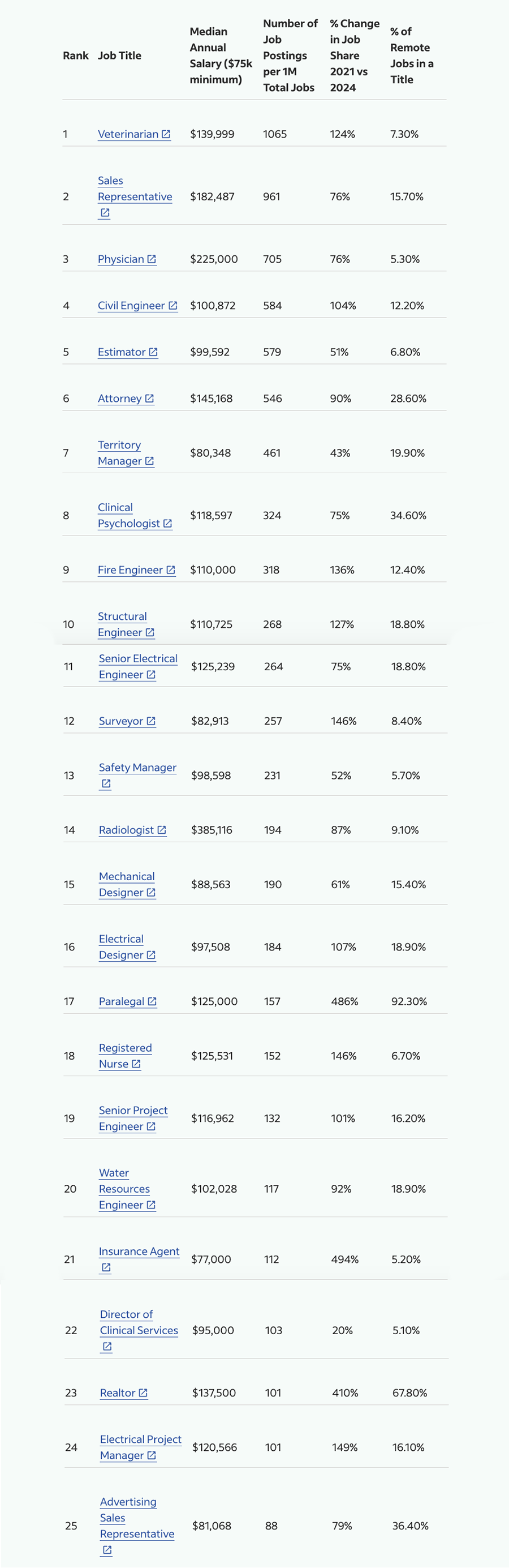
This list was compiled using a data-driven approach, focusing on roles that offer high salaries, sustained growth and flexibility. The methodology analyzes jobs on Indeed that meet three key criteria: a minimum salary of $75,000, at least 20% growth in postings over the past three years, and at least 5% of postings are remote or hybrid. These jobs are then ranked by their share of postings on Indeed.
Key Takeaways
- This year, health care and engineering endure as dominant sectors, reflecting society's continued need for wellbeing and innovation.
- Most jobs on this year's list of top jobs require specialized education and training.
- Soft skills and the ability to build human connections are valued in roles that don't require specialized education and training.
This Year's Top Job: Veterinarian
Job listings for veterinarians have surged 124% over the past three years, and the BLS projects the role will grow by an additional 19% over the next nine years. This is much faster than the average 4% expected growth for all other occupations.
With reports of younger generations increasingly opting to parent pets rather than children and a generally higher bar for the quality of life standards for pets, it's no surprise that demand for veterinarians is rising. And with three-quarters of U.S. households owning a pet, the love for furry companions is multi-generational, suggesting likely stability in the veterinarian sector for years to come.
The American Veterinary Medical Association notes, however, that the economy's strength directly affects how much consumers are willing to spend—and the veterinary industry is no exception.
With patterns in veterinary spending tied to major economic events, such as, most recently, stimulus packages during COVID-19, the demand for veterinary services during the last few years has been particularly elevated. As a result, several universities have announced plans to open veterinary programs to address the growing demand for vets. However, if all these schools are accredited, the supply of companion veterinarians may outpace pet-owning households in 10 years.
Why Health Care Jobs Are More Essential Than Ever
On the human side of health care, this year's top jobs include physician, clinical psychologist, radiologist, registered nurse, and director of clinical services. These positions show the sustained and ongoing need for health care professionals amid the changing demographic makeup of the U.S.
According to an analysis of data from the Bureau of Labor Statistics data, the health care sector has grown 8.2% in the last two years, more than double the rate of all other industries combined. The increased demand for health care professionals can be primarily attributed to an aging population for several reasons. By 2030, one out of every five Americans will be 65 or older, and as the U.S. population continues to age, older individuals tend to need increased care for chronic conditions, further fueling the demand for health care services.
The aging population also means many health care professionals are retiring. This has a dual impact: Not only does it shrink the active workforce, but it also reduces the pool of experienced professionals available to train the next generation of physicians, nurses, and other essential workers.
Personnel shortages are already evident across most of the health care roles on this year's list of top jobs, including clinical psychologists, physicians, nurses, and radiologists. Unlike in some industries, where advances in Generative AI could be deployed to help bridge worker gaps, many health care tasks require a human touch and cannot be easily outsourced, underscoring the continued stability and importance of the health care sector.
If you're interested in joining the health care industry, check out Indeed's Careers in Care hub for additional resources.
Building Tomorrow: The Engineering Jobs Shaping 2025 and Beyond
Engineering roles beyond the tech industry comprise five of this year's top 25 jobs, which is on pace with last year. There are many parallels between the health care and physical system engineering industries—shortages of engineers continue to drive demand, and aging infrastructure within the United States is accelerating that demand.
An analysis of the makeup of engineering in the U.S. found an ongoing mismatch of in-demand and available skills. Lack of sufficient supply in certain engineering specialties, including civil and electrical engineering, will result in unfilled positions over the next decade.
Shortages could further be exacerbated by the fact that engineering occupations are projected to grow faster than average, according to the BLS. Due to employment growth and the need to replace workers who leave their occupations permanently, about 195,000 openings are projected each year.
When Accounting for Salary, Health Care Leads the Pack
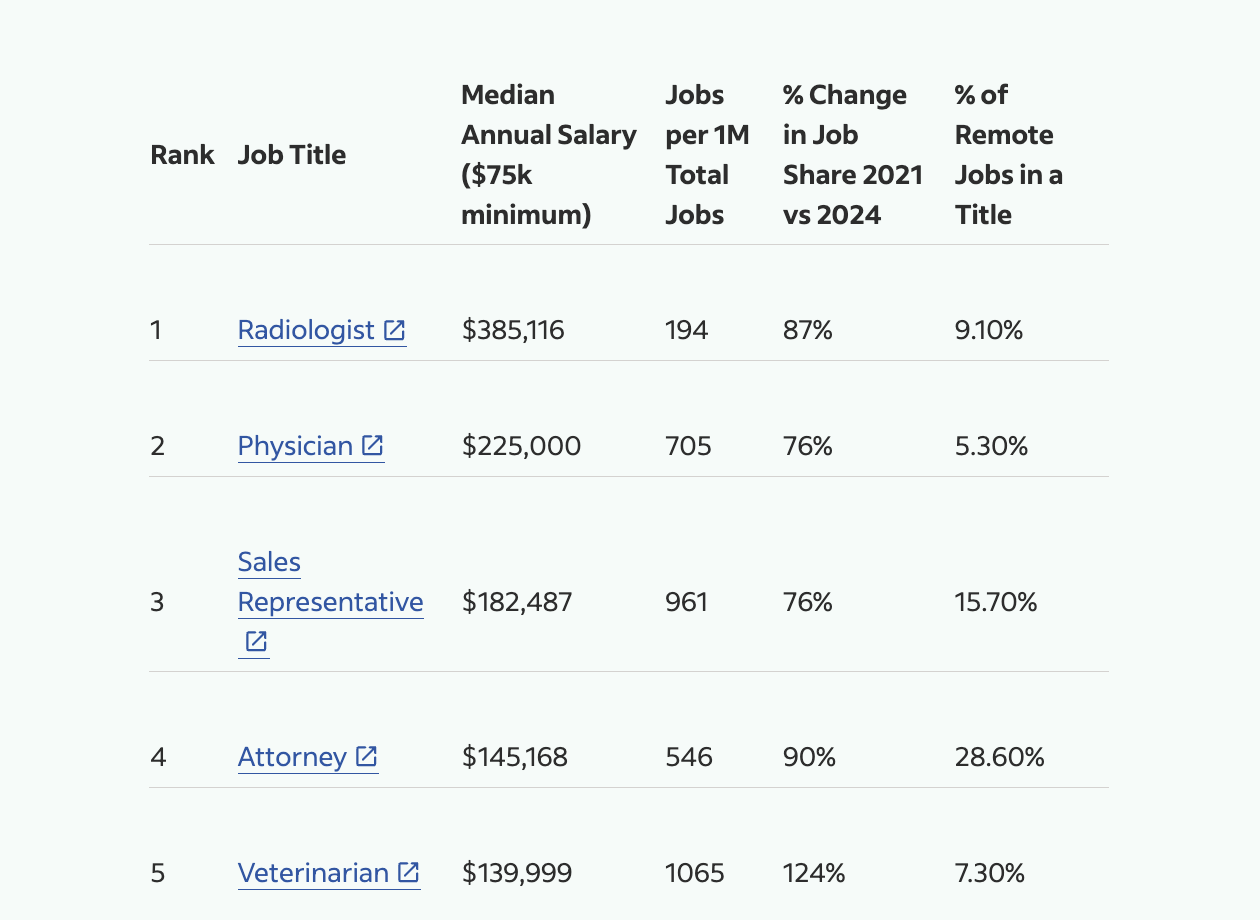
While health care and engineering roles are in high demand, it's no surprise health care is more lucrative. By arranging the jobs on this list by their median base salary, with the highest paying job at the top, there are three health care roles in the top five highest-paying jobs in this year's list.
Radiologist—a highly specialized role requiring over a decade of education—came in at number one by a significant margin.
High salaries and a history of stability make health care a highly attractive field, albeit with a high barrier to entry, especially for roles like radiology, which require a minimum of 13 years of school.
For job seekers looking to cash in on high-paying and fast-growing jobs without a long-term investment in education, the sales representative role might be something to consider, as many companies may consider applicants with a high school diploma and the right skill set.
Traditional Roles Are Among the Fastest-Growing
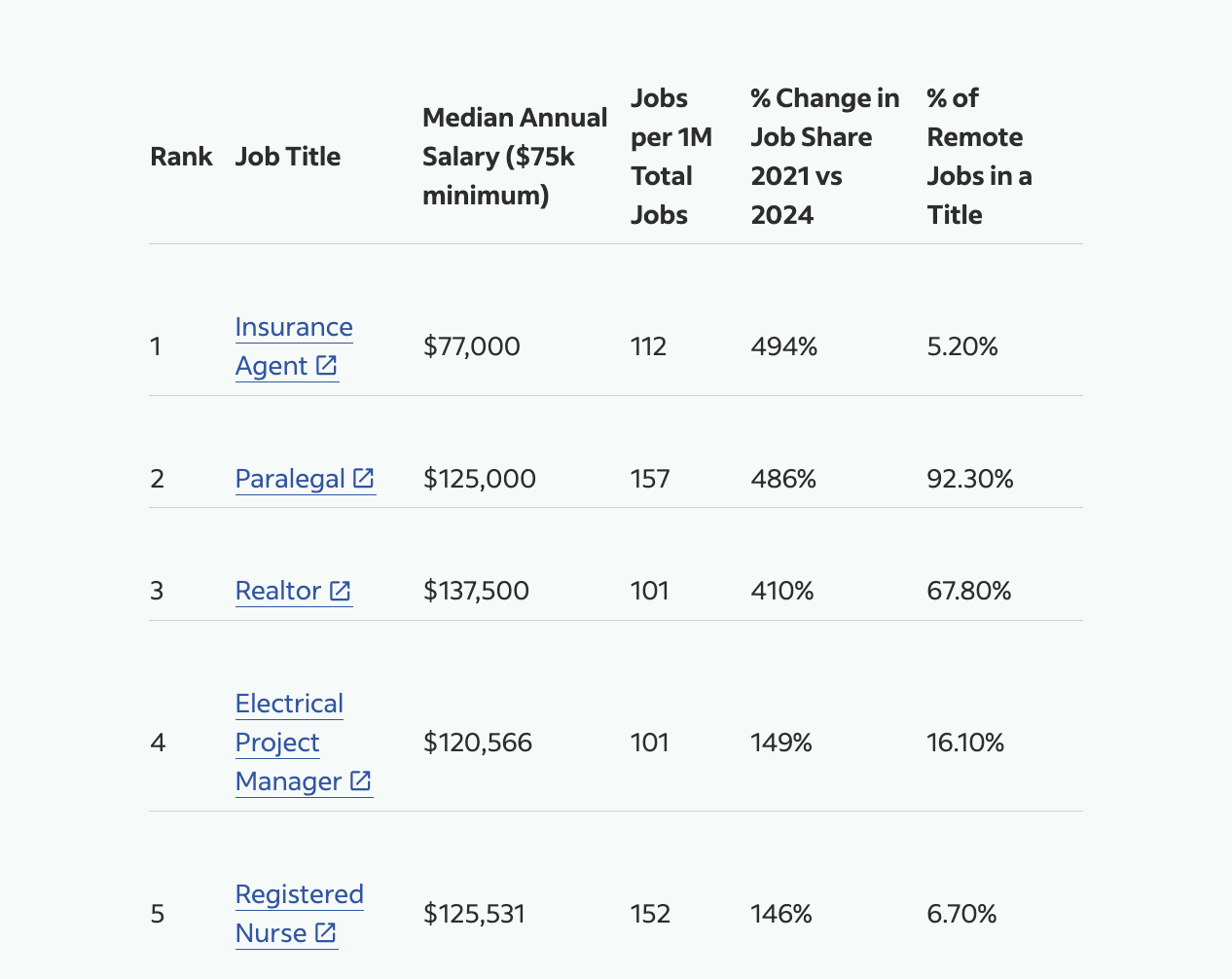
When it comes to the fastest-growing roles, however, the story isn't dominated by health care. Here are the top five roles with the highest growth in job postings from 2021 to 2024:
Jobs in insurance sales, law, and real estate are among the fastest growing this year. These professions have adapted to new demands while maintaining a legacy of stability and value.
The barrier to entry for most of these roles is relatively low—post-secondary education is not required to become an insurance agent, paralegal, or Realtor. Additionally, an expedited track is available for job seekers interested in becoming registered nurses.
Top 25 Jobs of 2025
Here's Indeed's comprehensive list of the top 25 jobs of 2025, with salary information. For the most up-to-date salaries click here.
1. Veterinarian
Median annual salary: $139,999
2. Sales representative
Median annual salary: $182,487
3. Physician
Median annual salary: $225,000
4. Civil engineer
Median annual salary: $100,872
5. Estimator
Median annual salary: $99,592
6. Attorney
Median annual salary: $145,168
7. Territory manager
Median annual salary: $80,348
8. Clinical psychologist
Median annual salary: $118,597
9. Fire engineer
Median annual salary: $110,000
10. Structural engineer
Median annual salary: $110,725
11. Senior Electrical Engineer
Median annual salary: $125,239
12. Surveyor
Median annual salary: $82,913
13. Safety manager
Median annual salary: $98,598
14. Radiologist
Median annual salary: $385,116
15. Mechanical designer
Median annual salary: $88,563
16. Electrical designer
Median annual salary: $97,508
17. Paralegal
Median annual salary: $125,000
18. Registered nurse
Median annual salary: $125,531
19. Senior project engineer
Median annual salary: $116,962
20. Water resources engineer
Median annual salary: $102,028
21. Insurance agent
Median annual salary: $77,000
22. Director of clinical services
Median annual salary: $95,000
23. Realtor
Median annual salary: $137,500
24. Electrical project manager
Median annual salary: $120,566
25. Advertising sales representative
Median annual salary: $ 81,068