Anti-hustle culture 2026: Gen Z's rebellion against burnout
Advancing your career used to mean working long hours, communicating formally, and following strict hierarchies. Baby boomers and Gen Xers placed a high value on loyalty, job stability, and climbing the corporate ladder. They followed clear and traditional career paths, prioritized titles, and often stayed with one company for many years. Overworking, sacrificing personal time, and pushing through burnout were just part of the hustle. The same has been true for many millennials.
Gen Z is changing the paradigm. By 2030, Gen Z will account for 30% of the workforce, and this new wave of workers is replacing the hustle culture with work-life balance, mental health, and flexibility.
Only 36% of Gen Z feel "very engaged" at work (13 points behind the rest of the U.S. workforce), and 91% have faced at least one mental health challenge or burnout. They now expect employers to step up and support them.
Upwork, an online marketplace for hiring skilled freelancers, explains anti-hustle culture and how Gen Z is reshaping the modern work ethic by rebelling against constant grind, avoiding burnout, and prioritizing their well-being.
What is the anti-hustle culture, and where did it come from?
The anti-hustle culture is a mindset that opposes the idea that success requires nonstop busyness and sacrifice, which can lead to burnout. This mindset promotes a more balanced approach to work by prioritizing mental health, self-care, wellness, work-life balance, and overall employee well-being over the constant hustle.
The anti-hustle culture didn't come out of nowhere. For decades, older generations believed in doing whatever it took to move up, including staying loyal to one company (the antithesis of today's side-hustle culture), working overtime, and putting career first. Now, younger workers, especially Gen Z, are challenging that model and redefining what success looks like.
Gen Z is looking for work that feels meaningful, offers flexibility, and supports their values and well-being. They’re working to live, not living to work, and for them, work-life balance often ranks as high as pay.
Social media trends
Recent trends like "Bare Minimum Monday" and "Lazy Girl Jobs" across podcasts and social media platforms like TikTok have helped fuel the anti-hustle culture.
Bare Minimum Monday encourages workers to start the week slowly by focusing only on essential tasks. The idea is to ease into Monday, reduce anxiety, and avoid burnout.
Lazy Girl Jobs, a term popularized by TikToker Gabrielle Judge, promotes low-stress, well-paying roles that offer flexibility, better work-life balance, and more job satisfaction, without glorifying constant productivity.
Generational shifts
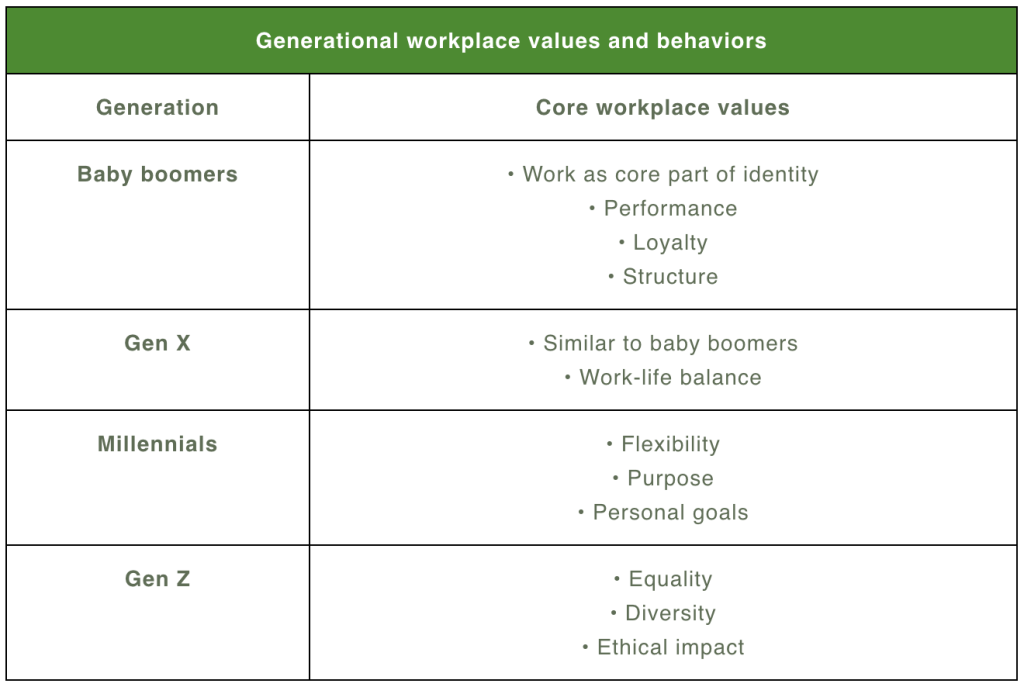
Generational views on work have shifted over time. Baby boomers saw work as a core part of their identity, prioritizing performance, loyalty, and rigid structures. Gen X held similar values but sought more balance between work and life. Millennials, shaped by the digital age, valued flexibility and leaned toward purpose-driven, goal-oriented careers.
Today, Gen Z is entering the workforce with different values, behaviors, and expectations. They prefer digital communication, prioritize equality and diversity, and care deeply about a company's ethical impact. Gen Z is also more likely to "quiet quit" if their needs aren't met, or to do only the bare minimum for their role while staying "under the radar." And when dissatisfaction grows, they're not afraid to quit without notice or ghost clients.
Why Gen Z rejects "rise and grind"
Gen Z is turning away from hustle culture for several reasons. They’ve entered the workforce during a time of major disruption, seen the impact of burnout firsthand, and are reevaluating what success should look like. Instead of glorifying nonstop work, they are prioritizing mental health, balance, and meaningful experiences that shape how they approach their careers today.
Mental health needs
Gen Z places emotional well-being above professional achievement. When work becomes overwhelming, they're more likely to step back and reset rather than push through at the expense of their health. According to Mental Health America, 71% of Gen Z workers in the U.S. report the lowest workplace health scores, a clear signal that mental health is a top priority.
Disillusionment with overwork
Gen Z has seen the fallout of hustle culture firsthand. They've watched older generations work long hours, suffer burnout, and still face layoffs or limited job security. These experiences have shown that hard work doesn't always lead to stability or fulfillment, prompting Gen Z to take a more relaxed, intentional approach to work.
Different perceptions of success
Success isn't just about money for Gen Z. It also means finding meaning and balance. In a recent Deloitte survey, 25% of Gen Z respondents chose their jobs based on work-life balance, while only 19% prioritized salary. For Gen Z, personal fulfillment now ranks nearly as high as financial gain.
Remote work realities
The remote-work strategies forced by the COVID-19 pandemic proved that productivity doesn't require being in the office. Gen Z entered the workforce during this shift and quickly embraced the efficiency, flexibility, and reduced stress that remote work offers. They're now less willing to accept rigid schedules and unnecessary office time.
How Gen Z's work philosophy improves quality, not just comfort
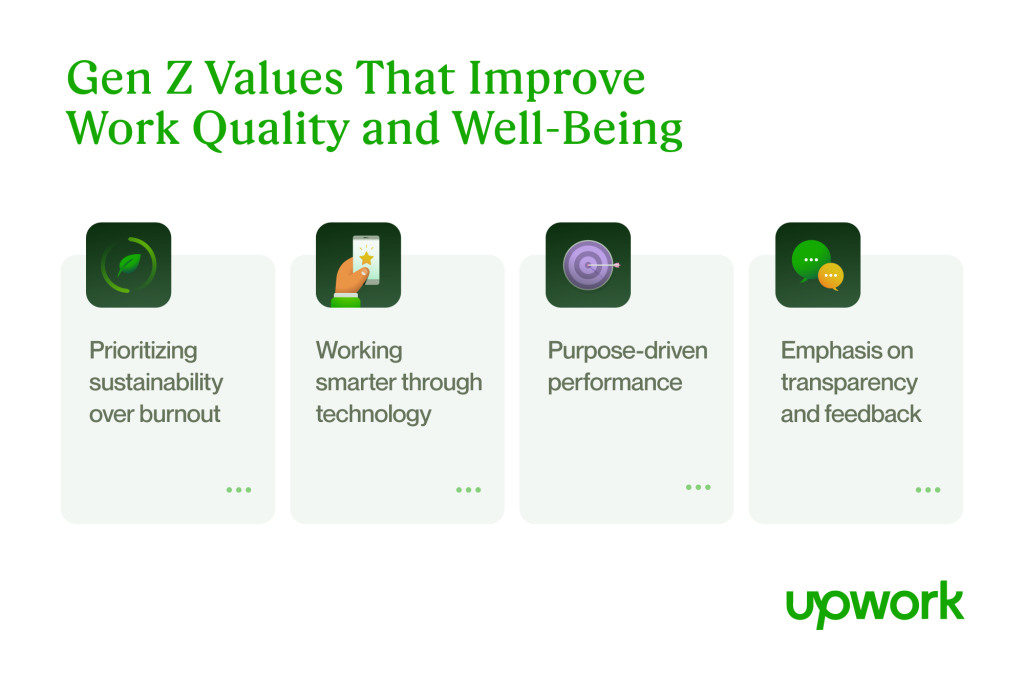
Gen Z isn't rejecting hard work but rather redefining it on their own terms, setting clear boundaries and choosing roles that promote their well-being. They're focused on sustainable, high-quality performance that fits in their personal life, not nonstop hustle. This shift is about working smarter, and they're doing it in a number of ways.
Prioritizing sustainability over burnout
Gen Z is moving away from the hustle mentality that often leads to burnout. Instead of chasing short-term wins through overwork, they focus on maintaining steady, sustainable performance. This approach reduces fatigue and helps them consistently deliver high-quality results within healthy boundaries.
Working smarter through technology
Rather than overworking, Gen Z uses technology to streamline tasks and boost efficiency. Automation tools, digital collaboration platforms, and AI integration help them achieve better outcomes with less wasted time, proving that productivity doesn't have to come from overextension.
Purpose-driven performance
For Gen Z, meaningful work drives motivation. They perform best in roles that align with their values and allow them to make a real impact. In fact, 89% say a sense of purpose is key to job satisfaction.
Emphasis on transparency and feedback
Gen Z values regular, honest feedback over traditional performance reviews. They prefer ongoing check-ins that allow them to adjust quickly, stay aligned with expectations, and continuously improve their work, resulting in higher quality and fewer missteps.
How businesses can collaborate effectively with anti-hustle freelancers
Working with Gen Z freelancers means partnering with talent that values flexibility, mental health, and meaningful work, and that mindset often leads to better creativity, stronger communication, and higher-quality results. These professionals prioritize efficiency over burnout and bring fresh perspectives that can elevate your projects.
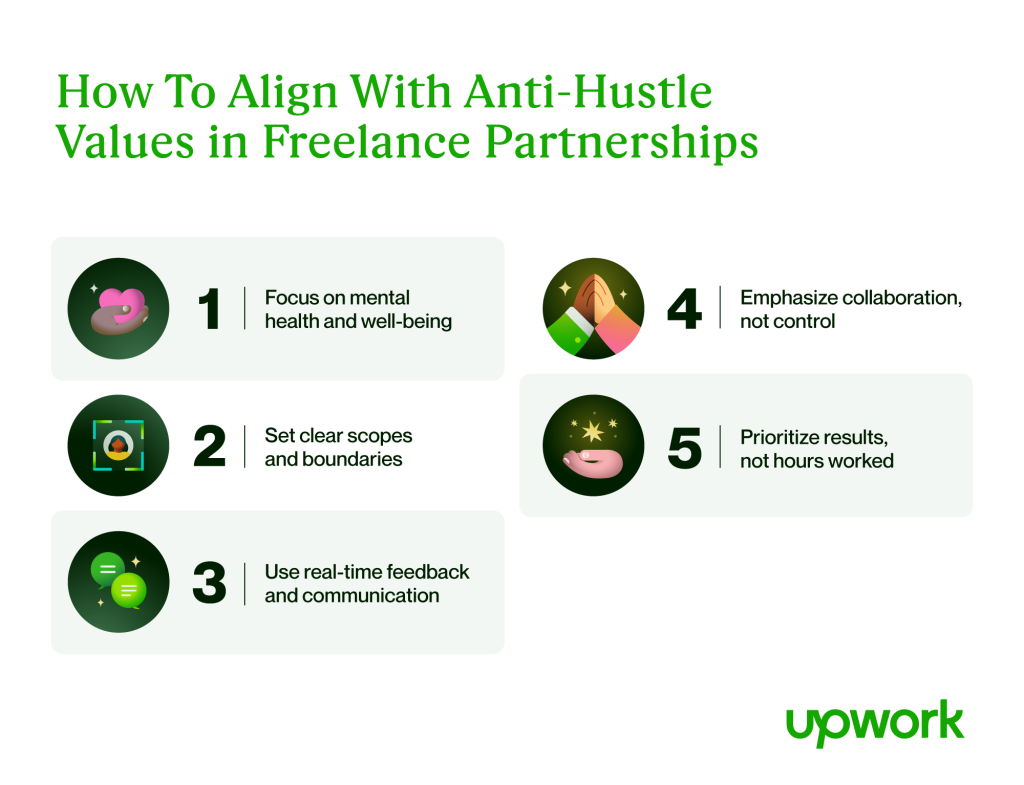
Tip 1: Focus on mental health and well-being
Gen Z freelancers place a high priority on mental and physical health. Foster a healthy working relationship by:
- Setting realistic deadlines and clear workloads. Avoid last-minute assignments or vague project scopes. For example, instead of saying "ASAP," agree on specific due dates and outline exactly what deliverables are expected.
- Encouraging open communication about availability and stress levels. Ask freelancers to share their preferred working hours or if they're managing multiple projects. Check in periodically by asking, "Is this pace working for you?" or "Do you have the bandwidth for an additional task?"
- Expressing appreciation for their contributions. Acknowledge good work with quick messages like "Great job on this," or "Thanks for the quick turnaround, much appreciated." Positive feedback goes a long way in motivating freelancers and building trust.
Tip 2: Set clear scopes and boundaries
Anti-hustle freelancers thrive with structure. Avoid confusion and unnecessary stress by:
- Clearly defining project deliverables, timelines, and expectations. Specify what's needed, when it's due, and what success looks like. For example, say "a 1,000-word blog post on X topic by Thursday at 3 p.m.," rather than "a draft sometime next week."
- Breaking down projects into milestones. Dividing large projects into smaller, trackable tasks helps freelancers stay organized and focused. This approach also allows for regular check-ins and feedback without overwhelming them.
- Agreeing on working hours and response times. Ask freelancers for their preferred work hours and clarify yours. Note time zones as well. For example, "Let me know your usual availability, I'm online weekdays 10-6 EST and try to respond within a day."
- Respecting off-hours and avoiding unnecessary pings. Don't send messages late at night or over the weekend unless it's an emergency or pre-agreed upon. If you do message outside their hours, mention when a reply is needed and that no rush is expected.
- Sticking to the agreed scope. Don't add extra tasks without discussing timeline or rate adjustments. Scope creep can lead to stress and frustration. If something changes, ask: "Are you available for an additional task this week? I'm happy to adjust the milestone accordingly."
Tip 3: Use real-time feedback and communication
Gen Z values ongoing feedback, not just end-of-project evaluations. Improve collaboration by:
- Giving quick and actionable feedback. Respond to progress updates with clear, specific input. For example, if you were working with a freelance copywriter, say "Let's tighten the intro to grab attention faster" rather than "This needs work."
- Using real-time communication tools. Platforms like Slack, Google Chat, or Microsoft Teams help streamline conversations. Creating a shared feedback loop. Set regular check-in points to review progress and address issues early. A simple mid-project review or weekly sync can help prevent misalignment.
- Keeping everything in one place. Use shared tools like Google Docs, Notion, or Trello to organize briefs, timelines, and revisions. This minimizes back-and-forth and helps freelancers stay focused.
Tip 4: Emphasize collaboration, not control
Micromanagement undermines trust and limits creativity. Collaborate better with anti-hustle freelancers by:
- Aligning on shared goals. Instead of detailing how every step should be done, explain what success looks like. For example, if you're collaborating with a freelance writer, say "I'd like this article to help beginners understand X topic in under five minutes" rather than providing a rigid outline.
- Involving freelancers in key decisions. Ask for their input on timelines or format. For instance, "Does this delivery date work for you?" or "Would you prefer a Google Doc or Notion setup for tracking edits?"
- Using tools to guide, not control. Manage tasks with platforms like Asana, Monday.com, or Jira to stay updated without micromanaging. Set deadlines and priorities, then let the freelancer handle execution in their own workflow.
Tip 5: Prioritize results, not hours worked
Gen Z doesn't equate long hours with high performance. Keep them motivated by:
- Measuring success by quality and impact. Focus on deliverables, deadlines, and KPIs rather than hours logged. For example, assess a blog post on clarity, SEO performance, and delivery date, instead of the hours it took to write.
- Setting clear, outcome-based milestones. Break projects into measurable stages, such as "submit draft one by Friday" or "revise visuals based on feedback by next Tuesday." This keeps expectations transparent and progress easy to track.
- Allowing flexible work styles. Let freelancers choose how and when they work, as long as the final output meets agreed standards. Whether they work in the morning or late at night shouldn't matter if the results are strong.
Anti-hustle doesn't mean anti-ambition
Gen Z is redefining traditional workplace values by prioritizing work-life balance and mental health instead of nonstop hustling. This shift is not about laziness. These workers are capable, motivated, and able to reach their goals while protecting their well-being and avoiding burnout.
Building successful businesses and increasing productivity among Gen Z starts with respecting their mental health, supporting healthy boundaries, and encouraging open communication and continuous feedback.
FAQ
Why is Gen Z rejecting the traditional hustle culture?
Gen Z is rejecting the hustle culture due to rising mental health awareness, economic instability, and a belief that work shouldn't come at the cost of well-being. They've seen that overworking doesn't guarantee success or security and prefer flexible, purpose-driven work that fits into their lives.
How do anti-hustle principles affect productivity?
Anti-hustle principles improve productivity by prioritizing mental health, work-life balance, flexibility, and autonomy. When workers feel supported and mentally well, they're more focused, engaged, and motivated. Clear boundaries help prevent burnout and frustration, leading to steady, high-quality performance over time.
Is anti-hustle the same as quiet quitting?
No. Anti-hustle is a conscious choice to prioritize mental health, balance, and meaningful work; it's about working smarter, not less. Quiet quitting, on the other hand, is when someone does only the bare minimum because they feel disengaged or undervalued in their role. Anti-hustle aims to improve work quality, not avoid it.
Upwork is not affiliated with and does not sponsor or endorse any of the tools or services discussed in this article. These tools and services are provided only as potential options, and each reader and company should take the time needed to adequately analyze and determine the tools or services that would best fit their specific needs and situation.
Any individuals mentioned are referenced based on publicly available information at the time of writing. Upwork does not endorse or maintain an ongoing affiliation with them.
This story was produced by Upwork and reviewed and distributed by Stacker.