Side hustles and skills: How today’s college students are redefining success beyond the classroom
Between their classes, jobs, side hustles, hobbies, and other on-campus or extracurricular activities, today’s college students face unprecedented demands on their time and energy — a pressure that only grows during finals season. Yet despite managing these multiple commitments, this generation continues to battle negative perceptions about their work ethic and potential.
Quizlet, the global learning platform serving millions of students, recently conducted the “Modern Student Experience” survey to examine how Gen Z college students balance their various responsibilities and what drives their decisions about time and priorities. The research surveyed 2,000 U.S. respondents between ages 18 and 28, with half currently enrolled in college and half having graduated within the past five years.
The findings of the report reveal a generation that defies common stereotypes, showing high levels of ambition, strategic thinking about their futures, and a willingness to make significant sacrifices for professional success. Rather than the unfocused, social media-obsessed demographic often portrayed in popular culture, the data highlight a generation who prioritizes skill-building, professional development and meaningful career preparation.
Students Are Stretched Thinner Than Ever
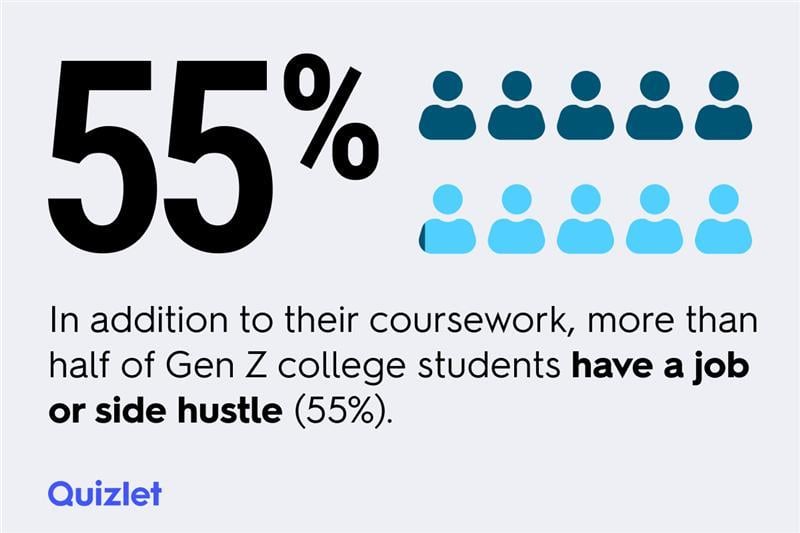
The survey reveals that modern college students are managing unprecedented levels of responsibility across multiple areas of their lives. More than half of Gen Z college students maintain a job or side hustle alongside their studies (55%). Among students participating in on-campus organizations — including honors societies, sports teams, Greek life and other groups — 58% are involved in two or more organizations.
Beyond formal commitments, Gen Z students actively pursue skill development in areas their coursework may not address. Nearly half (45%) focus on learning practical life skills such as cooking, budgeting and time management, while 44% work to develop social and interpersonal skills including leadership, teamwork and communication.
These multiple commitments create a generation that has learned to manage complex schedules, prioritize competing demands, and develop time management skills that may serve them well in future career environments.
Side Hustles Offer More Value Than Some Classes
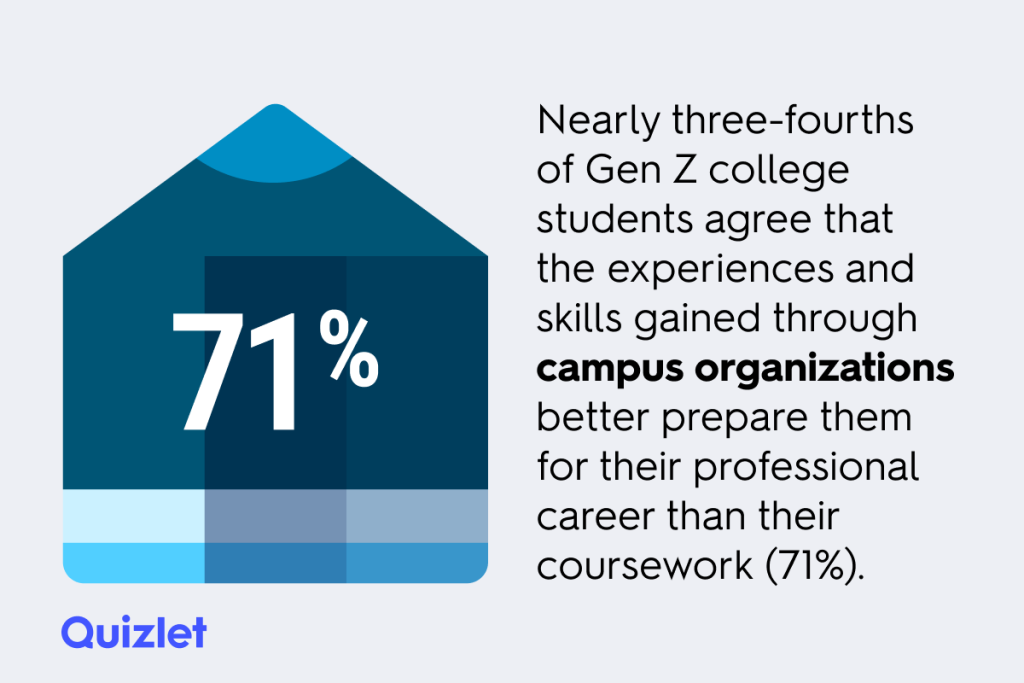
Rather than viewing these responsibilities as distractions from education, students appear to see them as complementary to their academic goals. In fact, the survey data reveals a striking disconnect between traditional academic structures and what students perceive as most valuable for their career preparation. Nearly three-quarters of Gen Z college students involved in campus organizations (71%) believe the experiences and skills gained through these activities better prepare them for their professional career than their coursework.
This finding suggests students are making strategic calculations about where to invest their time and energy. While maintaining academic performance remains important, they’re recognizing that hands-on experiences, leadership opportunities and practical skill development may provide more tangible career benefits than some classroom learning.
The emphasis on nonacademic experiences aligns with Gen Z’s vision for the future of work, which prioritizes work-life balance and meaningful professional development. When asked about changes they hope to make in the workforce, 20% of respondents identified better work-life balance as their top priority, followed by higher pay or pay transparency (15%) and increased opportunities for career growth (13%).
This perspective on work-life balance represents a significant shift from previous generations’ approaches to career building. Instead of simply accepting traditional models of professional advancement that may require sacrificing personal time and well-being, Gen Z appears committed to creating sustainable career paths that align with their values and lifestyle goals.
Their preference for experiential learning and practical skill development also reflects an understanding that the modern workplace rewards adaptability, collaboration and real-world problem-solving abilities—qualities that may be better developed through internships, leadership roles and project-based work than through traditional lecture-based courses.
Students Are More Ambitious Than Older Generations Assume
Contrary to stereotypes about Gen Z’s priorities and work ethic, the survey reveals a generation with strong professional ambitions and strategic decision-making abilities. Two-thirds of Gen Z students (64%) would prioritize a professional opportunity over a social activity when faced with competing demands, demonstrating their commitment to career advancement even when it requires personal sacrifices.
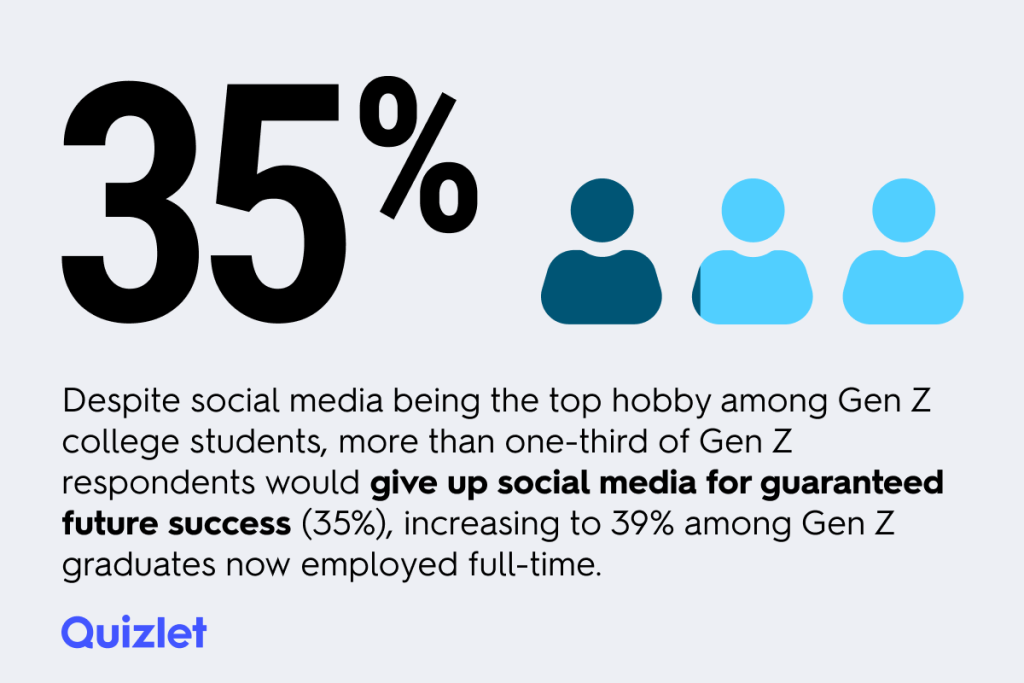
Perhaps most surprisingly, despite social media ranking as the top hobby among Gen Z college students, more than one-third (35%) would give up social media entirely for guaranteed future success. This finding directly challenges assumptions about this generation’s relationship with technology and social platforms, suggesting they view these tools as optional rather than essential to their identity or well-being.
These choices reflect a level of strategic thinking and long-term planning that contradicts common narratives about Gen Z being impulsive, instant-gratification-focused, or unable to delay rewards for future benefits. Instead, the data shows students are willing to make significant lifestyle changes and social sacrifices to achieve their professional goals.
The willingness to prioritize professional development over social activities also suggests this generation may approach networking and relationship-building differently than their predecessors. Rather than viewing social connections as separate from professional advancement, they may be more likely to seek opportunities that combine social engagement with career development, such as professional organizations, industry events or skill-building workshops.
This ambitious mindset, combined with their experience managing multiple responsibilities and their focus on practical skill development, positions Gen Z as a generation that may bring valuable perspectives and capabilities to the workforce—if employers can recognize and leverage these strengths rather than focusing on generational stereotypes.
Methodology
Quizlet partnered with global research and communications firm Allison Worldwide, whose Performance+ Intelligence team surveyed 2,000 U.S. respondents between the ages of 18 and 28. Half of the respondents (1,000 individuals) are students currently enrolled in college, and half (1,000 individuals) have graduated from college within the last five years and are now working full time. The survey was fielded using Forsta and the panel was sourced from RepData. Fielding took place in August and September 2025.
This story was produced by Quizlet and reviewed and distributed by Stacker.