The 2019 United Nations Intergovernmental Panel on Climate Change (IPCC) report takes an in-depth look at how climate change is affecting our land—and how land use impacts the climate. On the whole, the news is not positive. The report detailed the negative effects that climate change is having around the world in the form of increasing heat waves, droughts, desertification, and food insecurity.
"New knowledge shows an increase in risks from dryland water scarcity, fire damage, permafrost degradation, and food system instability, even for global warming of around 1.5 degrees Celsius," said Valérie Masson-Delmotte, co-chair of IPCC Working Group I.
A target of 1.5 degrees Celsius of warming is optimistic. In the Paris Climate Accords, which the United States backed out of under President Donald Trump, the goal was to keep warming below 2 degrees Celsius; globally, we are not even on track to do that.
The increased risks that Masson-Delmotte mentions are already visible in the United States. There are more fires across the West, food system instability across the Midwest, increased water scarcity in the Southwest, and a growing rate of extreme weather events taking place all over.
One of the biggest challenges when looking at the impacts of climate change is that it is often not possible to directly connect it to a specific hurricane, flood, drought, or fire. But while several elements go into a specific weather event, we are undoubtedly living through an unprecedented number of "1,000-year storms," extreme heat waves, and droughts.
Stacker compiled a gallery of 50 ways climate change is altering our 50 states by studying state and federal reports, peer-reviewed research papers, and trusted news articles. Of course, each state is experiencing many impacts of climate change, and often all at once. It's not all terrible news, however: Many of these states are also fighting back against the negative impacts of climate change through actions such as improved agricultural practices, greener buildings, and pledging to rely 100% on clean energy.
You may also like: Dramatic satellite observations that show the true scale of Arctic change
You may also like: 50 of the greatest archaeological discoveries of all time
1 / 50
Alabama: $1 billion in storm damage
2 / 50
Alaska: 2.4 million acres consumed in wildfires
3 / 50
Arizona: Average temperature has risen 3.2 degrees Fahrenheit
4 / 50
Arkansas: Winter tornadoes becoming more common
According to an April 2019 report by the American Meteorological Society, Arkansas' average temperature has risen by 2 degrees Fahrenheit since 1970, and winter tornadoes are becoming more common. To lessen the impacts of climate change, Fayetteville has pledged to move to 100% clean energy by 2050.
5 / 50
California: Deadly wildfires
6 / 50
Colorado: More spruce beetle outbreaks
A May 2019 study from Colorado State University found spruce beetle outbreaks could become more frequent in the Rocky Mountains if climate projections hold. Spruce beetles kill trees, and researchers say that even an increase of just 1.8 degrees Fahrenheit could extend the beetles' flight season from weeks to months.
7 / 50
Connecticut: Coast warming four times faster than world's oceans
8 / 50
Delaware: Increased flooding danger
9 / 50
Florida: 365 days of flooding per year in Miami by 2070
10 / 50
Georgia: Increase of heat-related deaths
11 / 50
Hawaii: Waikiki Beach in danger of going underwater
12 / 50
Idaho: 110% increase in droughts by 2050
Idaho is projected to see a 110% increase in droughts by 2050 due to climate change. This will heavily impact the production of potatoes for which Idaho is famous. The state has been late to acknowledge climate change as a problem, but after two decades of ignoring it, lawmakers have finally agreed that there is a need for more data.
13 / 50
Illinois: Average spring temperatures increased by 2 degrees Fahrenheit
In Illinois, the average annual temperature has increased by about 1 degree Fahrenheit since the beginning of the 20th century, with average spring temperatures increasing by about 2 degrees Fahrenheit, according to the NOAA National Centers for Environmental Information State Climate Report, published in 2017. The state's governor signed an executive order this past January to join the United States Climate Alliance to help reduce Illinois' impact on global emissions.
14 / 50
Indiana: More days with temperatures above 95 degrees Fahrenheit each year
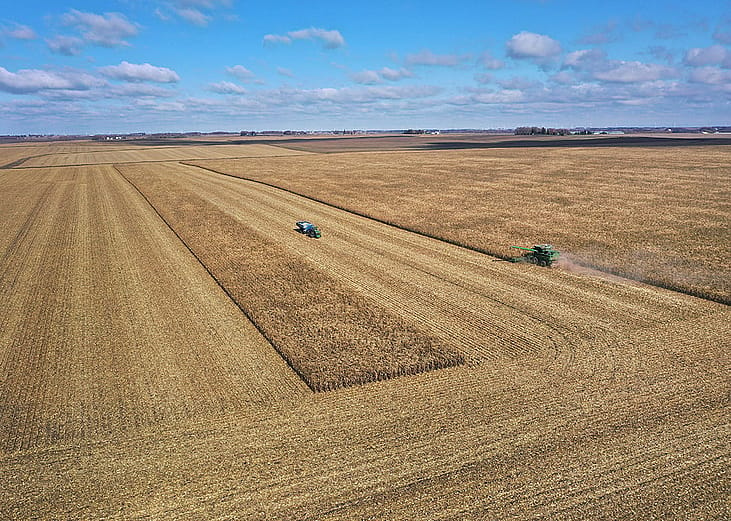
Increasingly hot summers are likely to reduce corn and soybean yields in Indiana. In 70 years, the Environmental Protection Agency estimates that much of Indiana will have between five and 15 more days with temperatures above 95 degrees Fahrenheit each year. To deal with these impacts on agriculture, farmers will have to adjust by planting different varieties of corn and investing in improved ventilation and cooling pads for livestock.
15 / 50
Iowa: Increase of soil erosion and nutrient runoff
16 / 50
Kansas: Increase of armadillos
Even subtle changes to average temperatures make climates more hospitable to certain species and less to others. These changes can reduce biodiversity in various parts of the world. In Kansas, a warming climate has meant an influx of an unlikely mammal: the armadillo.
Armadillos are adept diggers who find their food in the ground. They cannot live in places inhospitable to digging, such as areas in the north that experience prolonged freezing temperatures, because they don't hibernate and can't go more than two weeks without eating. As average temperatures rise in Kansas, there has been a reduction in consecutive days below freezing, allowing armadillos to travel further north than ever before (there have even been armadillo sightings in Nebraska and Illinois).
Biologists from the Kansas Department of Wildlife, Parks, and Tourism have spent decades tracking roadkill to monitor the populations of raccoons and beavers. But in 1986, they started tracking armadillos, too; with marked increases of that population recorded since the early 2000s. Sightings of armadillos in Kansas go back to the 1940s, to be sure, but were counted as anomalies. Their migration to Kansas is considered natural by biologists, meaning their arrival and the growing population there doesn't brand armadillos as invasive species. It's too soon to tell how the influx of armadillos will affect other species throughout Kansas and other northern states.
Climate change in Kansas is also affecting what crops get grown: Farmers have been handling less available water by experimenting with crops like cotton.
17 / 50
Kentucky: Increase in insect and disease damage to forests
18 / 50
Louisiana: Most flood-prone state
Louisiana is the most flood-prone state in the United States, and will likely continue to be heavily impacted by floods due to rising sea levels caused by climate change. This has led the state to develop the LA SAFE program, which addresses climate migration, ensures escape routes during floods, protects coastal communities and diversifies the economy.
19 / 50
Maine: Gulf of Maine has warmed by 2.3 degrees Fahrenheit
20 / 50
Maryland: Shorter winters and more pests
21 / 50
Massachusetts: Increase in number high-tide flooding days
22 / 50
Michigan: Lake Superior heating up
Michigan's Lake Superior, the coldest of the Great Lakes, is heating up by an average of 2 degrees Fahrenheit per decade, making it one of the world's fastest-warming lakes. This will probably make the lake more hospitable to invasive species, and scientists already believe that recent cyanobacterial blooms on the lake are tied, at least in part, to these warmer temperatures.
23 / 50
Minnesota: Voyageurs National Park will get hotter
Temperatures are projected to rise by 15 degrees Fahrenheit in Minnesota's Voyageurs National Park by 2100, according to data from Climate Central. While this could actually make the park more hospitable to many bird species, the state's iconic common loon may find the climate there less suitable; other species, such as red-breasted mergansers, hairy woodpeckers, and gray jays may be driven out altogether.
24 / 50
Mississippi: Increase in flooding
25 / 50
Missouri: More mosquitoes and West Nile Virus
26 / 50
Montana: Declines in revenue for outdoor recreation
The outdoor recreation industry in Montana could suffer heavily due to climate change. According to the Northern Great Plains chapter of the Fourth National Climate Assessment, a decrease of snowfall in western Montana could shrink the winter sports season by 20 to 90% by 2090. In addition, warming water could reduce the value of cold-water fishing by $25 to $66 million by the end of the century.
27 / 50
Nebraska: Longer and more severe allergy seasons
Increasing temperatures due to climate change may increase the length and severity of the pollen season for allergy sufferers in Nebraska. In Omaha, for example, the ragweed season has grown 10 days longer than it was in 1995 because the first frost in the fall comes later.
28 / 50
Nevada: Loss of snowpack
Nevada has seen a decline in snowpack since the 1950s because of climate change's warming temperatures. The loss has led to decreased precipitation falling as snow and more snow melting in the winter. This could threaten certain species as the tree line climbs to higher altitudes, encroaching on mountaintop habitats.
29 / 50
New Hampshire: Longer tick seasons
Warmer winters in New Hampshire could lead to an increase in tick-borne illnesses like Lyme disease. The ticks that spread Lyme are active when temperatures are above 45 degrees Fahrenheit, so warmer winters will lengthen the season in which people could be exposed to infected ticks.
30 / 50
New Jersey: Warming twice as fast as the national average
31 / 50
New Mexico: More vulnerable to pests
Warmer and drier conditions due to climate change have made New Mexico's forests more vulnerable to pests, such as bark beetles, which have infested 200,000 acres in the state. Many of these pests die off in the cold temperatures of winter, and as winters grow milder, more of these pests can exist year-round without seasonal population loss.
32 / 50
New York: Risk of extreme heat-related deaths in New York City
New York City is projected to face rising annual temperatures of up to 5.5 degrees Fahrenheit. This presents a special risk for people living in old buildings that were constructed with heat-trapping materials. To minimize the number of heat-related deaths in the city, the New York City Council passed the Climate Mobilization Act, which includes a new law requiring real estate owners to comply with stricter emissions standards.
33 / 50
North Carolina: More extreme precipitation events
Climate change is increasing the magnitude precipitation events like hurricanes, tropical storms, and floods, in North Carolina, according to a study from the University of North Carolina at Chapel Hill. Using storm data dating back to 1898, the study found that six of the seven highest precipitation events recorded have occurred within the last two decades.
34 / 50
North Dakota: Increase in heavy rainstorms
Climate change is causing an increase in heavy storms in North Dakota. Over the last half century, the amount of precipitation during the four wettest days of the year has increased by roughly 15% in the Great Plains area, including North Dakota. In the coming decades, heavy downpours are likely to account for a larger percentage of precipitation in the state.
35 / 50
Ohio: Increased precipitation threatens agriculture
36 / 50
Oklahoma: Not enough water
Rising temperatures will lead to more drought as rainfall decreases and evaporation increases. Farmers in Oklahoma need water to irrigate their crops, as 16% of the state's farmland is irrigated, but the High Plains Aquifer System is becoming depleted. Since the 1950s, there has been a 25% drop in the amount of water stored in the aquifer in parts of the Panhandle area.
37 / 50
Oregon: Ocean acidification will impact fishing
Acidification of Oregon's waters, because of rising temperatures, will change the marine ecosystem and increase losses of commercially and recreationally important fish. To better understand what this might look like in the future, scientists from Oregon State University have been taking measurements of the ocean temperature, current, and zooplankton levels for the past two decades. The data help researchers understand how climate change will affect fishing season and marine food.
38 / 50
Pennsylvania: Philadelphia in danger of flooding
Pennsylvania's shoreline is experiencing rising sea levels because the Delaware Valley is sinking. As a result, the Philadelphia International Airport, as well as areas to its north and parts of downtown Philadelphia, are in danger of flooding. Communities need to take measures to hold back rising rivers to mitigate flooding damage.
39 / 50
Rhode Island: First state in lower 48 with average temperature rise of over 3.6 degrees Fahrenheit
40 / 50
South Carolina: Increase in shore erosion
41 / 50
South Dakota: Higher temperatures increase drought risk
42 / 50
Tennessee: Increased risk of Zika virus
As average temperatures in Tennessee rise due to climate change, its mosquito season will get longer as well, leading to an increased risk of the Zika virus in the state. Between 1980 and 1989, Nashville's average mosquito season was 111 days long. Since 2006, that number has gone up to 122 days per year.
43 / 50
Texas: Texas-sized heat
A 2019 report by the Union of Concerned Scientists said that climate change is expected to sharply increase deadly heat in Texas. By the end of the century, Dallas, for example, could see an average of 18 days per year where heat index values climb so high that they cannot even be calculated. According to the report, those conditions could pose extreme health risks.
44 / 50
Utah: Air Force base threatened by climate change
The Pentagon in January 2019 named Utah's Hill Air Force Base as the U.S. military installation most threatened by the impacts of climate change such as desertification, flooding, droughts, and wildfires. The threats that put the Air Force base at risk are also making the rest of the state of Utah vulnerable to climate crisis.
45 / 50
Vermont: More precipitation and flooding
46 / 50
Virginia: Big costs to coastal cities
47 / 50
Washington: Salmon and other marine life in danger
According to the Fourth National Climate Assessment by the U.S. Global Change Research Program, if current emission levels remain the same or continue to rise, Washington's salmon are estimated to lose roughly 22% of their habitat by the end of the century due to warming stream waters. Already, because of rising temperatures and harmful algae, there have been closures of salmon, shellfish, and crab fisheries all along the coast.
48 / 50
West Virginia: More severe flooding
49 / 50
Wisconsin: Lake Michigan is heating up
Lake Michigan, partially located in Wisconsin, is warming. This increase in temperature will likely harm the lake's water quality, as warmer water has more algal blooms. This can harm species of fish as well. The lakes are likely to warm another 3 to 7 degrees Fahrenheit over the next 70 years.
50 / 50
Wyoming: Yellowstone National Park will get much hotter
Summers in Wyoming's Yellowstone National Park are projected to be 13 degrees Fahrenheit hotter by the year 2100. The park's average annual temperature has already gone up by 1.5 degrees Fahrenheit over the last century. This warming will likely have big impacts on the plants and animals that live in the park, but since the current changes are occurring faster than any climatic changes in recent history, scientists don't have a model to predict what the park will look like within the next century.
You may also like: The hidden cost of gasoline