MyFitnessPal
1 / 11980s: The Cabbage Soup Diet
The trend
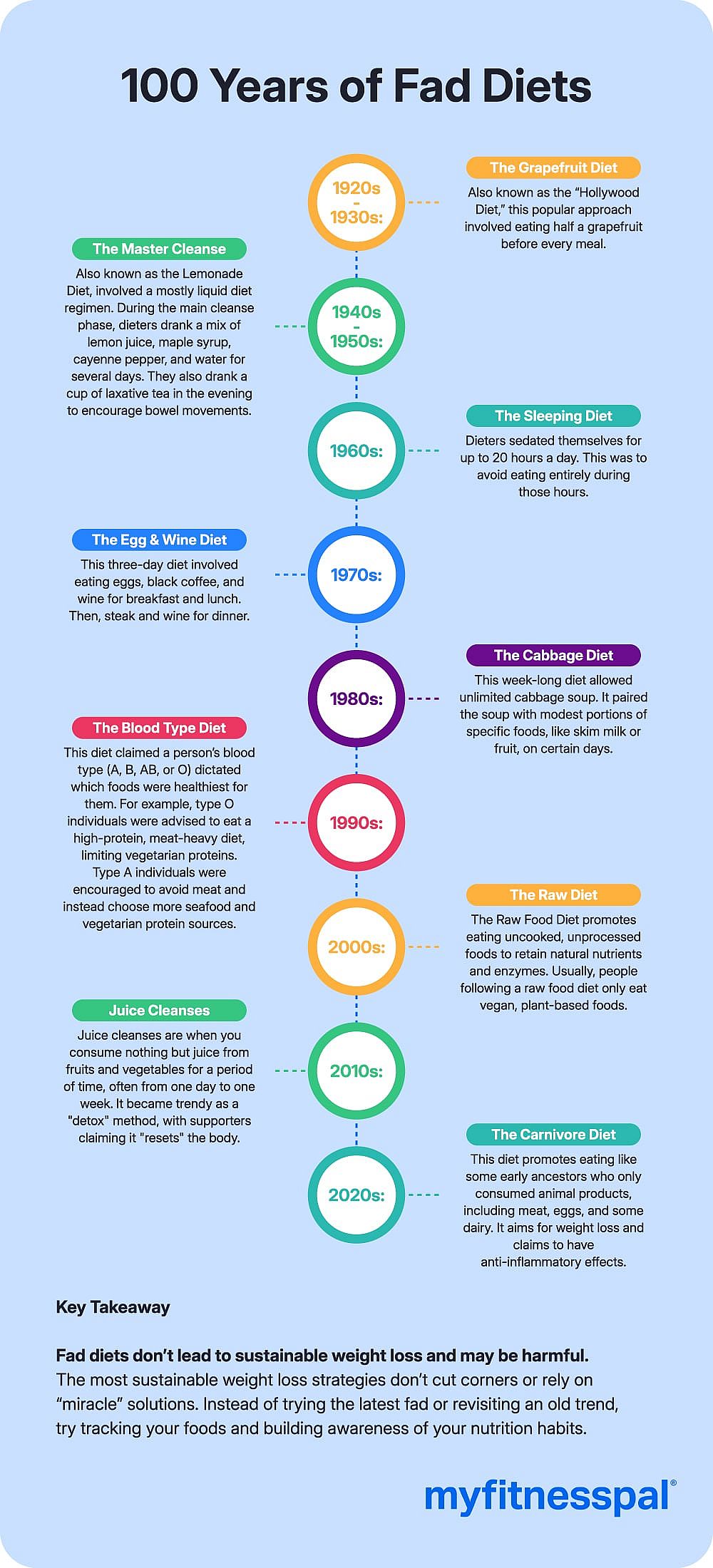
This week-long diet allowed unlimited cabbage soup. It paired the soup with modest portions of specific foods, like skim milk or fruit, on certain days. Like many fad diets, it promised rapid weight loss.
RD verdict
"While recipes found online for making homemade cabbage soup for this diet contain a variety of vegetables, this singular recipe does not make for a balanced diet," says Jaeger.
This diet is extremely low in calories and lacks protein, fat, and other vital nutrients. Any rapid weight loss is likely mostly water and lean muscle, not fat, and is not a long-term solution.
Jaeger also emphasizes that this diet does not have scientific evidence to support its weight loss claims or to review its safety.
She advises people to build sustainable diets, avoiding fads that claim to help rapidly meet our goals.
Expert takeaway
Aim for variety in your diet rather than focusing on one food or type of meal. Addressing entire eating patterns makes sustainable weight loss more successful.
1990s: The Blood Type Diet
The trend
This diet claimed a person's blood type (A, B, AB, or O) dictated which foods were healthiest for them.
For example, type O individuals were advised to eat a high-protein, meat-heavy diet, limiting vegetarian proteins. In contrast, type A individuals were encouraged to avoid meat and instead choose more seafood and vegetarian protein sources.
RD verdict
"The concept behind these diets is that an individual's blood type is theorized to be their ancestral blood group," says Brookell White, MS, RD, a Food Data Curator at MyFitnessPal.
Though the idea of this diet appealed to many, there is a lack of research to support its claims.
One study of this eating style found potential benefits for body weight and some health markers, like blood pressure and cholesterol.
However, White points out that the health benefits in followers were likely due to better eating habits (more vegetarian foods) rather than blood type.
"This seems to be the consensus for most studies that have been done," she says.
Expert takeaway
There's no need to determine your blood type to eat healthfully. Focus on evidence-based dietary patterns with plenty of variety, such as the Mediterranean diet.
2000s: The Raw Food Diet
The trend
One of the more lasting trends, the Raw Food Diet, promotes eating uncooked, unprocessed foods to retain natural nutrients and enzymes. Usually, people following a raw food diet only eat vegan, plant-based foods.
RD verdict
Daisy Mercer, RD, a Food Data Curator at MyFitnessPal says eating raw foods like fruits and vegetables can have benefits. These foods provide important nutrients like fiber, antioxidants, vitamins, and minerals.
Mercer also says that eating raw often means eating less processed food. It will generally provide us with more fiber, and our bodies will work harder to digest them. That will lead to better satiety and less desire to overeat.
Eating a raw food diet may also help reduce intake of sodium and saturated fats, she notes.
Additionally, raw, plant-based foods may contain more vitamins and minerals. Some nutrients can be lost in cooking, Mercer points out.
For example, certain cooking methods, like boiling, can greatly reduce the water-soluble vitamin content, like vitamin C, in fruits and vegetables. It may be best to cook high-vitamin C foods more quickly, with less heat and water, such as by steaming.
However research suggests that a mix of raw and cooked foods in the diet may be best for health.
A raw vegan diet, with over 90% raw foods, might not be safe long-term. It may cause micronutrient deficiencies and other health issues.
Mercer cautioned that a raw food diet can also become dangerous when raw or undercooked meats are involved, posing a risk of foodborne illness.
Expert takeaway
Eating more fruits and vegetables is a great way to support your health. Instead of worrying about whether they're cooked or raw, focus on eating a variety of plant-based foods as part of a balanced diet.
2010s: Juice Cleanses
The trend
Juice cleanses involve consuming nothing but juice from fruits and vegetables for a period of time, often one day to one week. They became trendy as a "detox" method, with supporters claiming they "reset" the body.
RD verdict
Like any liquid fad diet, juice cleanses can cause rapid weight loss.
"This is mostly due to not consuming enough calories," Mercer points out, rather than any special effect of the juice cleanse on weight loss.
And, once again, if you don't make healthy, sustainable changes to your diet, you'll likely gain the weight right back.
Mercer notes that drinking unsweetened, 100% fruit and vegetable juices in moderation can boost vitamin and mineral intake.
Just keep in mind that juice lacks fiber. This leads to quick absorption of natural sugars, which can act like refined sugar and cause short-term blood sugar spikes.
Additionally, we often consume more juice than whole foods, resulting in extra calories.
Juices with lower natural sugars and calories, like celery or cucumber juice, may be better for managing body weight.
Expert takeaway
Unsweetened fruit and vegetable juices can be part of a balanced diet in small amounts. Just don't rely on them for nutrition or unnecessary "cleansing" of the body. For healthy weight loss, choose whole fruits and veggies most often, and use juice splashes to flavor your water.
2020s: The Carnivore Diet
The trend
This diet promotes eating like some early ancestors who only consumed animal products, including meat, eggs, and some dairy. It aims for weight loss and claims to have anti-inflammatory effects.
RD verdict
Proponents of this diet claim it improves ailments and aids in weight loss, says White.
But, she adds, "there isn't any evidence that suggests this is true. In fact, evidence seems to suggest that a varied diet is best in most cases."
She warns that the Carnivore Diet lacks fiber and key vitamins, especially C and E.
These nutrients are found almost only in plants. They are crucial for everything from gut health to immunity and cancer prevention, she says.
Plus, White says that "animal products are high in saturated fat, which may increase your risk of heart disease."
"Red and processed meats are another concern," she says, noting that the International Agency for Research on Cancer considers processed meats carcinogenic (cancer-causing) and red meats 'probably carcinogenic'."
Expert takeaway
While the carnivore diet may lead to weight loss, it's restrictive and lacks essential nutrients and scientific support. For the best long-term health and weight outcomes, stick with a balanced diet rich in plant-based foods.
How to Approach "Fad Diets" of the Future (Spoiler: Don't)
Looking back at 100 years of dieting fads, one thing is clear—the most sustainable weight loss strategies don't cut corners or rely on "miracle" solutions.
Rather, they promote nutrient-rich, balanced eating combined with exercise and other healthy habits.
"We encourage striving for progress, not the concept of perfection," says Jaeger.
So, she advises, instead of trying the latest fad or revisiting an old trend, try:
- Tracking your foods
- Building awareness of your nutrition habits
- Know where you stand with your health
And Jaeger concludes, "most importantly, don't let any diet get in the way of real life."
"You can choose to enjoy a side of fries when dining out with friends or have a slice of cake at a birthday party, and skip the food guilt," she says.