This heart health test spots risks better than cholesterol
This heart health test spots risks better than cholesterol
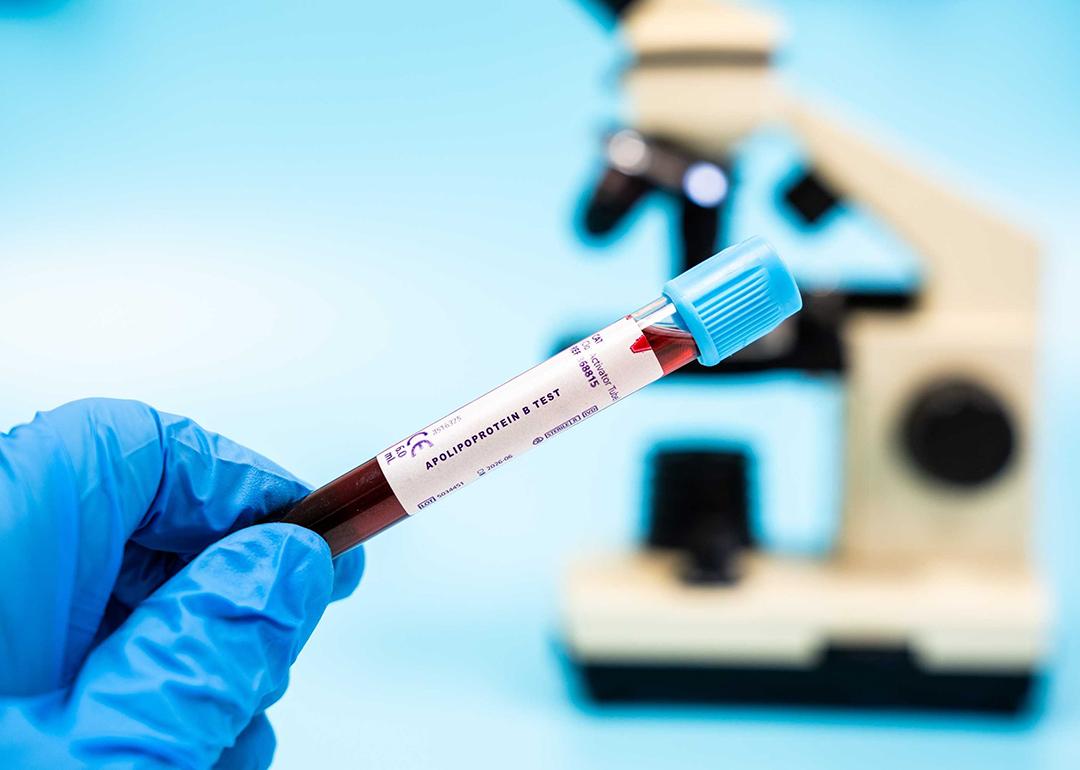
You’ve likely heard plenty about LDL (“bad”) and HDL (“good”) cholesterol. But there’s another heart-health marker worth knowing: ApoB. This lesser-known blood test can offer a more accurate picture of whether the fats circulating in your bloodstream are likely to turn into artery-clogging plaque—and raise your risk of heart disease.
“ApoB may be a better marker for heart disease risk since it reflects all of the bad particles that can drive heart disease, rather than just looking at LDL cholesterol,” says cardiologist Trent Orfanos, M.D.
Hone Health explains what ApoB is—and how to lower it.
What Is ApoB?
ApoB (pronounced AY-po-bee) stands for apolipoprotein B. It’s a protein that attaches to every cholesterol particle that can clog your arteries. As a “transport” or “carrier” protein, ApoB helps move cholesterol and fat through your bloodstream.
“ApoB carries around all of the ‘bad’ lipid particles that can cause damage to the arteries and circulatory system,” Orfanos says.
Each artery-clogging particle has exactly one ApoB attached. So when you measure ApoB, it’s like counting how many delivery trucks are on the road carrying bad cholesterol. The more trucks you count, the higher the risk of plaque building up in your arteries.
ApoB is measured with a blood test but isn’t included in a standard lipid panel. Instead, it’s considered an optional add-on, according to the National Lipid Association. Your doctor may be more likely to order it if you have a family history of heart disease or other cardiovascular risk factors.
What Elevated ApoB Levels Can Signal
Higher ApoB levels are linked to several cardiometabolic risks, including:
- Atherosclerosis is the hardening and narrowing of the arteries caused by plaque buildup.
- Insulin resistance is a metabolic condition that increases the risk of Type 2 diabetes and heart disease.
ApoB tests vs LDL tests
Compared to a standard LDL test, an ApoB test gives a more complete picture of cardiovascular risk.
LDL cholesterol measures how much cholesterol is in your blood—but it doesn’t show how many LDL particles are carrying it, says cardiologist Kimberly Campbell, M.D. That distinction matters because LDL particles vary in size. A smaller number of large particles can carry the same amount of cholesterol as a larger number of small particles. Having more particles increases the chances that some will slip into artery walls and form plaque.
This helps explain why some people develop heart disease even when their LDL levels appear normal. And it’s exactly why ApoB testing can be an early warning system.
Because each LDL particle—large or small—carries one ApoB protein, measuring ApoB reveals the total number of cholesterol-carrying particles in the bloodstream, which is more closely tied to cardiovascular risk, Campbell adds.
ApoB testing also captures other plaque-forming particles, including very low-density lipoproteins (VLDL), chylomicrons, and lipoprotein(a). All of these have been linked to cardiovascular disease.
Why early ApoB testing matters
ApoB plays a growing role in cardiovascular risk assessment and prevention. Knowing your level early can prompt lifestyle changes that slow or prevent disease progression.
“Ninety percent of cases of heart disease are preventable,” Routhenstein says. “The earlier you know these numbers, the more opportunity you have to reduce your risk.”
Heart disease risk increases with age in both men and women. Men often delay focusing on heart health until midlife, while heart disease risk increases for women in menopause and perimenopause as estrogen levels decline.
But plaque buildup can begin years—or even decades—before symptoms appear. Identifying elevated ApoB early gives you and your doctor a clearer opportunity to intervene long before serious problems develop.
How to Lower ApoB
Lowering ApoB often involves the same lifestyle habits that protect heart health overall—but some matter more than others.
1. Cut back on saturated fat
Dietary sources of saturated fat raise LDL cholesterol levels in the blood. One of the biggest contributors is red meat. Registered dietitian Jenna Stangland, R.D.N., recommends cutting back on fatty cuts like ribeye.
“You don’t have to eliminate red meat entirely,” she says. “Just opt for leaner cuts like round steak or sirloin tip.”
It also helps to limit foods made with palm oil—found in some ice creams, chocolates, cereals, and peanut butters—which is high in saturated fat.
Instead, aim for more lean proteins, such as fish, along with plant-based proteins like beans, nuts, and seeds.
2. Increase healthy fats and fiber
Monounsaturated and polyunsaturated fats can help lower LDL cholesterol and raise HDL cholesterol. Heart-healthy options include Mediterranean diet staples like extra virgin olive oil, avocados, flaxseeds, and chia seeds.
Fiber is also key. “Soluble fiber helps bind cholesterol and other substances the body doesn’t need, while insoluble fiber helps move them out through digestion,” says registered dietitian Michelle Routhenstein, R.D.N.
Soluble fiber is found in foods like oats, potatoes, cauliflower, and the skins of fruits such as apples and pears. Insoluble fiber is abundant in beans, lentils, blueberries, and nuts.
“Oats are an excellent source of soluble fiber and beta-glucans, which research has shown can specifically reduce ApoB levels,” Stangland says.
Fiber-rich complex carbohydrates—such as oats, quinoa, barley, and broccoli—also provide nutrients like magnesium, B vitamins, and folate that help reduce oxidative stress, Routhenstein adds.
“Once ApoB enters the arterial wall, LDL becomes oxidized as part of the plaque-forming process,” she explains. “If ApoB levels are high and oxidative stress is also high, plaque can form more aggressively.”
3. Get moving
Regular exercise helps lower cardiovascular risk, but the type of movement matters.
In a study published in the European Heart Journal, strength training alone didn’t reduce cardiovascular risk in participants who were overweight or obese with high blood pressure. Cardio exercise—or a combination of cardio and strength training—did.
The American Heart Association recommends at least 150 minutes of moderate exercise per week. Moderate activity means you’re breathing harder but can still carry on a conversation, Campbell says.
4. Prioritize sleep and stress management
Stress and poor sleep don’t directly raise ApoB, but they can worsen the conditions that lead to heart disease.
“When sleep quality is low, oxidative stress increases, which can promote LDL oxidation and worsen heart health,” Routhenstein says.
Being overtired and stressed also makes it harder to maintain healthy eating habits. That’s because sleep deprivation and chronic stress increase cravings for less heart-healthy foods.
5. Add medication when needed
Diet and lifestyle changes can significantly improve ApoB levels—but they aren’t always enough.
Statins, PCSK9 inhibitors, ezetimibe, and bempedoic acid are medications that can effectively lower ApoB, Orfanos says.
Medication works best alongside lifestyle changes, not in place of them. “Sometimes both approaches together are the solution,” Routhenstein says.
What is a Normal ApoB level?
There’s no single “normal” ApoB level for everyone. However, Campbell notes that an ApoB level of 130 mg/dL or higher is associated with increased cardiovascular risk.
For people with additional risk factors—such as a strong family history of heart disease or a prior cardiac or vascular event like a stroke—doctors often aim for lower targets.
Your physician will personalize any treatment plan based on your overall risk, not just one number.
This story was produced by Hone Health and reviewed and distributed by Stacker.