Guava Health
1 / 2How does potassium help your brain?
Potassium plays a substantial role in cognitive function. This critical electrolyte helps maintain the electrical activity of neurons, allowing them to communicate effectively. Here's how potassium benefits cognitive health:
1. Neurotransmitter function
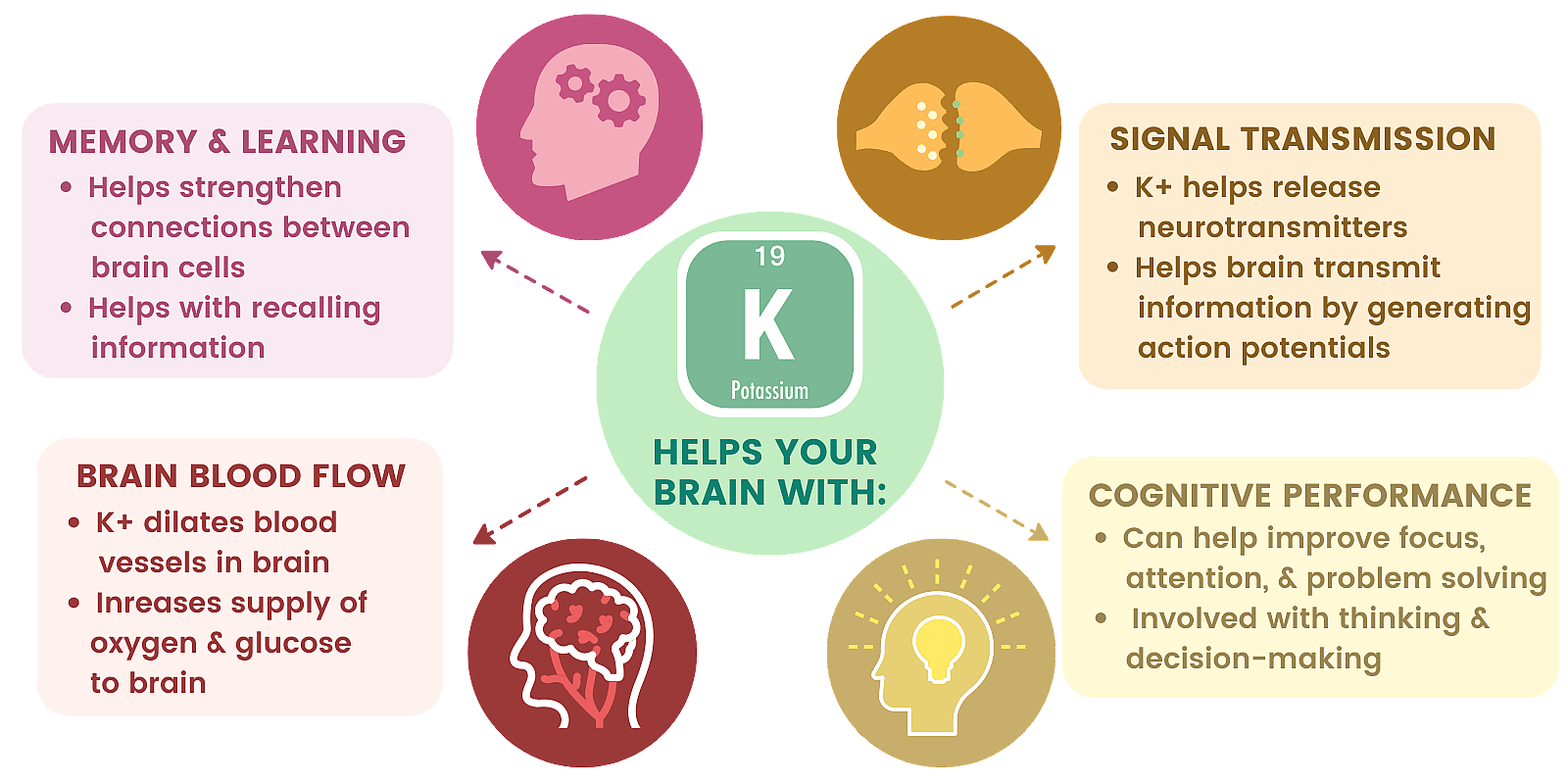
Signal transmission: Potassium is crucial for the release and action of neurotransmitters, which are chemicals that transmit signals between nerve cells (neurons). Neurons communicate with each other by releasing neurotransmitters into synapses – the tiny gaps between neurons. These neurotransmitters carry signals from one neuron to the next, allowing for the transmission of information throughout the brain.
Memory and learning: The effective release and action of neurotransmitters are crucial for processes like memory formation and learning. For example, when you learn something new, neurotransmitters are involved in strengthening connections (synapses) between neurons, making it easier for you to recall and apply that knowledge later.
2. Brain blood flow
Oxygen and nutrient supply: Potassium helps regulate blood flow to the brain, ensuring that brain cells receive an adequate supply of oxygen and nutrients. The brain is highly metabolically active and requires a continuous delivery of oxygen and glucose (a nutrient) to function optimally. Potassium contributes to the dilation (widening) of blood vessels in the brain, facilitating the delivery of these essential resources.
Enhanced cognitive performance: When brain cells receive sufficient oxygen and nutrients, they can perform at their best. This can lead to enhanced cognitive performance, including improved focus, attention, and problem-solving abilities.
3. Nerve impulse transmission
Generating action potentials: Nerve impulses, also known as action potentials, are the electrical signals that neurons use to transmit information rapidly. Potassium plays a crucial role in generating and maintaining these action potentials.
Thinking and movement: Nerve impulses are responsible for various cognitive functions, such as thinking, decision-making, and voluntary muscle movements. When you think or decide to move a part of your body, it's because neurons are firing action potentials, and potassium is involved in these electrical processes.
A deficiency in potassium (hypokalemia) can lead to symptoms like fatigue, muscle weakness, and impaired cognitive function, including difficulty concentrating and memory problems.