Northwell Health
1 / 4Fewer Americans drinking alcohol
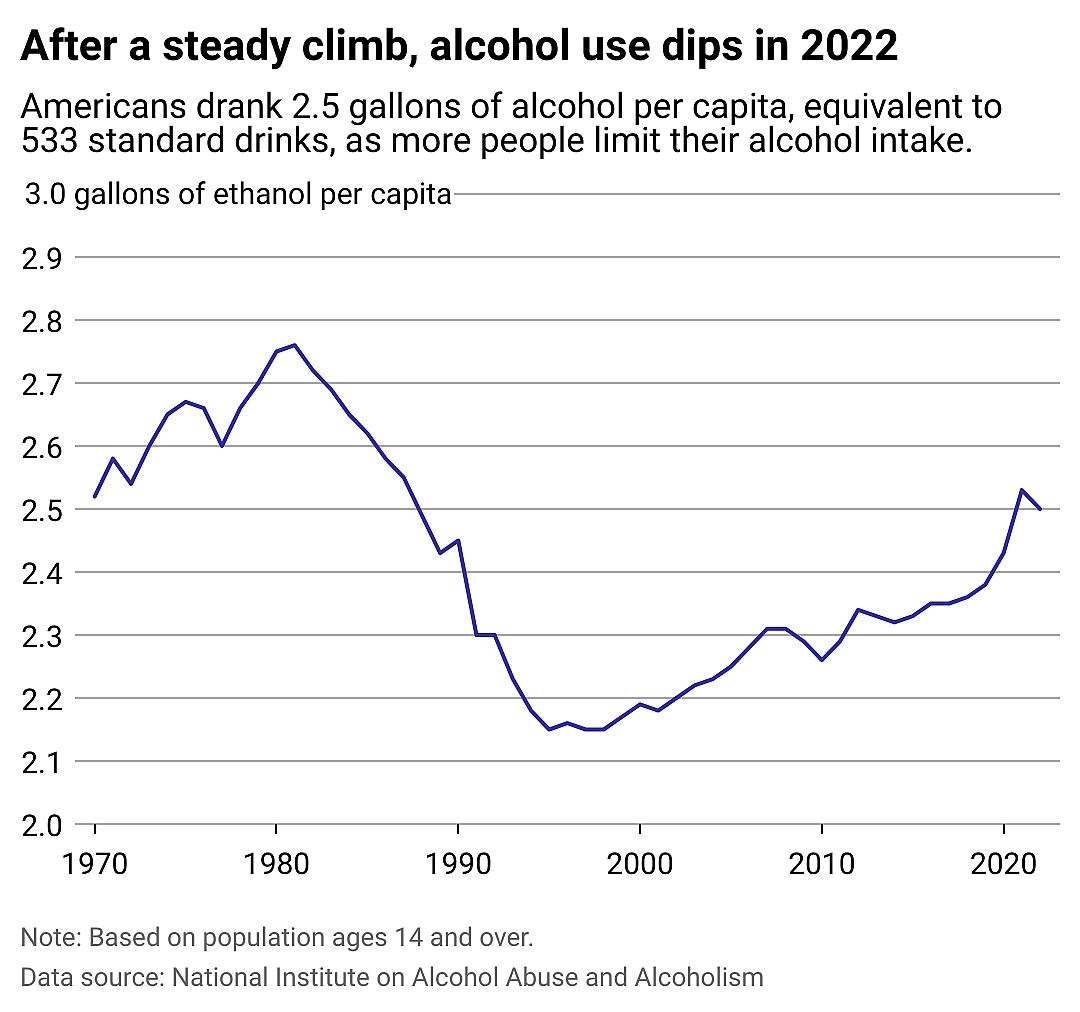
After peaking in the early 1980s, alcohol consumption in the U.S. began declining. However, drinking rates began rising again about a decade later, coinciding with a largely erroneous 1991 "60 Minutes" report examining the "French Paradox," which insinuated drinking red wine in moderation could lower the risk of heart disease.
The report examined why French people live longer than Americans, even though they eat more fatty foods and drink red wine. The findings' basis was a theory that antioxidants in grapes' skin could help with weight loss by flushing out fat.
However, in 2024, a meta-analysis of more than 100 studies published in the Journal of Studies on Alcohol and Drugs uncovered major flaws in this approach. The American Heart Association now says that while red wine does include antioxidants like resveratrol, people can get those benefits by eating peanuts or berries. In short, pause before popping a cork.
In 2022, Americans drank about 2.5 gallons of alcohol, or 533 standard drinks, in a year, according to a National Institute on Alcohol Abuse and Alcoholism report released in 2024. It represents a 1.2% decrease from the year before and comes as more Americans consider drinking alcohol bad for health.
A Gallup poll released in 2024 found that 45% of Americans say drinking one or two alcoholic beverages per day is unhealthy, the highest level since Gallup began asking in 2001. Meanwhile, the vast majority (86%) say drinking alcohol at all is at least "somewhat" harmful.
This tracks with current guidance from the World Health Organization, which warns any alcohol consumption comes with health risks. A 2015 report in the British Journal of Cancer, which looked at over 480,000 cancer cases, found alcohol is a risk factor in several cancers, including oral cancer, liver cancer, and breast cancer, though it depends on the level and frequency.