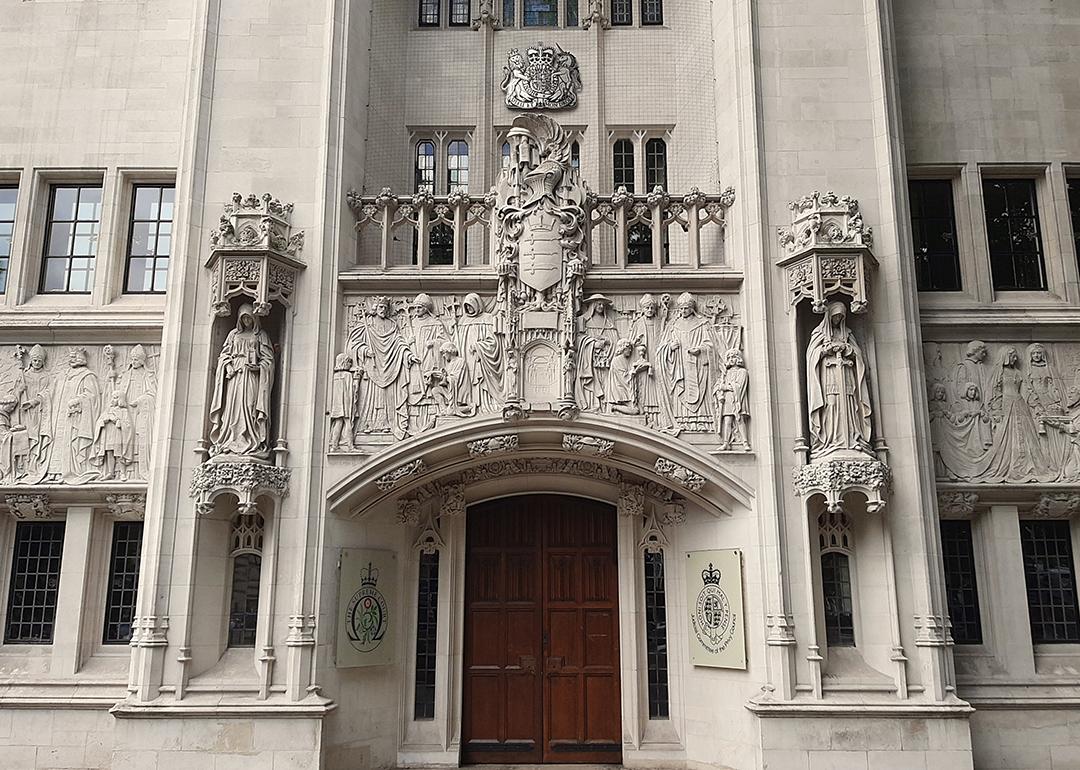
Impact of the English Common Law on the United States
Impact of the English Common Law on the United States
The British monarchy continues to draw global attention to its rich traditions, which date back to 1066 and perhaps even earlier. The British throne has influenced dozens of nations around the world that are part of its Commonwealth. Although the United States is not part of the British Commonwealth, many of its customs and practices have roots in England. Apart from English being the official language of the United States, its legal system is fashioned after the British legal system. In fact, many of the fundamental principles of injury law, or “tort law,” come directly from England. Originally, the British monarch stood at the top of the legal system, and the King or Queen controlled the appointment of the judges. Today, the appointment process involves the Lord Chancellor, an independent selection commission, senior politicians, current judges, and many more parties. Clearly, the process has developed to be much more democratic.
Because Britain has no codified constitution, its rule of law is founded in statute law and common law. Statute law is created by Britain’s legislative bodies, or Parliament, while common law is founded on judicial decisions. The principle of stare decisis, which is Latin for “to stand by things decided,” is a key aspect of Britain’s common law. Stare decisis applies when two cases have similar fact patterns that should lead to the same ruling. Stare decisis encompasses vertical stare decisis—which means lower courts should abide by the decisions of higher courts—and horizontal stare decisis, which means all courts should adhere to their own previous rulings. This principle ensures uniformity and makes the common law more consistent. Following suit, the United States has its own common law and requires its courts to adhere to the principle of stare decisis.
Ahead, Davis, Saperstein & Salomon, P.C. examines how English common law principles shaped the American legal system.
What Impact Did the English Common Law Have on the United States?
American jury trials are also fashioned after British jury trials. While the names may differ, America’s jury trials share several key elements, such as a presiding judge, prosecutor, defense counsel, witnesses, and a court stenographer. Like the British Commonwealth, the United States only requires that an individual be granted a jury trial if they may be faced with a punishment of over six months’ imprisonment. Britain’s Human Rights Act 1998 defines the rights and freedoms that are afforded to defendants. Article 6, Section 2, states that “Everyone charged with a criminal offense shall be presumed innocent until proved guilty according to law.” Sound familiar? The United States’ criminal justice system is founded on the presumption of innocence, and guilt must be proven beyond a reasonable doubt for an individual to be convicted. The United States has incorporated Britain’s version of “innocent until proven guilty,” and it forms the basis of our system today. For civil trials, the United States and Britain also have the same evidentiary standard, which is a preponderance of the evidence. Preponderance of evidence is a much lower burden of proof than beyond a reasonable doubt, the criminal standard, which means that the fact in dispute is more likely than not to have occurred.
The British legal system has influenced the United States’ tort system beyond the evidentiary standard. One example is a citizen’s ability to sue a public entity. Even today’s restrictions limiting the right to sue the state of New Jersey, a county, city, or any public entity date back to prohibitions against suing the sovereign or the King. In today’s context, in New Jersey, one cannot sue the “sovereign” state without its permission. New Jersey’s Tort Claims Act, known as Title 59, lays out the preconditions to suing a public entity, such as a governmental entity (and even New Jersey Transit!). The preconditions include:
- Written notice must be given within 90 days, with few exceptions, on a special form.
- Medical bills must exceed $3,600.
- Injuries must be of a permanent nature.
After receiving such notice, a person must wait six months to file suit.
America’s legal system may not be perfect, but it’s the best legal system in the world. Today, there are over 1.1 million members of the bar and 30,000 judges in the United States. The legal system employs approximately 1.2 million people, not including law enforcement and administrative agencies. Americans owe the Brits their gratitude and appreciation for the historical ties that built much of their nation’s legal system.
This story was produced by Davis, Saperstein & Salomon, P.C. and reviewed and distributed by Stacker.