Creditnews
1 / 2Public college
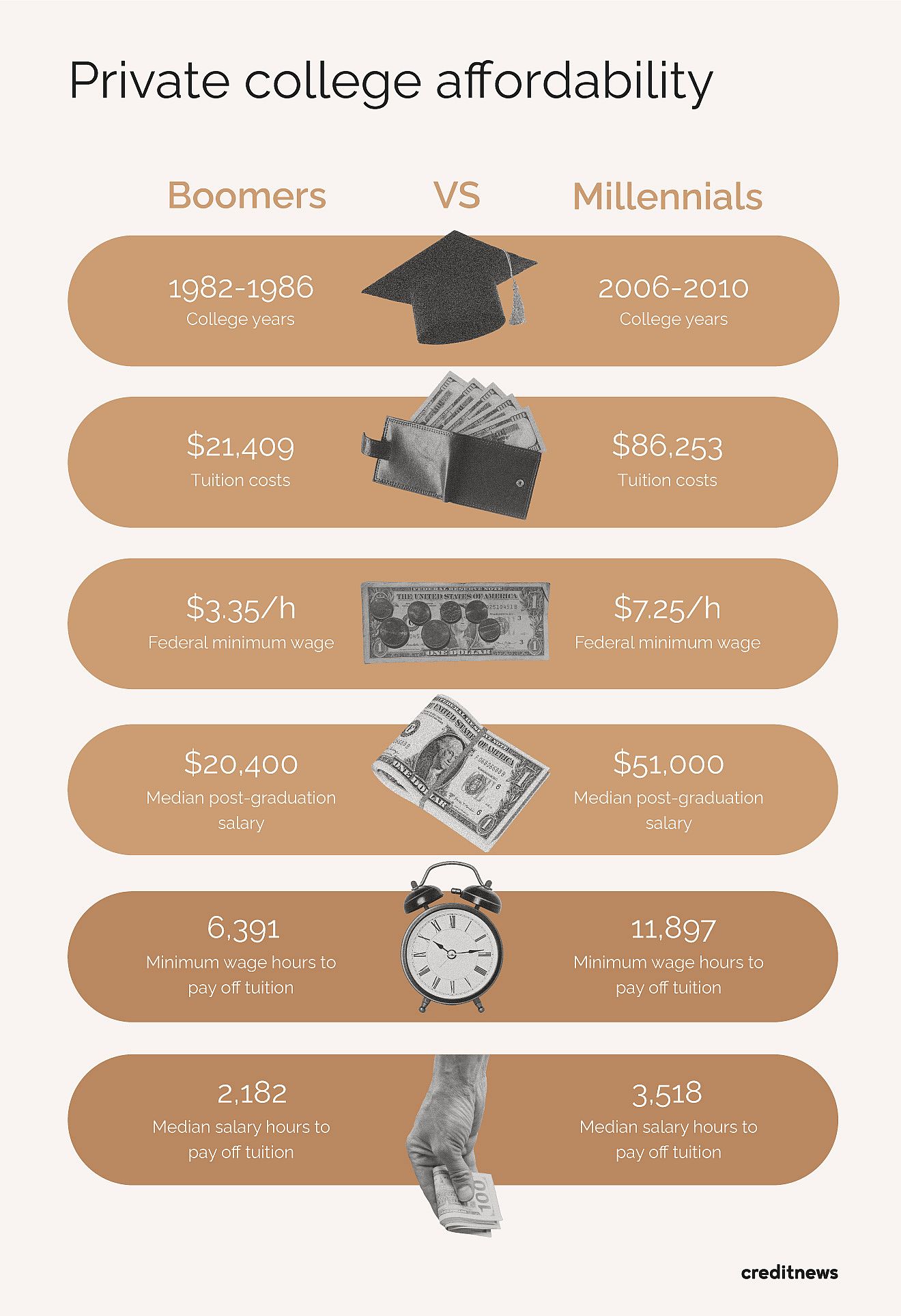
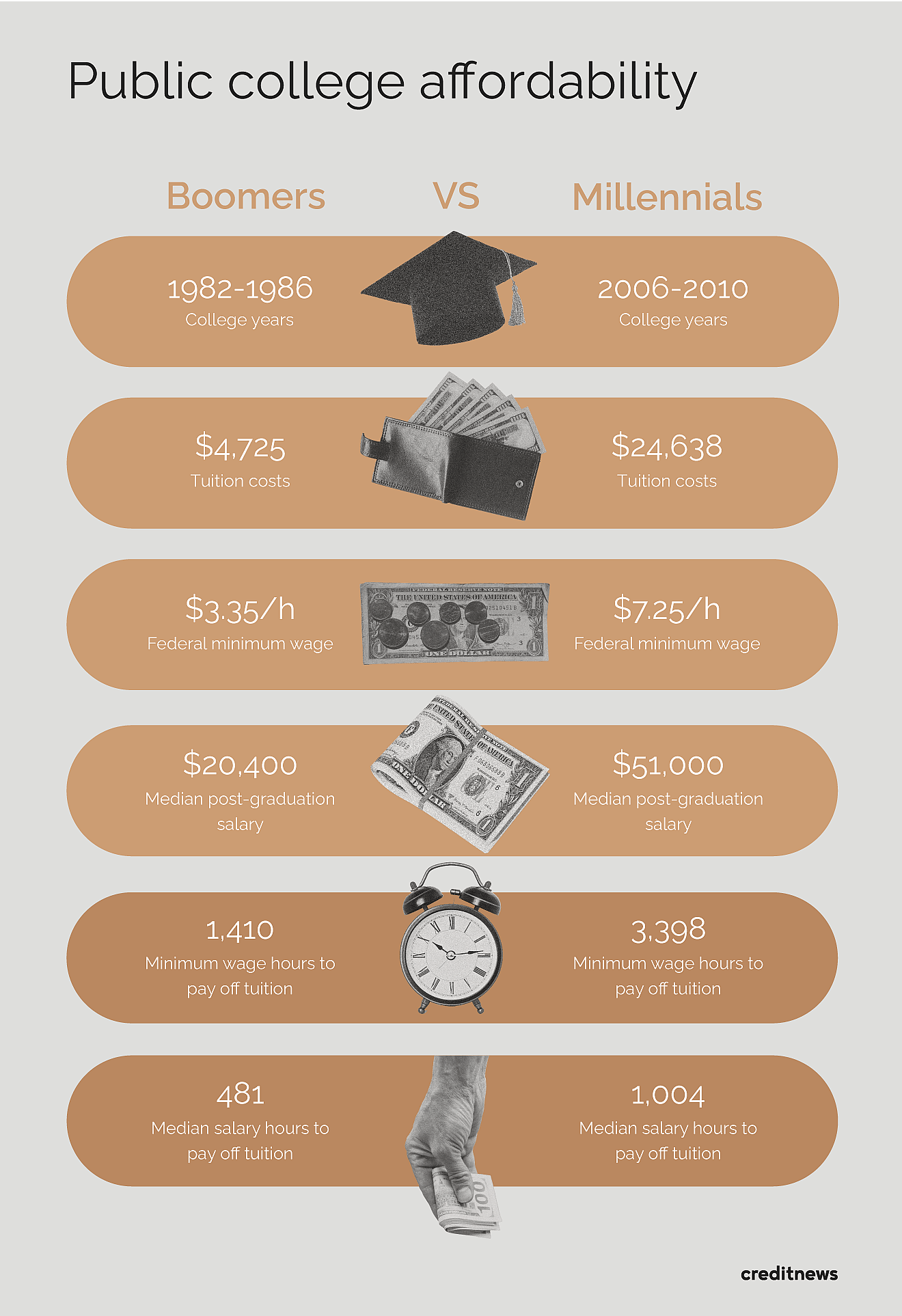
Baby Boomers who attended a public college between 1982 and 1986 paid a total of $4,725 for a Bachelor's degree. Even if they had earned the minimum wage ($3.35 per hour), it would have taken them 1,410 hours to pay back their tuition in full. That's equivalent to about nine months of work, assuming a typical 40-hour work week.
However, had they earned the average post-graduation salary ($20,400), they could have paid off their full tuition in 481 work hours or three months. On the flip side, Millennials who attended a public college between 2006 and 2010 paid $24,638 in tuition costs and related fees.
Although Millennials faced a 421% increase in tuition costs compared to Baby Boomers, their post-graduation wages hardly caught up—with the federal minimum wage and median post-graduate salaries increasing by only 116% and 165%, respectively. By the time they graduated, Millennials could earn the federal minimum wage of $7.25. At that rate, it would have taken 3,398 working hours for Millennials to pay back their tuition in full.
Even those Millennials who earned the average post-graduation salary in 2011 ($51,000) needed 1,004 hours' worth of work— or more than six months—to pay off their tuition costs. That's twice as much as Boomers, even with wage inflation factored in.