Experian
1 / 4Most say they would cut retirement savings first
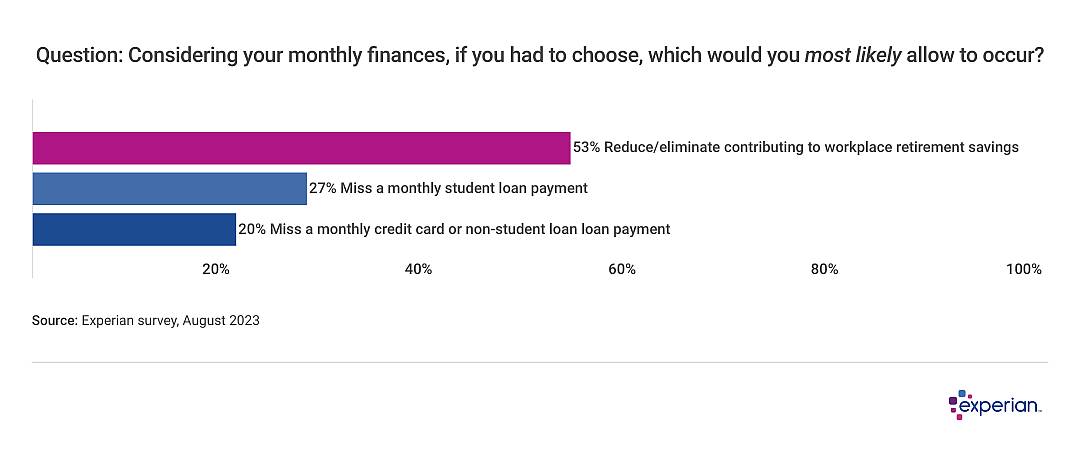
We asked millennials and Gen Zers with student loans which expense they would choose to skip a payment on, if push came to shove. Most (53%) would reduce or eliminate contributing to their retirement savings plan before missing either a credit card payment or student loan payment.
None of these choices are a bargain, however. Missing a credit card payment means late fees, a potential APR hike, and a potential hit to one's credit score if the payment is 30 or more days late.
Although workers with student loans probably aren't relishing repayments that begin again in October, they quite likely prefer to see either the principal decrease or notch another month of payments toward the 120 months needed for some types of forgiveness programs, like the Public Service Forgiveness (PSLF) program.
But suspending workplace retirement savings plan contributions has its own downsides, some financial and others attributable to the human condition. Just like getting back to the gym, restarting contributions may feel more difficult once you've stopped, even for a short period.
Perhaps the worst reason to suspend retirement savings contributions is thinking you'll have plenty of time to catch up. Assuming even a conservative nominal return of 5% annually on retirement savings, every $1,000 saved earns an additional $3,300 after 30 years, either tax-deferred or tax-free, depending on the type of retirement account. Waiting just five years to "catch up" reduces that gain to $2,300.