The Trace
1 / 3ShotSpotter's Mixed Track Record
ShotSpotter, which launched in Northern California in the mid-aughts, is more closely associated with big cities like Chicago, New York, and Washington, D.C. But in recent years, those cities have faced pressure to abandon the system as researchers and community activists criticize it as an ineffective technology that doesn't prevent shootings and leads to overpolicing in Black and brown communities.
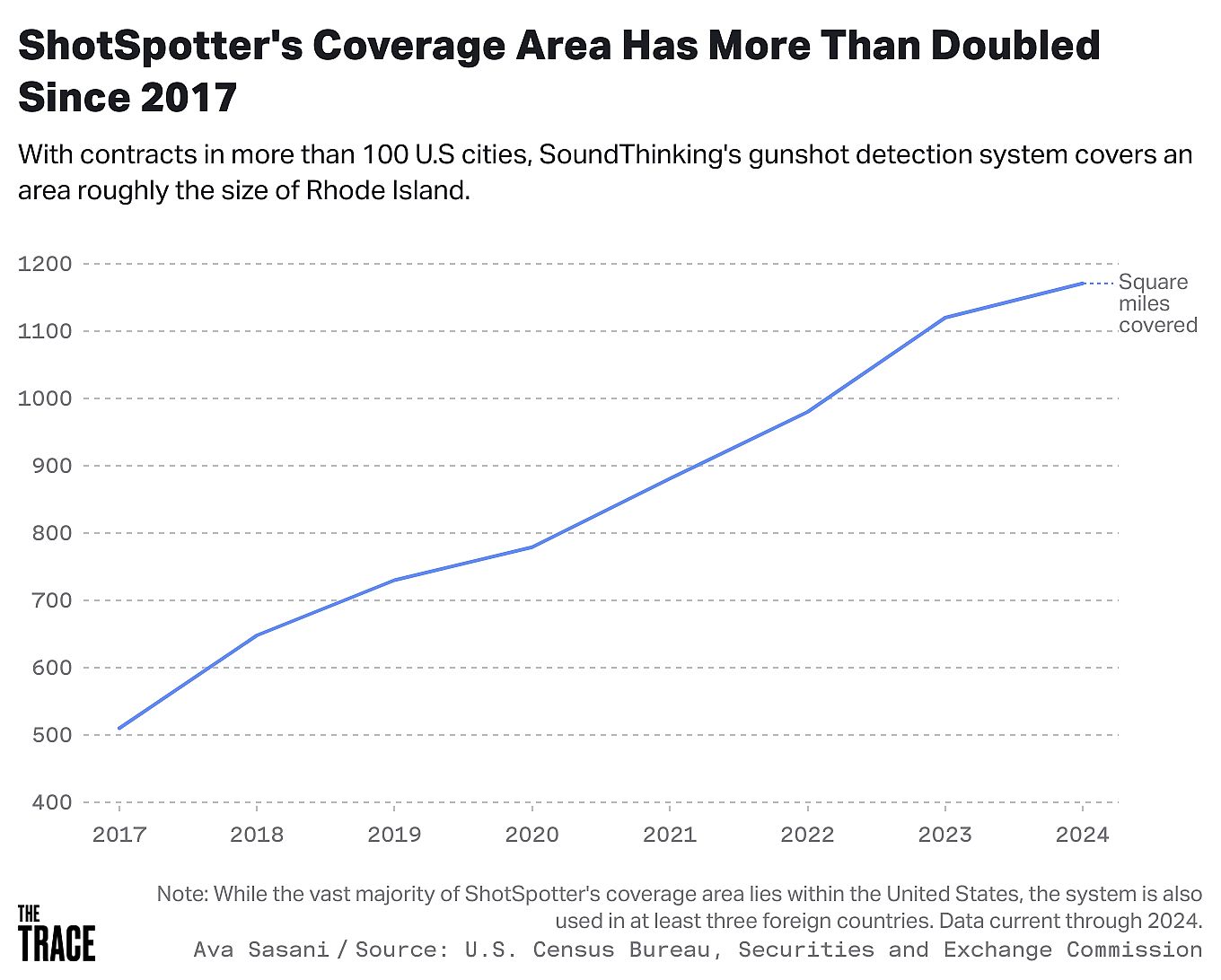
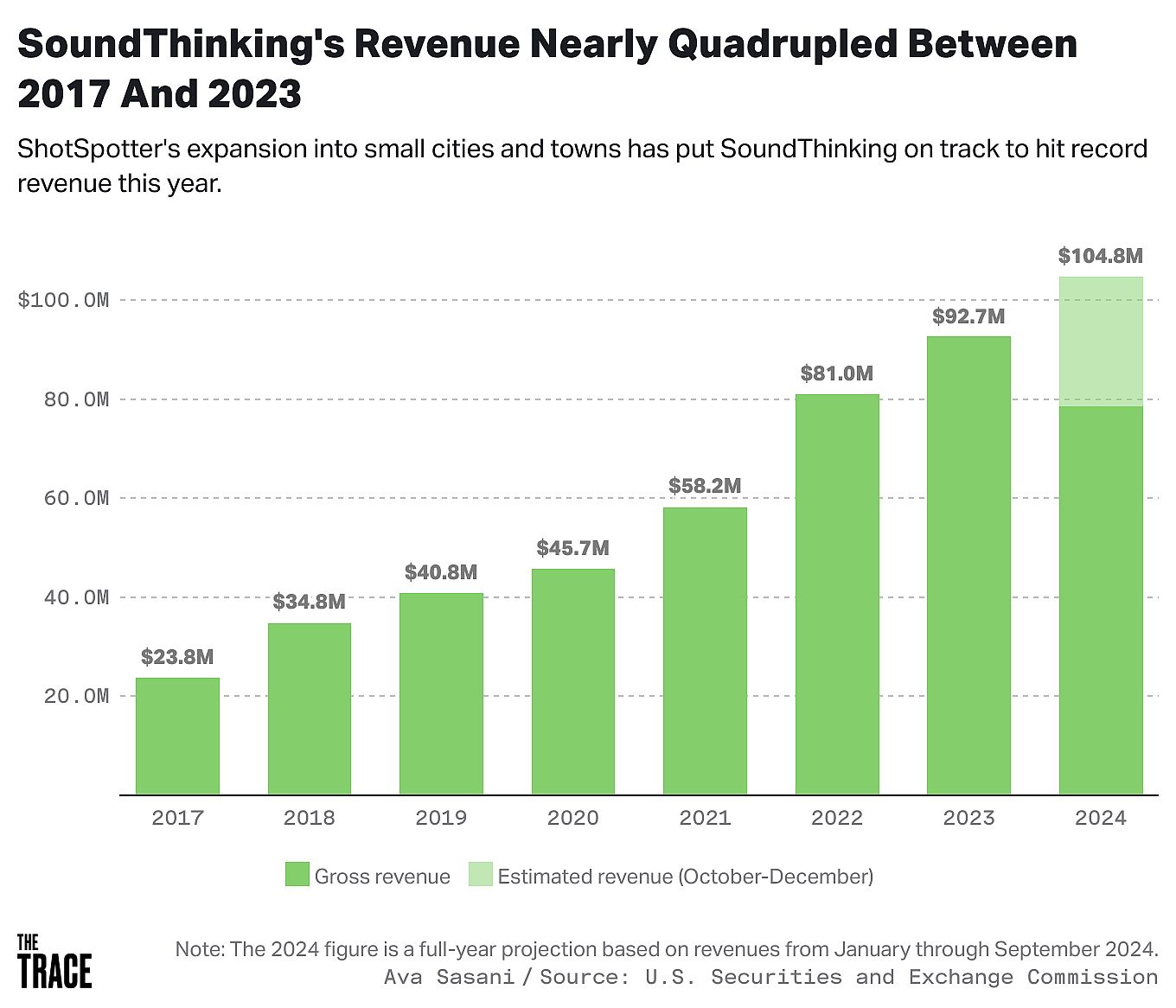
Amid the backlash, SoundThinking has pursued dozens of smaller markets—like Phillipsburg—that were more receptive to the technology. But those smaller cities are far less likely to have the volume of gun violence that justifies the need for the system, which typically costs $65,000 to $90,000 for each square mile of sensors.
David Chipman, a former federal law enforcement agent who served as ShotSpotter's senior vice president of public safety solutions from 2013 to 2016, said low-violence cities that adopt the system are just preparing themselves. "Violence might not be at your doorstep today, but we're in an interconnected country," he told The Trace. "Those cities have adopted a zero-tolerance policy for gun violence. For them, it's an early warning sign. So if you have Shotspotter and you have zero gun violence, it's because you never want to have it."
Piza, the Northeastern researcher, has found that while ShotSpotter does not improve case clearance rates or decrease crime, the technology confers other benefits, like the increased collection of ballistic evidence and more gun recoveries. A 2023 cost-benefit analysis of ShotSpotter in Winston-Salem, North Carolina, which has had the technology since 2021, found that the response time to gunshots or gunshot-like sounds flagged by ShotSpotter is "significantly quicker than those called in by residents," and police recovered guns or shell casings in more than 600 incidents, leading to more investigations.
But the largest peer-reviewed study of the technology found that it didn't significantly reduce gun deaths or increase public safety. A July audit by the New York City Comptroller found that police are sent to alerts that aren't actually shootings 87% of the time and are wasting thousands of hours responding to these false alarms. In Chicago, where the decision to not renew the city's $10 million ShotSpotter contract sparked a political power struggle between the mayor and the City Council, a recent analysis by South Side Weekly and Type Investigations found that ShotSpotter missed more than 20% of shootings and discharges in the city between January 2023 and August 2024.
The SoundThinking spokesperson said the peer-reviewed study was "flawed" because it used data from areas where ShotSpotter was not deployed. In response to New York City's audit, the company said its "alerts provide critical support and are often the only way police receive the information needed to respond quickly, render aid to victims, save lives, collect critical evidence, and take dangerous criminals off the streets."
Funding ShotSpotter
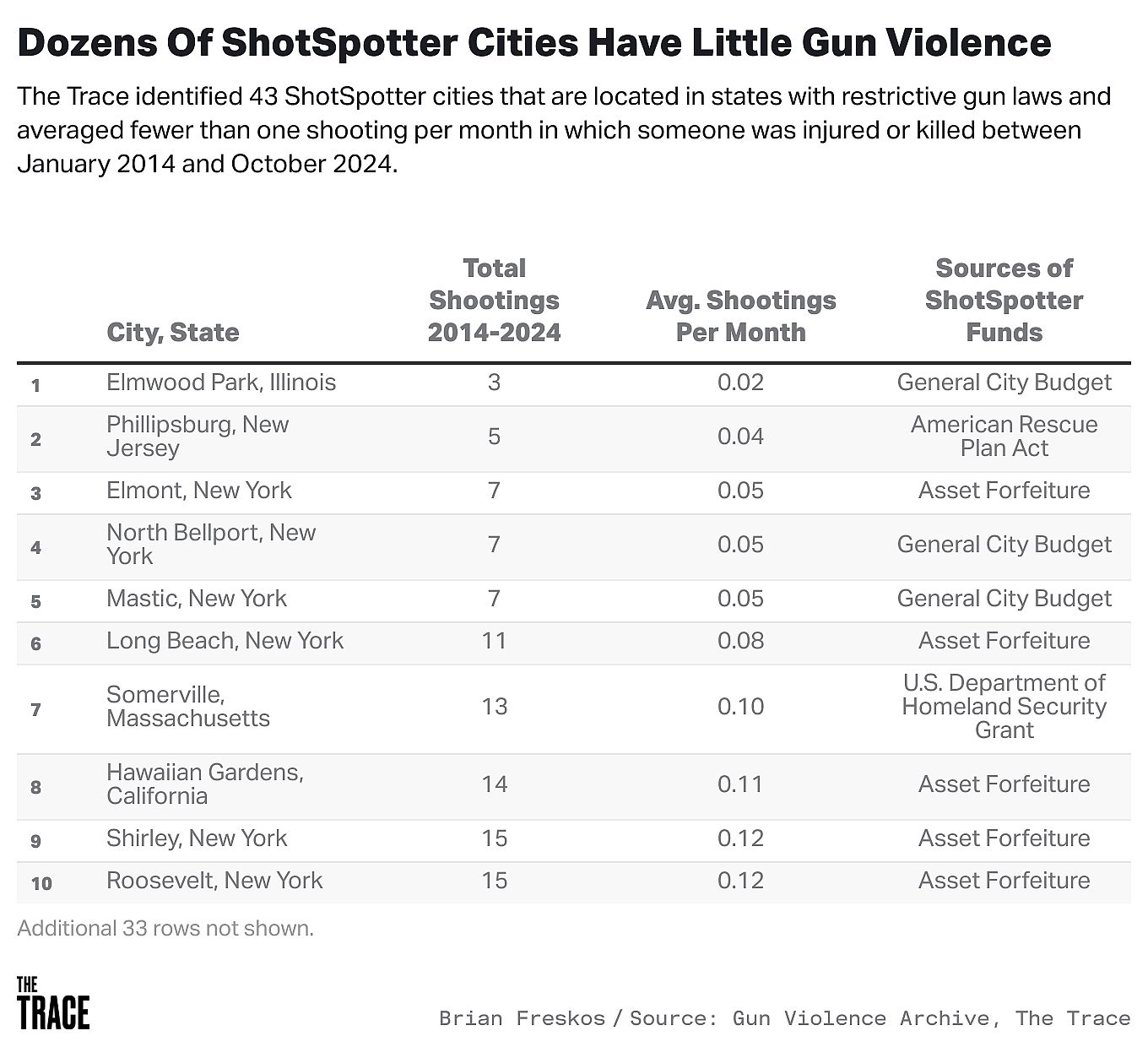
Cities fund ShotSpotter in a variety of ways: municipal and police budgets, state and federal grants, and even private donations. Of the 43 cities identified by The Trace, 30 used city budgets to pay for the technology. Of those, eight cities used the proceeds from asset forfeiture, four cities tapped their police budget, and two cities reappropriated money from the county prosecutor's office. One city—Pleasantville, New Jersey—imposed a 2.5-cent increase on the municipal tax rate to pay for ShotSpotter.
Twelve of the cities paid for ShotSpotter with federal funds. Phillipsburg and East Orange, both in New Jersey, used federal COVID-19 relief funds provided by the American Rescue Plan Act. Five cities, all in Massachusetts, used grants from the Department of Homeland Security's Urban Area Security Initiative, which is intended to help guard against acts of terrorism. Two cities used Department of Justice grants, and another two cities paid with private funding. The pharmaceutical company AbbVie, which is based in North Chicago, Illinois, subsidized that city's ShotSpotter.