Shutterstock
1 / 5Burned or banned: Outlawed books reflect fears and politics of the time
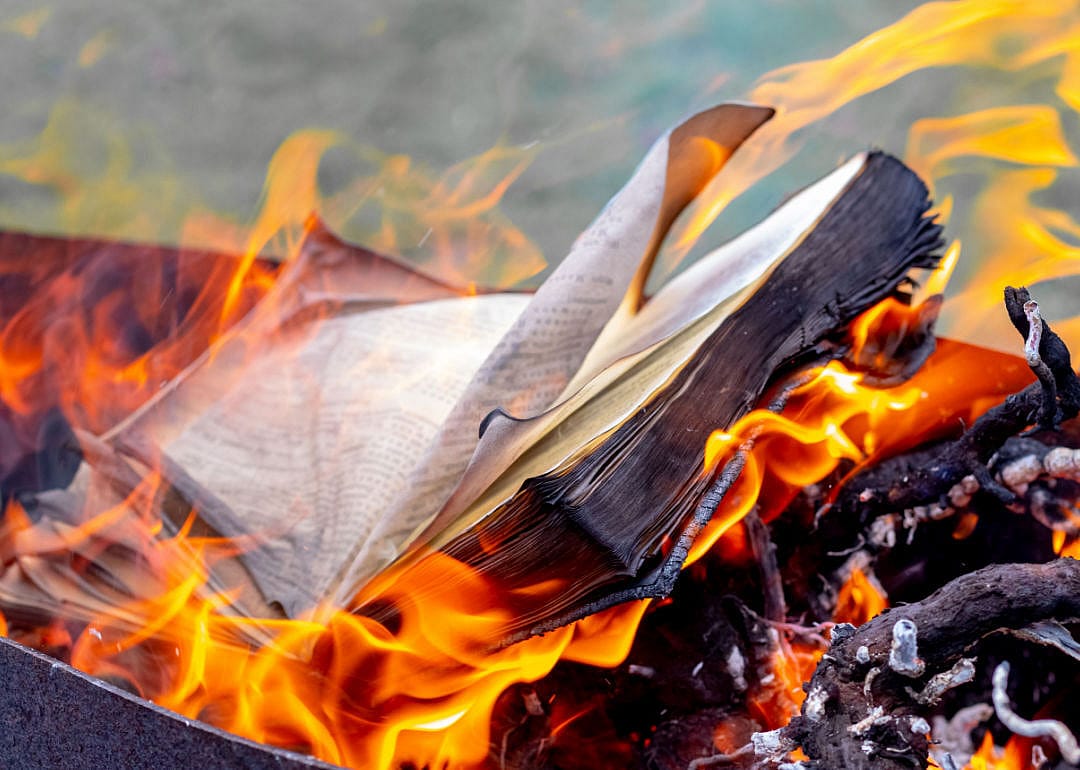
As long as there have been books, it seems that there have always been those who oppose them or have corralled them to gain the upper hand. The Chinese emperor Qin Shi Huang ordered a bonfire of books in 213 B.C. to wipe out any comparisons to previous rulers. Livy's "History of Rome," finished in 1 A.D., details past rulers who outlawed and burned books to prevent foreign ideas from taking root on Roman soil.
Throughout history, the types of books targeted by challenges often reflect the fears and politics of a particular moment in time. During the Red Scare in the late 1940s and early 1950s, for instance, censorship pressures on libraries became more overt as fears of communism swept the nation and Sen. Joseph McCarthy's influence grew. Books like John Steinbeck's "The Grapes of Wrath" and even "Robin Hood" came under fire for promoting "un-American" ideas. In 1948, the ALA responded to these pressures by adopting a revised—and more strongly worded—Library Bill of Rights, a document that pledges the commitment of libraries to provide access to information regardless of "partisan or doctrinal disapproval."
Other moral panics have similarly corresponded with which books are subject to challenges. In the 1970s and '80s, after the Supreme Court handed down its decision on Roe v. Wade, Judy Blume's frank discussion of topics including puberty, menstruation, masturbation, and female sexuality in books like "Forever…" and "Are You There God? It's Me, Margaret." made her work a frequent target of bans. In 1982, one year before the founding of the now-discredited drug education program Drug Abuse Resistance Education and amid President Ronald Reagan's expansion of the war on drugs, "Go Ask Alice," a young adult book that explicitly details drug use by a teenager, was the most censored book in the U.S. The novel "Bridge to Terabithia" was frequently challenged in the 1980s and '90s for allusions to witchcraft and the occult as the satanic panic raged across the U.S.
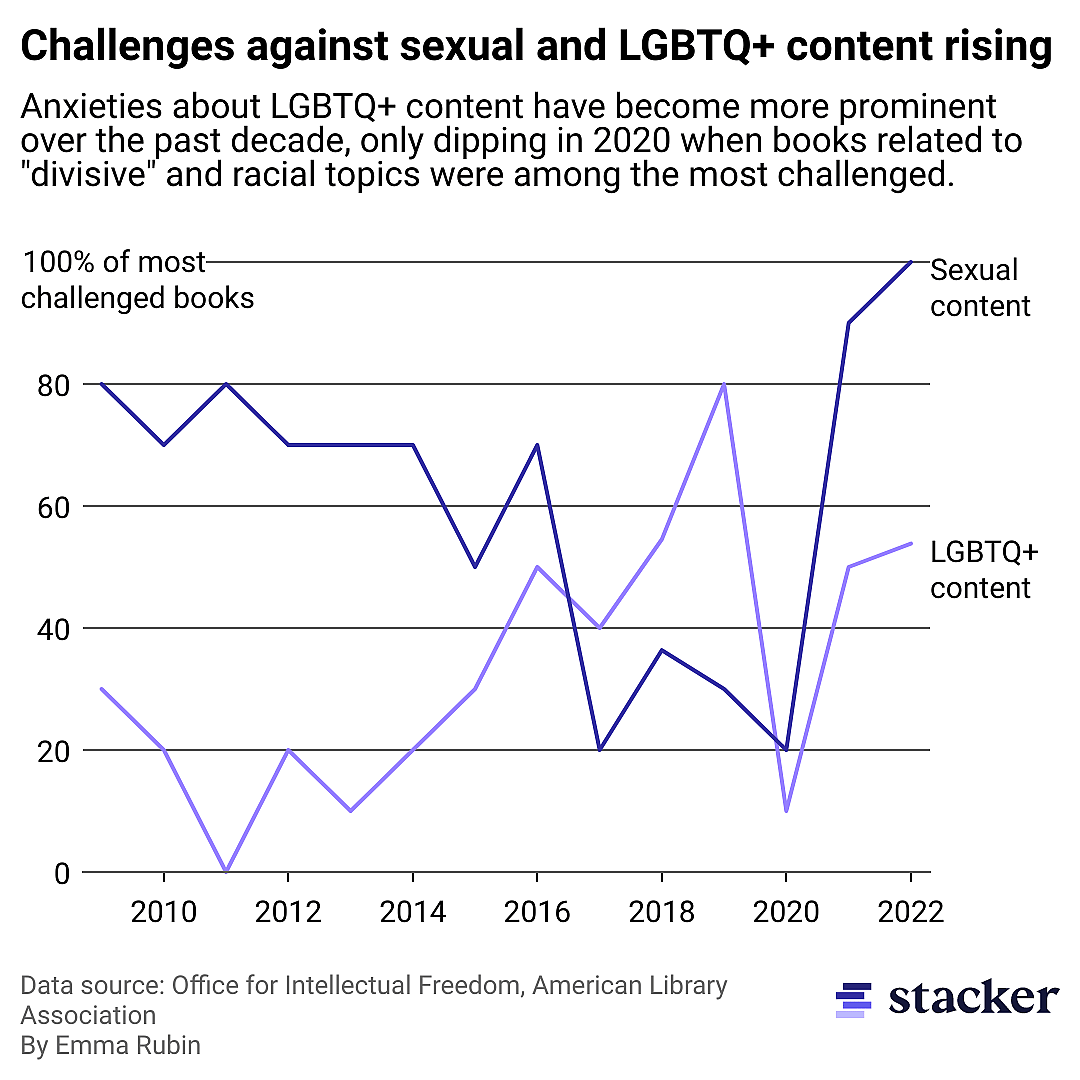
Some books and topics have proven to be evergreen targets of attempted bans, cropping up on most-challenged lists year after year. Books by Black authors, or those dealing explicitly with racism, like Toni Morrison's "Beloved" and "The Bluest Eye," Alice Walker's "The Color Purple," and Maya Angelou's "I Know Why the Caged Bird Sings," have been repeatedly challenged on charges of being "anti-white," for depicting homosexuality, and for themes of sexual abuse. Books with LGBTQ+ characters or storylines, like "Daddy's Roommate" and "The Picture of Dorian Gray," have also long been singled out by challengers.
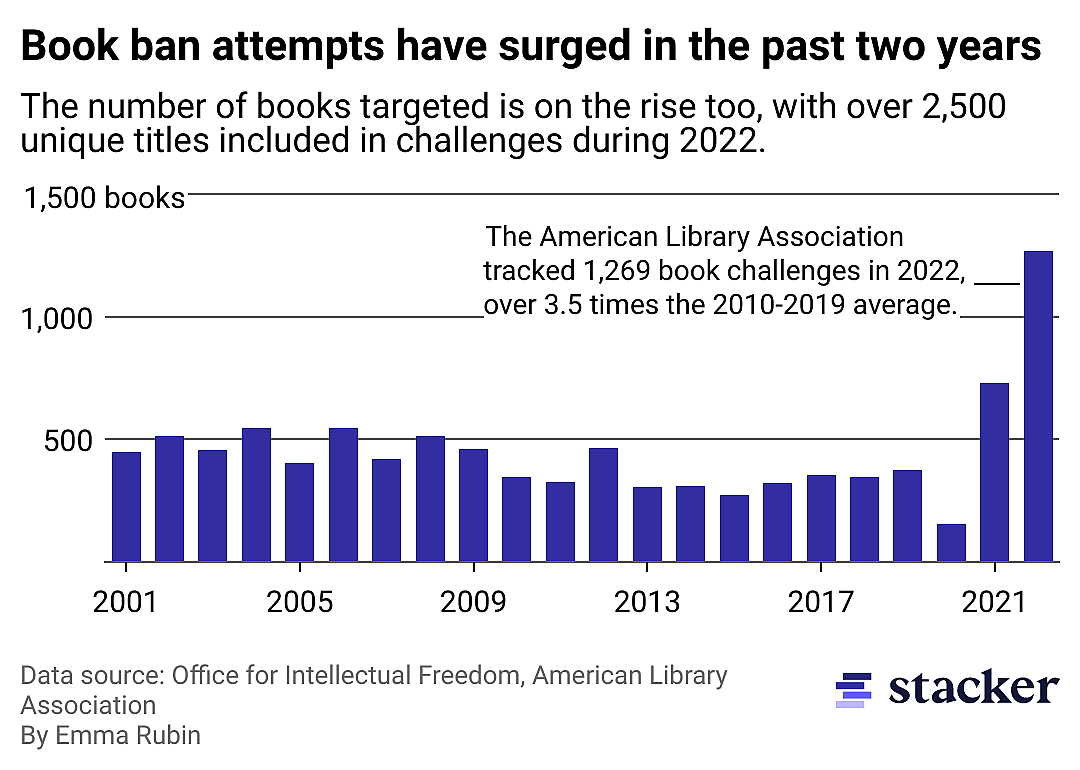
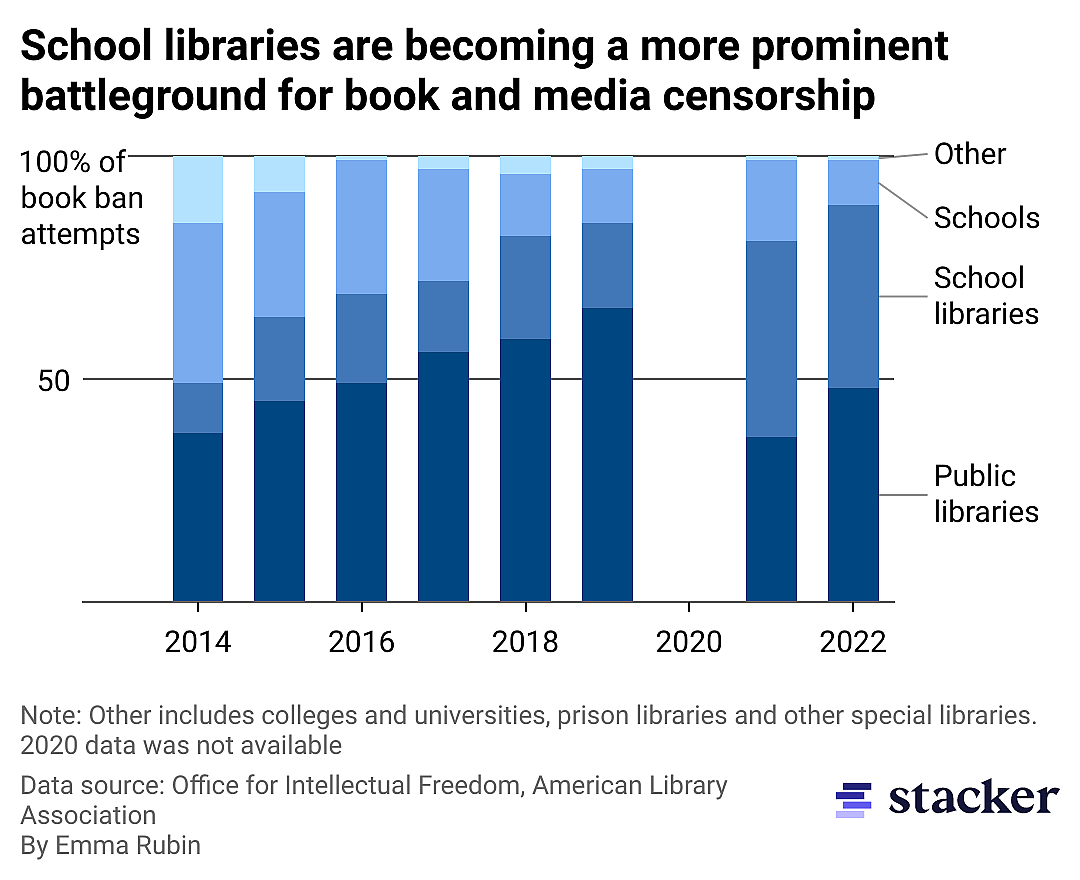
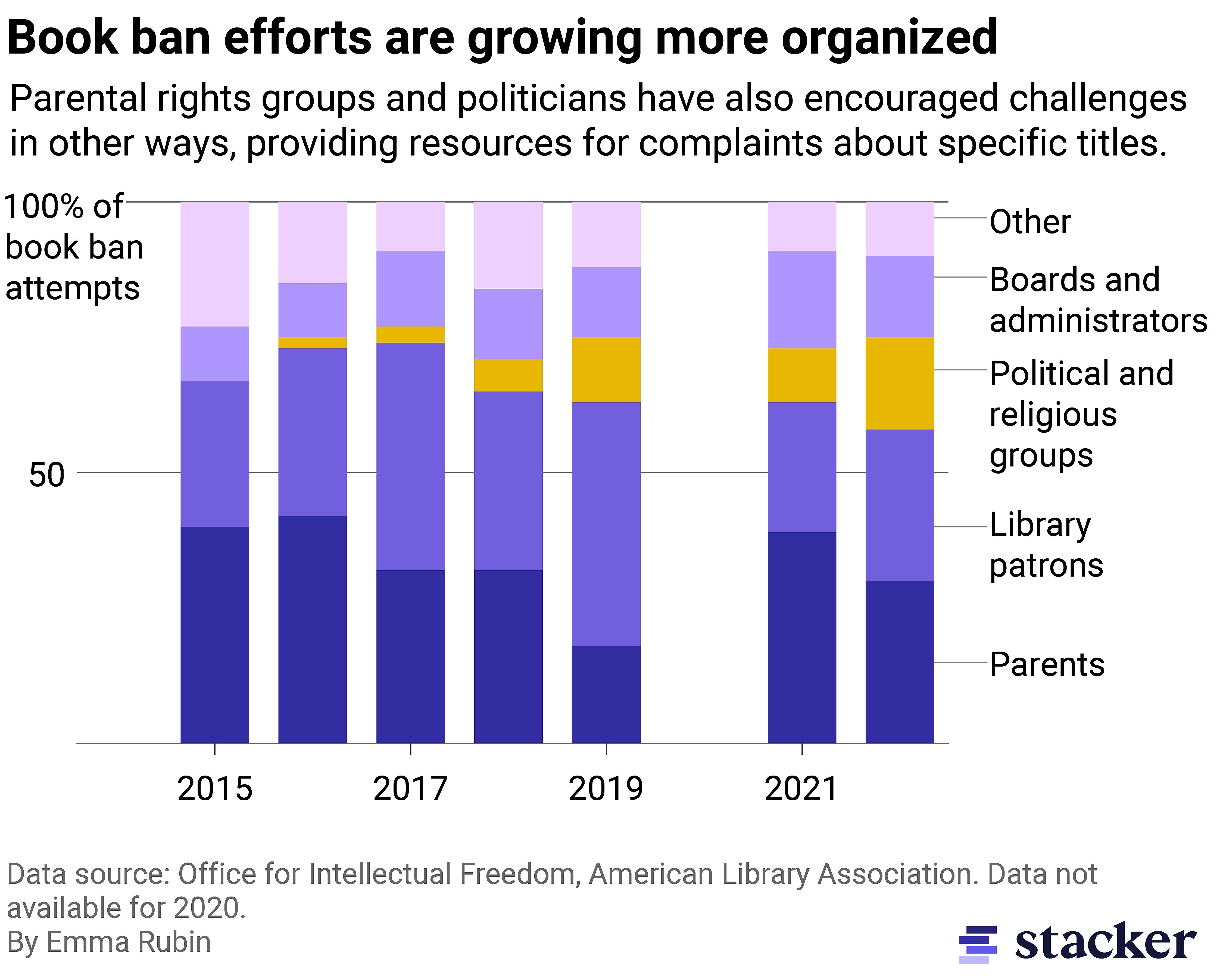
As attempts to remove certain books from libraries and schools intensify, many of the most frequently challenged stories bear a strong resemblance to those targeted in the past. There are, however, key differences in recent book ban efforts—both in terms of scale and who's behind them.