Truck Parking Club
1 / 3Geopolitical pressures shift top trading partners
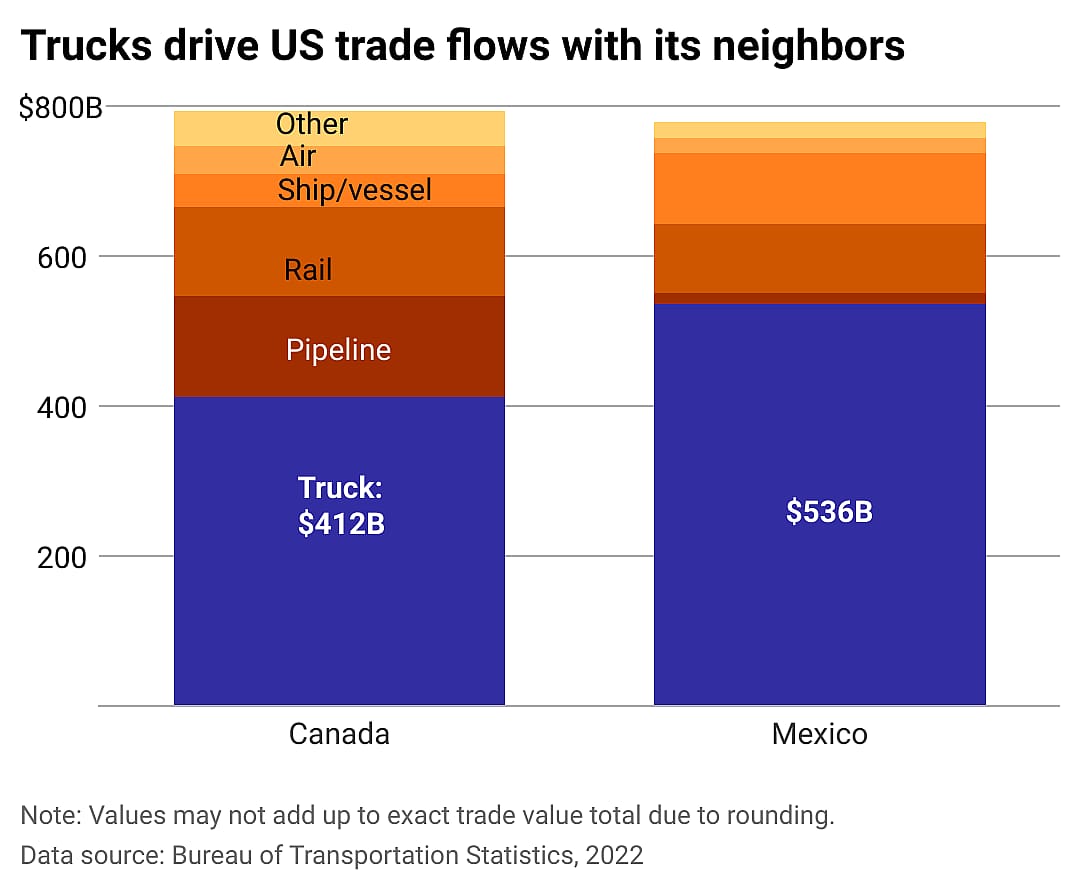
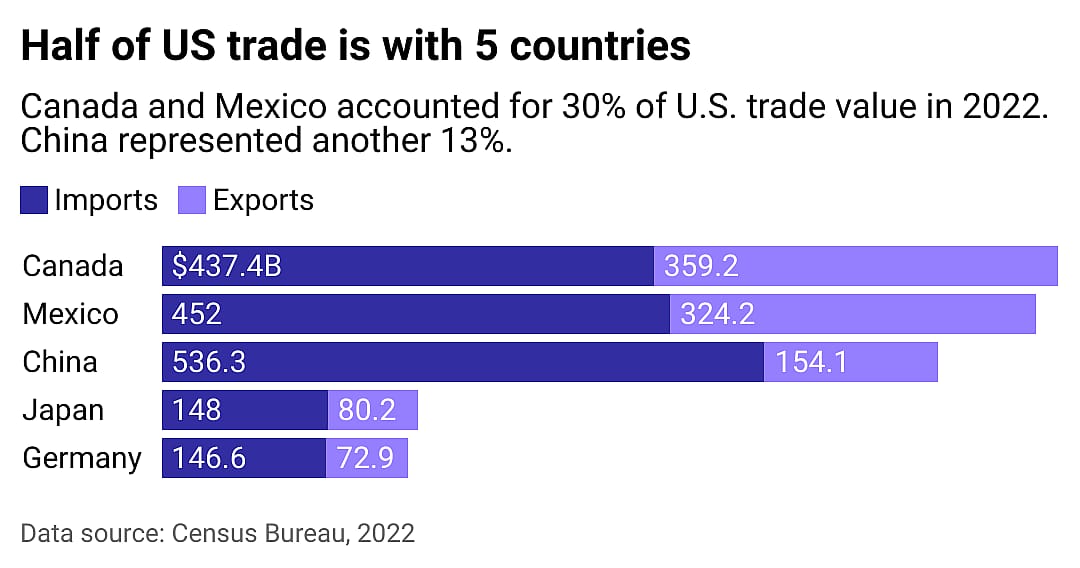
For the first time in decades, Mexico overtook China in the number of goods bought and sold to the U.S. in 2023. Centers for Disease Control and Prevention data shows that Canada claimed first place, taking the title of top trade partner.
The shift follows the push to embrace nearshoring. The United States' dependence on the fragile worldwide supply chain came into focus during the coronavirus pandemic. Then, shipments of vital supplies like computer chips, personal protection equipment, and medication faced shipping backlogs and caused shortages worldwide. Nearshoring policies aimed to encourage suppliers to keep materials and the manufacturing processes geographically closer to the U.S.—not only to have them readily available in case of an emergency but to encourage the economic growth of the U.S. and its direct neighbors.
The trade war between the U.S. and China that began in 2018 and the subsequent Russian invasion of Ukraine worried U.S. investors. They recognized the war would bring more sanctions and devolve international business relations and figured it was better to transition some manufacturing to North American soil and U.S. allies.
Increased tariffs on Chinese goods imposed by the Trump administration and carried through the Biden administration also made an impact, forcing companies to look for suppliers and manufacturers closer to the United States. The international North American Free Trade Agreement and its successor, the United States-Mexico-Canada Agreement, imposed strict rules outlining what percentage of an item must be produced in North America. For example, under the USMCA, 70% of a vehicle manufacturer's steel and aluminum purchases by value must originate in North America, and those companies that don't meet the mark may face additional tariffs.