Is it too late to profitably invest in bitcoin?
Is it too late to profitably invest in bitcoin?
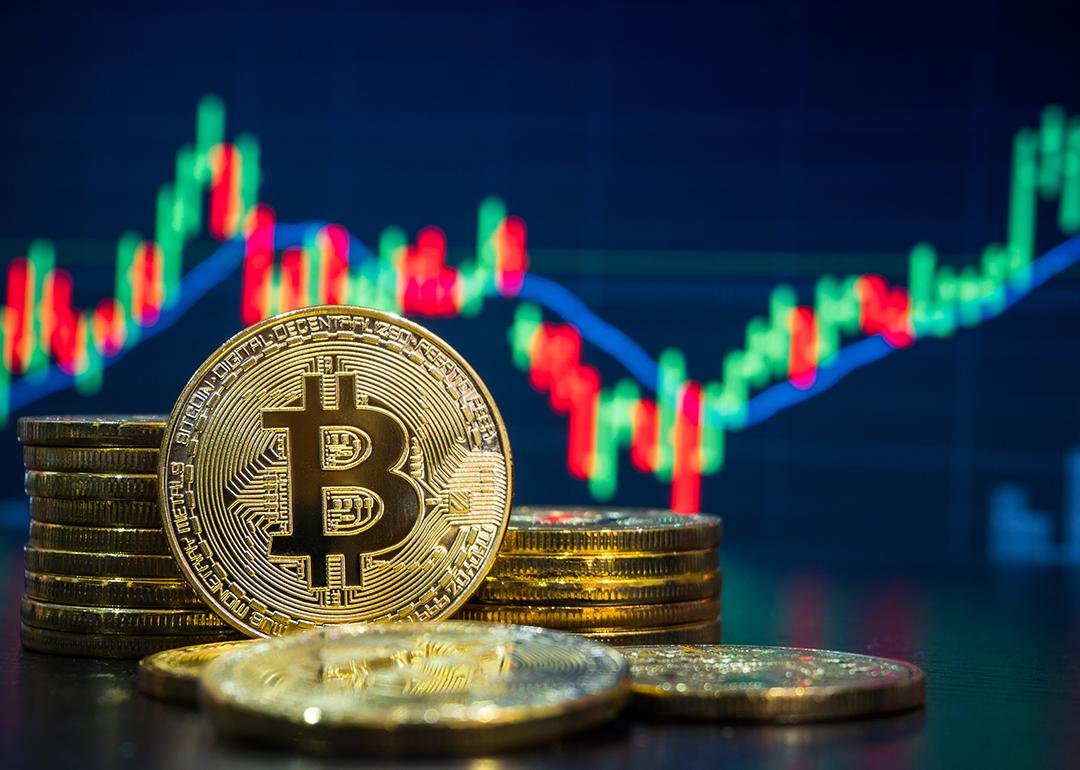
Back in 2010, you could buy bitcoin for just a few cents. Fast forward 15 years, and the cryptocurrency’s price has skyrocketed to roughly $93,000 per coin as of early January 2026.
It’s easy to get FOMO when you see what your returns could have been had you invested alongside the early crypto devotees. The number of bitcoin millionaires worldwide grew 70% between July 2024 and July 2025, Henley & Partners reported in its recent Crypto Wealth Report. But have you actually missed the boat to invest in bitcoin and reap the benefits of its popularity?
Current had financial experts weigh in and outline the risks of putting your money toward such a volatile asset.
Bitcoin’s volatile price movements
If you’ve ever felt the stomach-churning drops and euphoric climbs of riding a rollercoaster, you may have a little bit of insight into what it feels like to own bitcoin. Just take last year: Bitcoin started around $93,000 before dropping to $75,000 in April, soaring as high as $125,000 in October and winding up back around where it started 2025 in December.
“Bitcoin has always been a highly volatile asset,” says Ben Loughery, a certified financial planner and founder of Lock Wealth Management in Atlanta. “We have seen it go through multiple boom and bust cycles and each peak has historically been followed by new all-time highs years later.”
But those ups and downs are also what gives bitcoin its potential for high returns. If you buy in during a sell-off, you benefit if a price surge follows. So while you may have missed bitcoin’s early and massive gains, the price could very well take off again.
Should you invest in bitcoin?
Just because bitcoin comes with the potential for high returns doesn’t mean you should necessarily invest in it. The important question to ask is whether bitcoin fits into your overall investment plan, risk tolerance and time horizon — not whether you perfectly timed an entry into the market, Loughery says.
“It is better to understand its long-term role in your portfolio versus worrying about missing a short-term dip or spike,” he adds.
That’s because it’s hard enough for Wall Street professionals to time the stock market. So you probably don’t want to bet on your own ability to guess where bitcoin’s price is headed next. Instead, do your own research. Bitcoin has entered the mainstream investing world, with federal regulators allowing for exchange-traded funds (ETFs) that track its price and an influx of money from institutional investors. But crypto skeptics say that the asset has no intrinsic value.
“Whether it goes up or down in the next year, or five or 10 years, I don’t know. But the one thing I’m pretty sure of is that it doesn’t produce anything,” billionaire investor Warren Buffett, who often warns investors of crypto’s risks, said in 2022. “It’s got a magic to it and people have attached magic to lots of things.”
How to invest in bitcoin
If you do decide to buy bitcoin, financial advisors tend to say that you shouldn’t invest more money in crypto than you’re willing to lose. Some recommend allocating only so-called “play money” to bitcoin and other speculative assets — that is, money that you’re not relying on to cover goals like buying a home or retirement. And first, have an emergency fund in place that would cover three to six months of your expenses.
You also want to make sure one particular asset doesn’t account for too much of your portfolio.
“A key principle of investing is to diversify. Investors should never put their eggs in one or too few baskets,” says Chris Chen, a certified financial planner and founder of Insight Financial Strategists in Newton, Massachusetts. “The same is true for bitcoin. For that reason, it should never be more than a small part of a portfolio.”
Morgan Stanley recently recommended that those small portions be up to 4% for aggressive investors seeking higher returns from short-term market opportunities. (Again advisors generally don’t recommend that strategy to investors, especially those new to crypto). A 3% allocation makes more sense for investors with a moderate-to-aggressive risk tolerance, 2% for those looking for a mix of capital appreciation and income and 0% for those focused on income or wealth preservation, according to Morgan Stanley.
When it comes to actually investing, you don’t necessarily have to open a brand new account. Some fintech banking platforms let you buy and sell dozens of coins, including bitcoin, in the same app as you manage your spending account without trading fees.
In short, bitcoin’s price is somewhat unpredictable. But if you are looking to invest, diversification and keeping crypto to a limited portion of your portfolio could be key.
This story was produced by Current and reviewed and distributed by Stacker.