
Why so many people live paycheck to paycheck, even high earners
Living paycheck to paycheck is no longer limited to low-income households. In 2025, Americans earning $100,000 a year are more likely to report living paycheck to paycheck than those earning $50,000. This trend highlights a growing disconnect between income and financial stability, driven by rising costs, increased debt, and changing spending behavior.
Understanding why higher earners struggle financially requires examining lifestyle inflation, savings habits, and debt trends across income levels, CreditNinja explains.
Key Takeaways
- Living paycheck to paycheck affects high earners as often as lower earners due to lifestyle creep and rising fixed costs.
- As income increases, spending often rises at the same pace, eliminating the financial benefit of higher earnings.
- High-income households report greater anxiety about debt and missed payments than lower-income households.
- Long-term financial stability depends more on spending, saving, and debt management than on income alone.
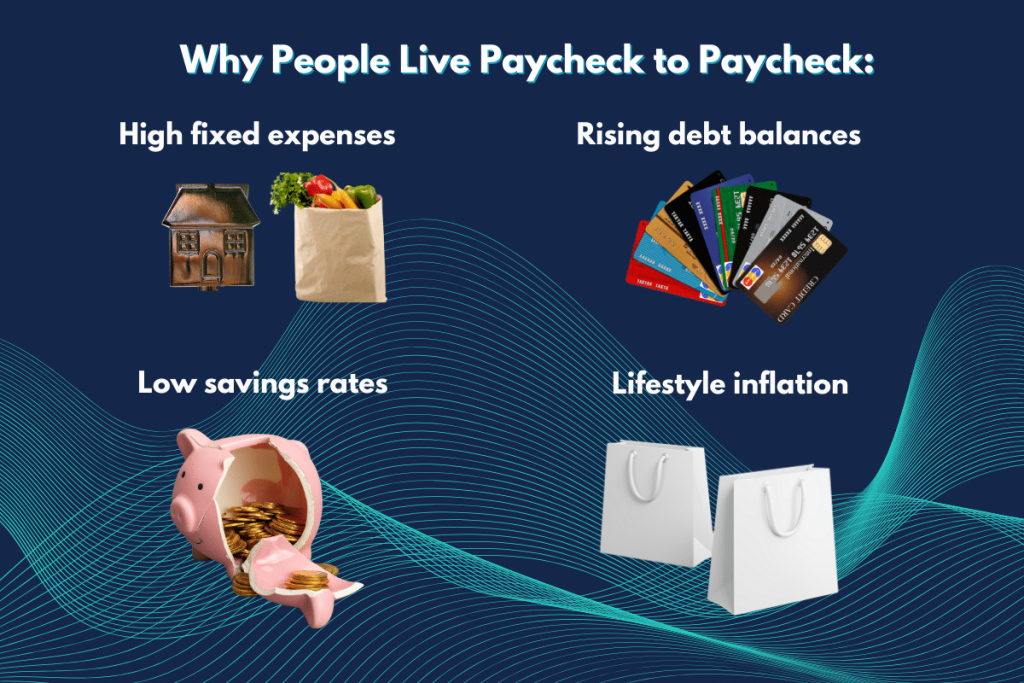
Lifestyle Creep Is a Major Cause of Living Paycheck to Paycheck
Lifestyle creep occurs when spending increases alongside income, often gradually and without deliberate planning. As people earn more, they tend to spend more on housing, transportation, food, and discretionary purchases.
Because these changes usually happen incrementally, they may feel manageable. Over time, however, they can eliminate the financial benefit of higher earnings and make it difficult to save or absorb unexpected expenses.
Higher Income Often Comes With Higher Fixed Costs
As income rises, people are more likely to increase their fixed expenses, which are harder to reduce during financial stress. Here are some examples of standard fixed cost ranges:
- Housing costs should stay within 30% of income.
- Vehicle costs should stay within 35% of income.
While these guidelines scale with income, many households spend close to the maximum they can afford within their budget rather than the minimum required for comfort. This often leads to larger rent or mortgage payments, more expensive vehicles, and higher recurring bills.
Higher fixed costs reduce flexibility and increase the risk of living paycheck to paycheck, even at higher income levels.
High Earners Report Growing Debt Anxiety
According to a 2024 Federal Reserve survey, 14% of consumers said they were at risk of missing a minimum debt payment within the next three months. This was the highest share of consumers bracing for delinquency since April 2020.
Notably, the increase in debt-related anxiety was greatest among households earning over $100,000 annually. Higher earners tend to carry larger debt balances and often rely on expectations of continued income growth to manage those obligations. With layoffs and economic uncertainty increasing, that strategy has become riskier.
Americans Are Saving Less Than in Previous Decades
The U.S. personal savings rate has declined significantly over time. It’s also common for many Americans to have personal loans, which can make saving more difficult. According to the Bureau of Economic Analysis, Americans saved an average of just 3.8% of disposable income in December 2024, even though savings rates were higher in the 1970s, 1980s, and 1990s and briefly peaked at 32% during the COVID-19 pandemic. While inflation and higher living costs contribute to lower savings, long-term shifts in spending habits and consumer behavior also play a major role.
Consumer Culture Encourages Spending Over Saving
Modern consumer culture prioritizes convenience and consumption. Targeted advertising, social media, and easy access to credit make spending faster and easier than saving.
Small, frequent purchases can provide short-term satisfaction, but they often add up to significant monthly expenses. Over time, this behavior reinforces a spending cycle that replaces saving, increasing financial stress.
Is There an Ideal Salary for Happiness?
Earlier research showed that day-to-day happiness plateaued around $75,000, which is roughly $108,000 today when adjusted for inflation. Other studies suggest happiness can continue to rise with income, particularly for those who feel financially secure and in control.
The consistent finding across studies is that financial satisfaction depends more on spending habits and financial stability than income alone.
Why Income Alone Does Not Prevent Living Paycheck to Paycheck
Both low- and high-income households face financial challenges, but for different reasons. Lower-income households often struggle with basic necessities, while higher-income households face pressure from higher fixed costs, debt, and lifestyle expectations.
Without intentional financial planning, higher income does not automatically lead to financial security. And so, even as your income increases, it’s important to have a financial plan and savings that can help you stay out of debt.
This story was produced by CreditNinja and reviewed and distributed by Stacker.