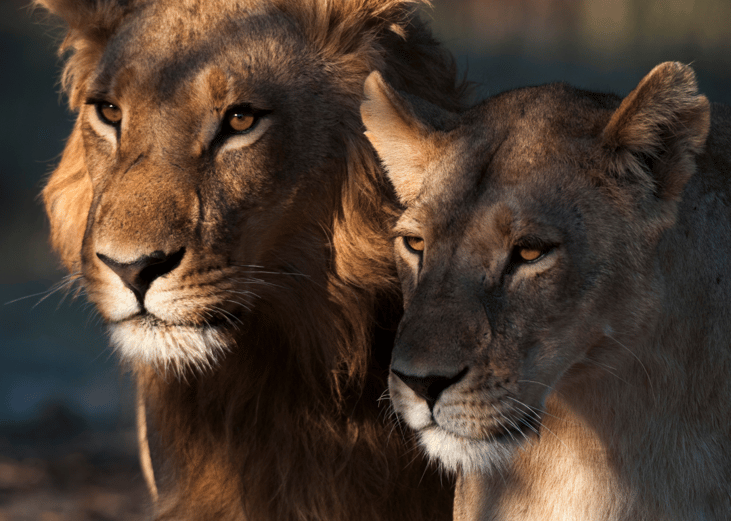
Have you ever wondered what your dog dreams about? What about that snoozing lion cub at the zoo? As it turns out, many of our favorite animals aren't so different from us when it comes to sleep.
Scientists are still on the fence about how certain animals catch their z's. Sleep in human beings still isn't completely understood, which is pretty wild considering we spend a full third of our lives sleeping or trying to do so. The human race's need for sleep isn't up for debate—it's universally accepted that we need sleep to survive—but our biological purpose for doing so has remained somewhat of a mystery. The act of sleep affects almost every part of the human body, from the brain, heart, and lungs to the metabolism, immune system, and mood. Even more importantly, a lack of sleep or poor sleep quality can increase the risk of cardiovascular disease, diabetes, obesity, and even depression.
A common question regarding non-human animals and sleep is the presence of dreams. Humans spend about two hours a night dreaming even if we can't remember most, or anything, about those dreams. Many researchers believe dreams exist to help us process our emotions; however, the purpose of dreaming remains a mystery.
When it comes to sleep in animals, needs range greatly between different species. Like humans, sleep among all mammals is necessary for survival and some have adapted unique habits and gone to incredible evolutionary lengths to avoid becoming susceptible to predators while resting.
The animal kingdom is full of unbelievable sleeping tendencies, from the slightly off-putting hibernation habits of frozen frogs to the cuddly approach to napping taken by baby otters. Stacker researched 30 different fascinating sleep habits of the world's most interesting animals using journalistic research papers, news articles, and more to give our readers a better understanding of the world of animals and sleep.
You may also like: Margaret Morse Nice thought like a song sparrow and changed how scientists understand animal behavior
1 / 30
Brown bats sleep for nearly 20 hours every day
Most of us know that bats like to sleep upside down, but many might not realize just how long the winged animals sleep for. Little brown bats enjoy bunching together into groups during their very long slumbers, which can last for up to 20 hours per day.
2 / 30
Giraffes sleep on their rumps
The world's tallest mammal doesn't sleep lying fully down often, but when they do, it's pretty adorable. Giraffes can REM sleep when positioned with their on their own rumps, only doing so for about five minutes at a time to avoid being exposed to predators.
3 / 30
Dolphins sleep with half their brains turned off
The bottlenose dolphin uses only half of its brain and one eye during sleep. The other half of its brain stays awake, though at a much lower level of alertness. In this way, dolphins can watch for predators and rest while continuing to swim through the water.
4 / 30
Bullfrogs might not sleep at all
A 1967 study—the only of its kind—found that bullfrogs don't sleep. In the experiment, the animal's response to stimuli was the same during the waking and the "resting phase." Because it's the only study out there regarding sleeping habits (or lake thereof) of bullfrogs, scientists are still divided on the subject. More research will be required to draw a definitive answer.
5 / 30
The dormouse can hibernate for 11 months
Ever wanted to take a year-long nap? The edible dormouse has the ability to stay dormant for up to 11 months straight in the wild. To pull off this feat, the animals need to eat enough to double (or triple) their weight while awake to create enough of a reserve.
You may also like: 12 animals that have been observed adopting animals from other species
6 / 30
Koalas can sleep for up to 18 hours a day
Koalas sleep tucked into the nooks and crannies of their beloved eucalyptus trees. These animals native to Australia spend about 18 hours a day sleeping. They spend the rest of the time munching away at eucalyptus leaves to the tune of about 2.5 pounds per day.
7 / 30
Large dogs dream longer
8 / 30
Fish sleep in suspended animation
Instead of completely falling asleep, fish rest while staying on high alert for nearby predators. During these half-naps, fish slow their movements and metabolisms without shutting down entirely. Scientists think these restful periods may offer fish the same benefits of a good night's sleep for people.
9 / 30
Ducks sleep with one eye open
Studies have shown that different sections of a duck's brain sleep independently of each other. Even with just one side of the brain and one eye open, it only takes about a fifth of a second for a duck to be alerted to danger.
10 / 30
Octopi change color while they sleep
11 / 30
Sea otters sleep holding hands
12 / 30
Orangutans make their own mattresses to sleep on
13 / 30
Meerkats sleep in piles
14 / 30
Walruses can sleep practically anywhere
Not only can walruses go up to 84 hours without sleeping, but they also find some bizarre ways to crash when they finally get around to taking a nap. Walruses can sleep at the bottom of an ocean floor or while bobbing on top of the water's surface. These animals have even been observed sleeping while using their tusks to hang from a block of ice.
15 / 30
Some sharks constantly move while they sleep
Certain types of sharks must continuously move, even while they sleep, to keep oxygen flowing through their gills. Some sharks get creative, resting in strategic areas on the ocean floor with strong currents to allow water to naturally flow over their gills.
You may also like: Plants that can attract butterflies
16 / 30
Hibernating frogs have built-in natural antifreeze
17 / 30
Bears can give birth while hibernating
Black bears who hibernate during winter don't let sleep stop them from giving birth. Pregnant bears in the wild have been recorded doing exactly that, with their heart rates increasing throughout the pregnancy and spiking during birth. After the cubs are born, the mama bear's heart returns to normal, and the hibernation continues.
18 / 30
Horses can't experience REM without laying down
The limbs of horse legs have special tendons and ligaments to allow them to stand with almost no muscular effort, letting them stand for long stretches of time during periods of drowsiness.
But contrary to popular belief, a full, deep sleep can't occur for a horse unless it is lying down on the ground.
19 / 30
Sloths sleep through about 80% of their lives
Sloths are known as one of the animal kingdom's slowest and sleepiest animals. Though sloths sleep 15 to 20 hours every day while tucked high up in the trees, they typically remain motionless while awake, as well.
20 / 30
Reptiles REM sleep and might even dream
21 / 30
Cats can wake up immediately
Even though the life of a house cat greatly differs from that of its wild ancestors, domesticated cats have more in common with lions and tigers than you may realize. House cats still sleep for most of the day to save up their energy "for the hunt," and can go from ffast asleep to fully operational almost instantly in the presence of danger.
22 / 30
Armadillos sleep 16 hours per day
Armadillos are widely antisocial, only forming in groups to mate or stay warm during the winter. For the rest of the year, the animals spend the wide majority of their time asleep—typically around 16 hours each day.
23 / 30
Pigs prefer to sleep nose-to-nose
Unlike armadillos, pigs are extremely social animals. Pigs have been known to form close bonds with other pigs, and they often snuggle close to each other, sleeping nose-to-nose. Studies have even shown that pigs can dream.
24 / 30
Penguins sleep in groups and only for minutes at a time
To avoid becoming easy prey, penguins don't let themselves fully fall asleep. Instead, they take short naps throughout the day, usually for just a few minutes at a time. Penguins prefer to sleep in large groups for added protection and warmth during the colder seasons.
25 / 30
Bees, like humans, can learn while they sleep
26 / 30
Elephants sleep far less in the wild than in captivity
Studies of African elephants in 2017 found that the animals sleep significantly less in the wild than in captivity. elephants in nature only sleep for about two hours, while elephants in nature only sleep for about two hours, typically at night. What's more, the elephants in the wild only entered REM sleep once every few days.
27 / 30
Migratory birds power nap while they fly
28 / 30
Seals can sleep on land or in the water
29 / 30
Sperm whales sleep vertically
Sperm whales have been observed sleeping vertically in the water, giving the appearance of "standing" under the sea. Whales, like dolphins, sleep by turning half of their brain off, which scientists believe is to avoid predators or keep their bodies swimming and breathing.
30 / 30
Female lions sleep less than male lions