Natalia Contreras // Votebeat
1 / 4What HB 1217 says about extended early voting days and hours
The number of additional early voting days and hours required by House Bill 1217 depends on the election.
For the typically high-turnout March primary and November general election, the main early voting location — usually the county courthouse or the county's elections administration office — must be open for at least nine hours every weekday except holidays. Early voting sites must also be open on the same days as the main location for at least eight hours each day. In the last week of early voting, the main early voting location must be open for at least 12 hours every weekday and Saturday, and at least six hours on Sunday.
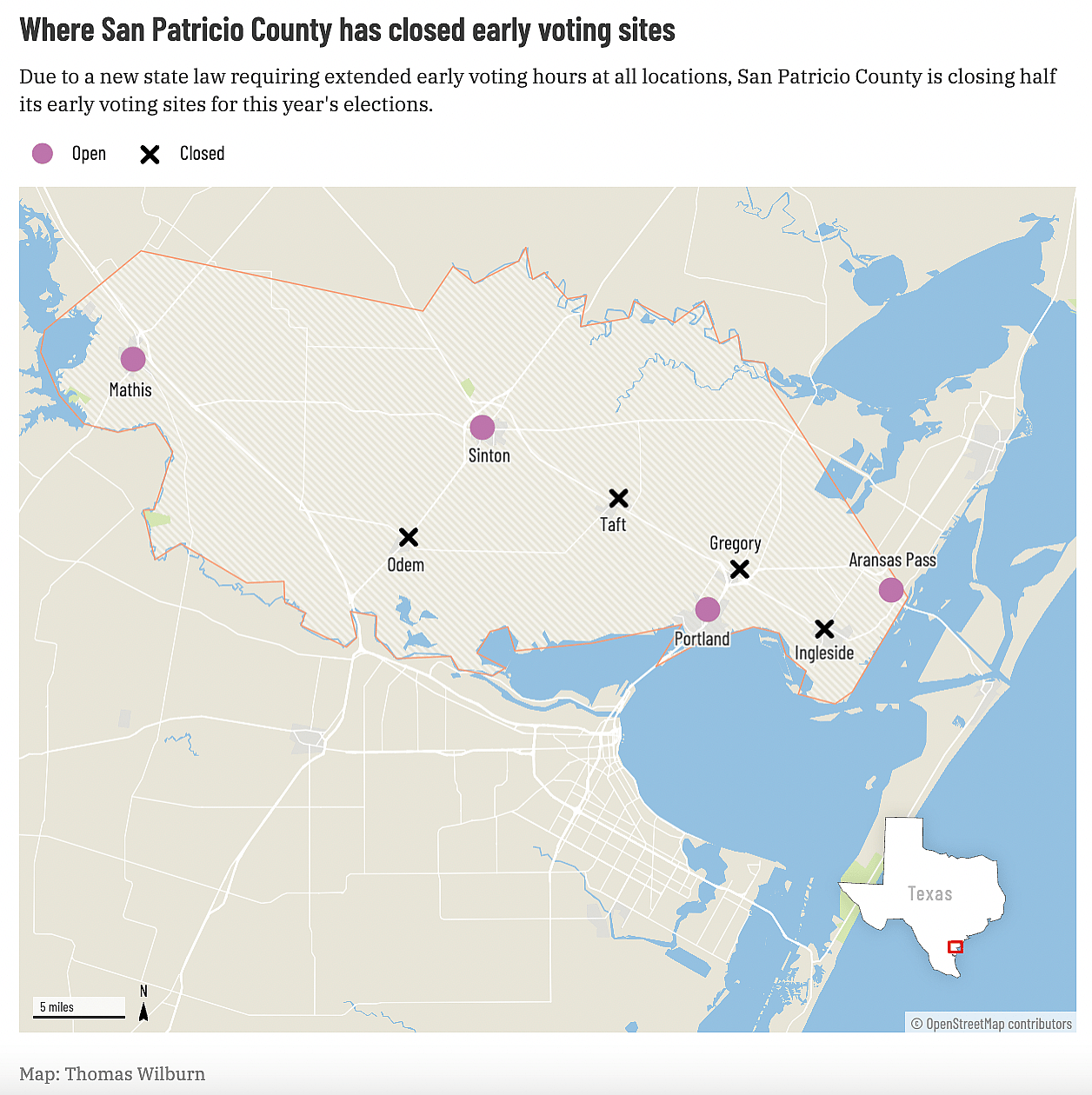
Some of the early voting locations in San Patricio were typically open for less than a handful of days per week, and for seven to eight hours per day. But it was more than nothing.
In the heavily Republican county, less than an hour north of Corpus Christi and home to more than 40,000 registered voters, the money to pay election workers for the additional hours and days are not in the budget. Hill is already digging for money to deal with a different new law, which requires the county to add more polling locations on Election Day. The voting equipment for three required additional locations cost taxpayers more than $80,000, Hill said.
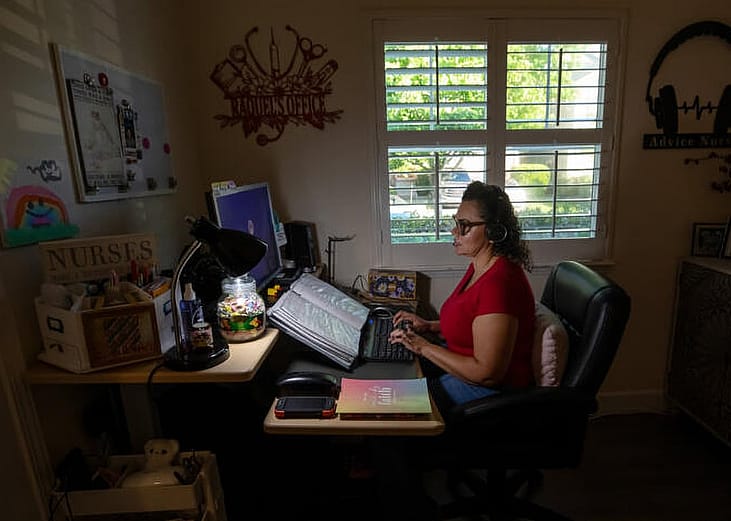
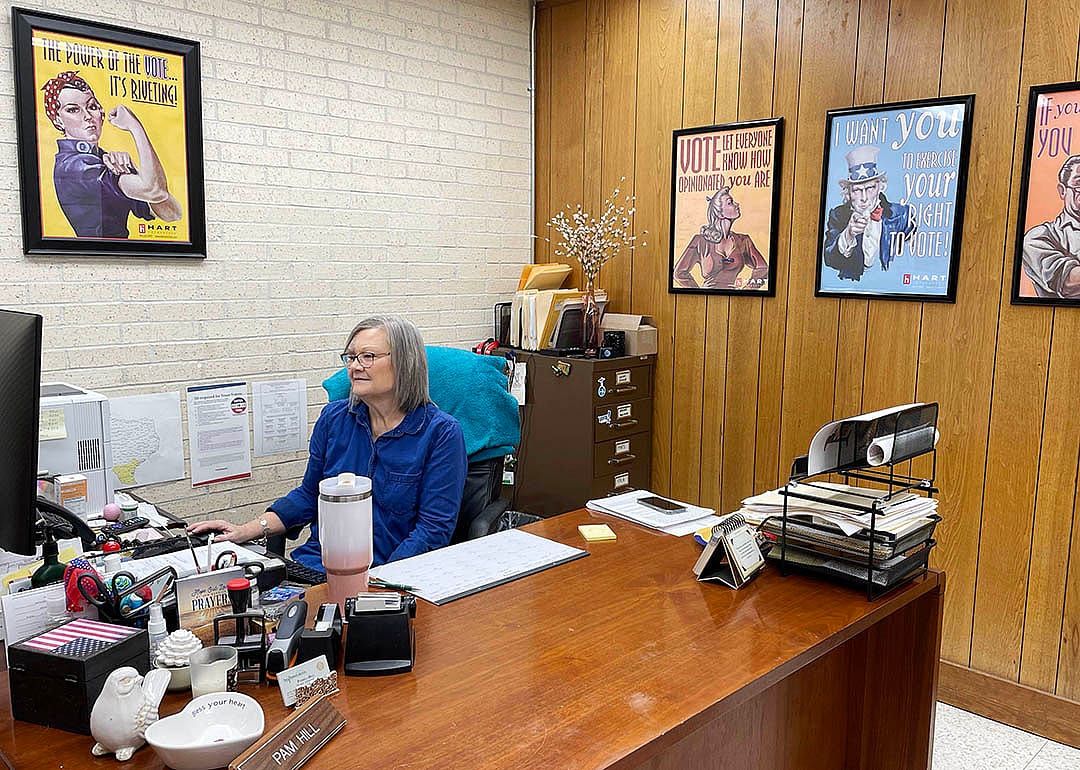
Hill (pictured above) told county leaders about the new requirements and requested more money to pay election workers for the extra hours. County leaders told her they did not want to put an additional burden on the county's taxpayers and didn't grant the increase.
The new law allows counties to dip into funds, known as Chapter 19 funds, that the state provides to counties for voter roll maintenance. The amount of money each county receives varies based on how many voters the county adds and removes from the roll, generally 25 cents to 40 cents for each one. The greater the number of registered voters in the county, the more money it can potentially receive.
In smaller counties, however, election officials say the money isn't enough to pay for extended hours and the workers required to support them. Some counties' elections departments have seen as little as $900. In some counties where the voter registrar is also the tax assessor-collector, the county clerk's office, which is in charge of elections, doesn't have access to the funds at all. Every other year, San Patricio receives about $15,000 from the fund, but the county spends that money paying part-time election workers who perform voter list maintenance duties and for internet access costs, which aren't going away.
That means there's no new money to pay for the costs associated with the extended hours now required for early voting sites.