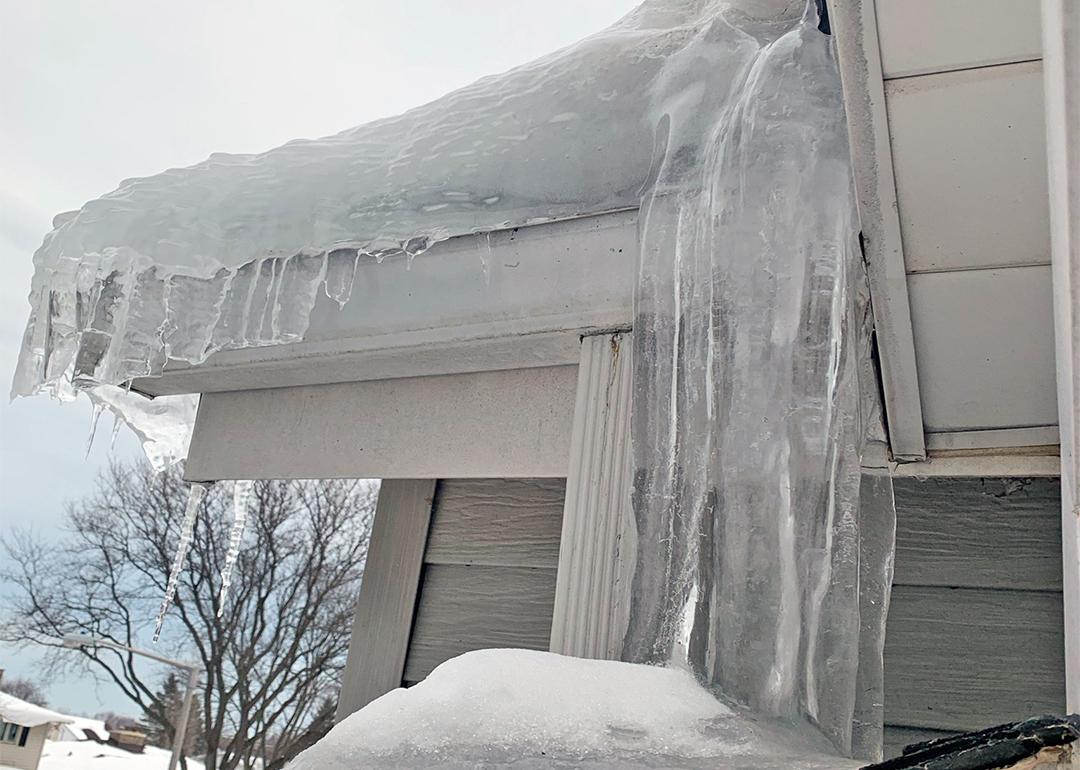
6 ways to eliminate ice dams in your gutters
6 ways to eliminate ice dams in your gutters
Winter can be a chillingly challenging time for homeowners, especially in climates where below-freezing temperatures are the norm. The damaging effects of extreme winter weather on your home can manifest themselves in myriad ways. Wicked winds can topple trees and bring down branches, frigid temperatures can cause pipes to freeze, and snow on the ground near your home for extended periods can even cause mold and rot problems. One of the most frequent and frustrating winter weather challenges for homeowners is the issue of frozen gutters and downspouts.
Frozen gutters and downspouts create a host of potentially long-lasting effects. The weight of ice in a gutter can pull the gutter away from the house, causing permanent damage to your roof and siding. Meanwhile, ice-clogged gutters — also known as ice dams — can lead to major moisture problems. When melting snow on the roof has no place to travel, the resulting backup can eventually cause water to pool up beneath shingles, leading to the potential for leaks and mold growth. In short: Ice-dammed gutters can be more than just a nuisance — and they're a stone-cold pain in the neck to get rid of once they form.
Upon discovering that you’ve got a giant block of ice clogging your gutter, you might be tempted to ascend the ladder with a hammer in hand, armed and ready to start smashing. As satisfying as the thought may be to pound your problems to a pulp, it’s also a surefire way to cause permanent damage to your gutters and roof — not to mention it’s downright dangerous. If you find yourself in this dammed predicament, there are a few proven methods for clearing obstructions and getting your gutters back in working order.
HomeServe shares six ways to get your frozen gutters flowing again:
1. The Stocking Stuffer
One popular technique for thawing ice dams is the stocking method. It involves using calcium chloride to aid in the melting of the ice. Calcium chloride is the same ice-melting chemical compound that gets spread over roads and sidewalks during the winter months.
Avoid sprinkling calcium chloride directly on the ice in your gutters, as it could stain your shingles and corrode the aluminum of your gutters. Instead, fill stockings or long socks with the compound and lay the socks on top of the ice-clogged gutter. You'll need to fill enough stockings to line the length of your gutters in order to create a channel in the ice through which water can flow and keep your gutters operable.
2. The Pour-Over
Another method for removing ice dams in your gutters is to simply use hot water to melt the ice. While not a long-term solution, this option can deliver fast results. For minor ice blockage, use a ladder to climb up next to your gutters and pour hot water along their entire length, as well as into the opening of the downspout.
3. Remove Debris
Perhaps more than any other method, the best way to keep ice from clogging your gutters is to prevent it from happening in the first place. As part of your regular home maintenance regimen, ensure that you keep your gutters clear of leaves and debris during the fall, before the threat of severe winter weather becomes imminent. Ice dams are exacerbated by neglected gutters because water flow is obstructed, making them more prone to freezing. Cleaning out gutters periodically or installing gutter guards to keep debris out can help prevent buildup from occurring to begin with.
4. Rake It Off
Rakes ain’t just for leaves on your lawn! Ever heard of a roof rake? Well, you can buy one at your local home improvement store. It’s a long aluminum rake with a polyethylene blade and a telescoping handle specially designed to let you pull snow down from your roof and out of your gutters without you having to leave the safety of ground level. Promptly after a heavy snow, use the roof rake to brush snow off the first few feet of your roof’s edge. This helps prevent snow from melting, trickling down into your gutters, and refreezing into solid ice.
Raking your roof not only clears it, but it can change the exterior temperature of the roof and prevent further buildup, as you'll be exposing the underlying shingles to the sun's rays.
5. Attic Insulation
Another way to prevent ice dams from forming is to make sure your attic is properly insulated and sealed. If heat is escaping from a specific spot in your attic, it can create the conditions for ice dams to form. The heat escaping will cause snow and ice to melt off the roof and travel down the roof into your gutters, where it can refreeze.
Although it can be challenging to identify these spots on your roof, the reward is definitely worth it. Not only can you prevent ice dams, but you can also lower your home's energy costs.
6. Leave It to the Pros
Preventing ice dams from forming is perhaps the safest and most effective way to deal with this wintertime nuisance. With proper care and maintenance, the majority of ice dams can be avoided. However, if you do end up with a frozen gutter problem, try one of the methods listed above.
However, while these methods can be effective, calling for professional help is always an option for preventing damage to your house — and yourself. Winter weather can bring with it a host of headaches for homeowners, but with proper prevention and care, you can help mark frozen gutters off your list of winter woes.
This story was produced by HomeServe and reviewed and distributed by Stacker.