All told, the 1970s were a chaotic decade. At home, the countercultural revolution of the '60s continued with protests against the Vietnam War and demonstrations in favor of increased women's rights. Globally, there was also a good amount of political upheaval, evidenced by the Iranian Revolution, the conflicts between Egypt and Israel, and the ongoing Cold War. But there was also this unpredicted return to more conservative roots, as seen in the formation of the "silent majority" in the United States and the election of Margaret Thatcher in the United Kingdom.
Beyond the political realm, there were major steps made in the sciences with the birth of the first test tube baby, the increased popularity of home computers, and the various space missions, both manned and unmanned, that provided a more well-rounded understanding of the universe. Pop culture drifted away from family-friendly, wholesome content to racier and more substantial programming like "All in the Family" and "Roots." Disco took over the nightlife scene and gave people a place to escape the oppression they often faced in the daytime, especially if they were from Black or LGBTQ+ communities.
Whether you focus on one year or the entire decade, there was an overwhelming amount of change happening in the '70s—and the examples we've mentioned thus far are just scratching the surface. To better understand one of the nation's most formative decades, Stacker has compiled a collection of 70 images that show how the '70s changed the world. From politics to technological developments, pop culture, and major figures of the decade, these images tell quite a story.
You may also like: 15 discontinued sodas you'll never drink again
Sidey,Crawshaw&McDonald/Mirrorpix // Getty Images
1 / 70Air travel goes mainstream
International travel took a huge step forward when the first Boeing 747 Pan Am jet safely made the journey from New York City to London's Heathrow Airport on Jan. 22, 1970. The wide-bodied aircraft was quick, comfortable, and affordable, making a trip across the pond more accessible for many Americans than it had been in previous years.
Bettmann // Getty Images
2 / 70Apollo 13 arrives home
In the spring of 1970, the world anxiously followed the progress of Apollo 13 after it suffered an onboard explosion on the second day of its mission. Fortunately, the astronauts operating the spacecraft made it home safely, and a naval ship was on hand to pick up the three American heroes when they dropped into the South Pacific Ocean.
Bettmann // Getty Images
3 / 70The first Earth Day
New York City crowds pack a closed-to-cars Fifth Avenue on the first Earth Day, April 22, 1970. Now observed in 192 countries, the holiday was originally intended to bring awareness to environmental causes and oppose ecological degradation.
Bettmann // Getty Images
4 / 70The Kent State shootings
On May 4, 1970, four anti-war protesters at Kent State University were shot and killed by members of the Ohio National Guard during a peace rally. Nine other Kent State students were wounded. Here, students flee the scene as tear gas billows around them.
Bob Parent // Getty Images
5 / 70The Women's Strike for Equality
In celebration of the 50th anniversary of the ratification of the 19th Amendment, women across America went on strike on Aug. 26, 1970. The Women's Strike for Equality looked a little bit different in every participating city, but the biggest single event of the day took place in New York City when some 50,000 women congregated to march down Fifth Avenue.
You may also like: 27 photos that show what life looked like in 1980
Ben Martin // Getty Images
6 / 70Masters and Johnson study sexuality
William Masters and Virginia Johnson were just over a decade into their work researching the nature of human sexuality in the spring of 1970. Here, the pioneering duo is photographed at their Reproductive Biology Research Foundation in St. Louis, now called the Masters and Johnson Institute.
National Archive/Newsmakers // Getty Images
7 / 70Elvis meets Nixon
In one of the more bizarre White House moments of all time, Elvis Presley popped by the Oval Office unannounced on Dec. 21, 1970, to personally offer his services to President Richard Nixon in the war on drugs. According to the Washingtonian, images of the iconic meeting are the most-requested items from the National Archives.
David Fenton // Getty Images
8 / 70Muhammad Ali and the Black Panthers
Muhammad Ali and the Black Panther Party had a close relationship throughout the '70s, though he was never an official member of the movement. Here, the legendary boxer marches with a group of Black Panthers, lending his voice to the fight for fair treatment and equal rights.
Bettmann // Getty Images
9 / 70'All in the Family' premieres
"All in the Family," a sitcom following the lives of the working-class Bunker family, made its debut in early 1971. Before it wrapped in 1979, the series tackled many issues that had never been addressed on TV—racism, women's rights, abortion, and infidelity.
Roy H. Williams/MediaNews Group/Oakland Tribune via Getty Images
10 / 70The San Francisco Bay oil spill
Bettmann // Getty Images
11 / 70Congressional Black Caucus founded
The Congressional Black Caucus, a group focused on championing the causes that most affect Black Americans and aims to fight for increased equity for Black Americans, was founded in 1971. Here, 12 members sit down to get to work.
Bettmann // Getty Images
12 / 70Bettmann // Getty Images
13 / 70Troops began leaving Vietnam
The United States' involvement in the Vietnam War had been controversial from the beginning, but it wasn't until the early 1970s that the Senate actively began working against the sitting president to bring troops home. In response, President Richard Nixon started bringing troops home— like this young man—in earnest.
Soul Train via Getty Images
14 / 70'Soul Train' hits the airwaves
In October 1971, "Soul Train," the iconic Black music and dance show, hit the airwaves. Here, Sly and the Family Stone perform on the show to the delight of a packed audience.
Bettmann Archive // Getty Images
15 / 70Corbis via Getty Images
16 / 70Icon and Image // Getty Images
17 / 70Concert for Bangladesh
Nowadays, massive benefit concerts are almost commonplace, but they were practically unheard of in the 1970s. George Harrison's 1971 Concert for Bangladesh is thought to be the first of these celebrity fundraisers. In two sold-out performances, Harrison, fellow musician Ravi Shankar, and other guest performers, including Ringo Starr, Bob Dylan, and Eric Clapton, played to sold-out Madison Square Garden audiences, raising money for East Pakistani refugees fleeing the Bangladesh Liberation War.
Bettmann // Getty Images
18 / 70Angela Davis acquitted
In 1970, activist and professor Angela Davis was arrested for her supposed involvement in the armed seizure of Marin County's courthouse in California. She spent 16 months behind bars before being released and acquitted in 1972. Her time in prison helped to shape her future as a staunch prison-industrial complex abolitionist.
Bettmann // Getty Images
19 / 70Women enter the Boston Marathon
Only men were allowed to participate in the Boston Marathon for the first 76 years of its existence. That all changed in 1972 when eight female participants were finally allowed to register. The winner, Nina Kuscik (on the left wearing F2) finished the race in three hours, 10 minutes, and 26 seconds.
Dirck Halstead/Liaison // Getty Images
20 / 70The SALT I Treaty is signed
Hulton Archive // Getty Images
21 / 70Burning draft cards
A group of anti-war protestors burned their draft cards in 1972. Though the form of protest was seen as more symbolic than, say, fleeing the country to live in Canada, it was still illegal as determined by the Draft Card Mutilation Act of 1965.
Russell Mcphedran/The Sydney Morning Herald/Fairfax Media via Getty Images
22 / 70The Munich Olympic massacre
In what would become one of the defining images of the 1972 Munich Olympics, a member of the Black September terrorist group stands on the balcony of the Israeli wrestling team's dormitory. The Palestinian terrorists, calling for the release of prisoners being held in Israeli jails, took nine members of the country's Olympic team hostage. After 20 hours, five of the terrorists, 11 Israelis, and one West German police officer would be dead.
Heritage Space // Heritage Images via Getty Images
23 / 70'Blue Marble'
On Christmas Eve 1972, astronauts aboard the Apollo 17 took this iconic photo of Earth, later dubbed "Blue Marble." The incredibly detailed image would become a component of the official Earth Day flag.
Michael Ochs Archives // Getty Images
24 / 70Ziggy Stardust
David Bowie's alter ego, alien rock star Ziggy Stardust, changed the direction of the music industry. The character, who Bowie only performed as in 1972 and 1973, practically invented the glam rock genre, and his songs had huge influences on the melodies and beats used in pop music.
Allan Tannenbaum // Getty Images
25 / 70The 1973 oil crisis
When member countries of the Organization of Arab Petroleum Exporting Countries placed an oil embargo against nations that supported Israel during the Yom Kippur War, bedlam ensued. Gas was difficult to come by and often rationed, and drivers would occasionally be forced to wait in extraordinarily long lines just to fill their tanks. By the end of the OAPEC embargo, gas prices had risen nearly 400% and have never fully gone back down.
You may also like: 21 Discontinued Wendy's Menu Items That Fans Still Miss
Bettmann // Getty Images
26 / 70The Watergate scandal
Hands down the biggest political story in 1970s America was the Watergate scandal. Here, the two journalists who broke the story, Bob Woodward (left) and Carl Bernstein, pose at their Washington Post desks.
PL Gould/Images // Getty Images
27 / 70McDonald's takes Japan
The 1970s saw the beginnings of a globalized economy and culture. In 1971, for example, the first McDonald's opened in Japan. While many folks saw moves like this as a way to create more wealth and opportunity, others worried the expansion of American brands endangered local cultures.
Bettmann // Getty Images
28 / 70Sacheen Littlefeather attends the Oscars
In 1973, Sacheen Littlefeather made history when she became the first Native American to stand on stage at the Academy Awards. The actress and activist was there to refuse an Oscar on behalf of Marlon Brando, who had won Best Actor for his role in "The Godfather" and was boycotting the ceremony over Hollywood's treatment and portrayal of Native Americans. The traditionally dressed Littlefeather was booed off stage by unimpressed attendees.
CDC/Charles N. Farmer/Smith Collection/Gado // Getty Images
29 / 70Polio vaccinations
Residents of Columbus, Georgia, lined up to receive polio vaccinations in 1973. Thanks to the efforts of the National Polio Immunization Program, polio cases across the country dropped from 20,000 per year in the 1950s to just 10 per year by 1979.
Bettmann // Getty Images
30 / 70Skylab 3
The Skylab 3 crew set a record in 1973 when it spent a whopping 59 days and 11 hours in space. The three astronauts flew to Skylab, the first American space station, where they conducted experiments and took photos, including this one of a pocket of helium gas erupting from the sun.
You may also like: 31 photos that show what life looked like in 1981
US News & World Report Collection/PhotoQuest // Getty Images
31 / 70National speed limit laws enacted
Bettmann // Getty Images
32 / 70King defeats Riggs
In 1973, 90 million people tuned in to the Battle of the Sexes tennis match. A 29-year-old Billie Jean King handily defeated 55-year-old Bobby Riggs, who had previously gone on record saying that women's tennis was so inferior to men's tennis that even an older player like him could beat the best women's players. Talk about eating your words.
Keystone/Hulton Archive // Getty Images
33 / 70Skyrocketing inflation
Due to numerous compounding economic factors, the 1970s brought about some of the highest inflation rates in recent history. The purchasing power of a dollar hit a near all-time low, making prices of things like groceries skyrocket. Here, women and children march in New York City, protesting the rising costs of things like milk, bread, and meat.
Anwar Hussein // Getty Images
34 / 70Elton John entertains the world
Bettmann // Getty Images
35 / 70'Free to Be… You and Me'
In the early '70s, actress Marlo Thomas collected several of her celebrity friends, including folks like Cicely Tyson, Michael Jackson, Shel Silverstein, Mel Brooks, and Alan Alda, to help her put together a children's book and a record that challenged traditional gender norms. The project, "Free to Be… You and Me," also garnered its own television special that challenged the sexist beliefs which had long been ingrained in our culture.
You may also like: 47 photos that show what life looked like in 1977
Bettmann // Getty Images
36 / 70President Nixon resigns
On Aug. 8, 1974, Richard Nixon made a televised appearance in which he resigned from the presidency following the Watergate scandal. He told the people: "I have never been a quitter. To leave office before my term is completed is abhorrent to every instinct in my body. But as president, I must put the interest of America first." The following day, he boarded Air Force One, leaving the White House for the last time. He remains the only president in history to resign from office.
Fotos International // Getty Images
37 / 70Jane Goodall gets to work
Jane Goodall, now the world's foremost expert on chimpanzees, was still early into her tenure at Tanzania's Gombe Stream National Park in the 1970s. Later in the decade, the primatologist opened the Jane Goodall Institute, a wildlife and environmental conservation organization.
Central Press/Hulton Archive/Getty Images
38 / 70Margaret Thatcher wins office
Britain's first woman prime minister, Conservative Margaret Thatcher, won against Edward Heath for Opposition Party leadership and won in 1975. She became prime minister in 1979. Dubbed the Iron Lady, she was known for her uncompromising leadership style and hardline politics.
Silver Screen Collection // Getty Images
39 / 70'MASH'
"MASH," a series that followed the staff of an Army hospital during the Korean War, hit the airwaves in 1972. Hugely popular, the dramedy was nominated for more than 100 Emmy Awards over the course of its 11-season run, and its finale remains the most-watched finale of any TV show.
Bettye Lane/Photo Researchers History // Getty Images
40 / 70Gloria Steinem speaks out
Spencer Grant // Getty Images
41 / 70Marching for equality
Following the Stonewall riots of 1969, the lesbian and gay men movement gained traction in the United States during the 1970s. Marches like this one in Boston's Back Bay neighborhood became frequent occurrences, increasing the visibility of and demanding equality for the formerly ostracized group.
David Redfern/Redfern's // Getty Images
42 / 70Disco dancin'
The disco scene blipped in and out of popularity in the 1970s. Born in New York City, the movement provided a sense of liberation and freedom for the average American, and disco clubs provided a safe place where folks from all walks of life could gather to let loose.
Bettmann // Getty Images
43 / 70Bettmann Archive // Getty Images
44 / 70'Jaws' premieres
Steven Spielberg's shark thriller "Jaws" premiered in 1975. The first summer blockbuster, the movie was also the highest-grossing film of all time when it was released, bringing in more than $100 million at the box office. The 50th anniversary of the movie's release was commemorated with "Jaws @ 50: The Definitive Inside Story," which premiered in July 2025 on National Geographic. The authorized documentary featured never-before-seen archival footage, newly filmed interviews with Steven Spielberg and the original cast and crew, and explored the film's lasting impact on cinema and shark conservation.
Warner Bros. // Getty Images
45 / 70Live from New York…
…it's Saturday Night!
The classic sketch comedy show "Saturday Night Live" debuted in 1975. Although audiences' attitudes toward it were lukewarm initially, the series quickly found its footing. Around 4 million people still tune in each week to catch its incisive takes on politics and pop culture. "SNL" celebrated its 50th anniversary season with special events throughout 2025. NBC released docuseries and produced special events, which culminated with "SNL50: The Anniversary Special" in February 2025. The three-hour special aired on NBC and Peacock and was watched by nearly 15 million viewers.
You may also like: 25 photos that show what life looked like in 1982
Bettmann // Getty Images
46 / 70Barbara Walters breaks glass ceilings
In the 1970s, pioneering TV journalist Barbara Walters became the first woman to be named an official co-host of the "Today" show and the first woman to co-anchor an evening news program. Here, she announces to viewers that she'll be leaving NBC for ABC, where she'd be hosting the evening news alongside Harry Reasoner, earning $5 million over five years.
Heritage Space/Heritage Images via Getty Images
47 / 70A journey to Mars
The first long-term missions to Mars began in the mid-'70s when two pairs of orbiters and landers—Viking 1 and Viking 2—touched down on and orbited the Red Planet. For years, the spacecraft crawled across the surface of the planet and circled it at the same time, sending pictures like this one back to scientists at NASA.
Bettmann // Getty Images
48 / 70World population hits 4 billion
In 1974, the world population officially hit 4 billion. More than 50 years later, the population has more than doubled, reaching approximately 8.3 billion in 2026.
Tony Korody/Sygma/Sygma via Getty Images
49 / 70The birth of the personal computer
The first personal computers began making their way into homes in the early 1970s. Machines like the Kenbak-1, the Wang 2200, and the Xerox PARC Alto were among the first mass-market options available to consumers with money to burn.
Heritage Space/Heritage Images/Getty Images
50 / 70The Enterprise takes flight
The Space Shuttle Enterprise was rolled out in 1976. Not actually capable of space flight since it lacked both engines and a heat shield, the orbiter spacecraft was pivotal in the development of the eventual space shuttle program and had a huge role in the popularization of space exploration with the average American.
You may also like: The 50 most popular baby names of the 1980s
ABC Television // Getty Images
51 / 70'Roots'
A national phenomenon, "Roots" is a 1977 TV miniseries that tells the dramatized story of members of author Alex Haley's family tree, from their origins in Africa through their time as enslaved people in the South. The series was actor LeVar Burton's breakout role.
Sunset Boulevard/Corbis via Getty Images
52 / 70A long time ago…
…in a galaxy far away.
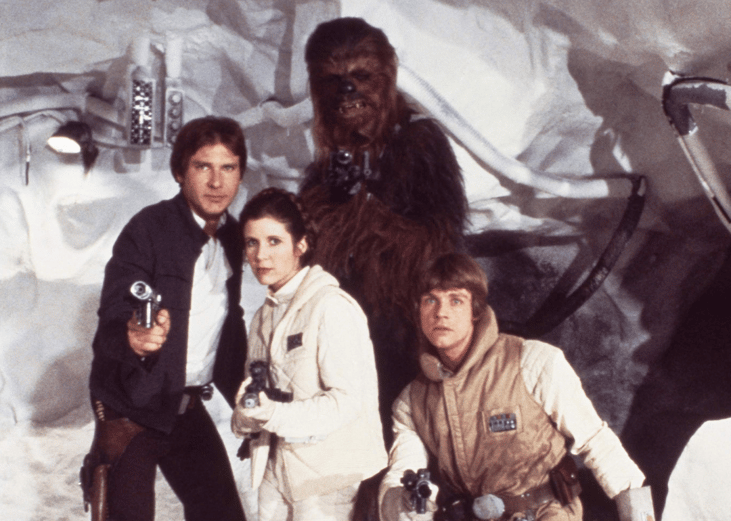
So began George Lucas' groundbreaking 1977 space epic "Star Wars— Episode IV: A New Hope." An instant hit, the film remains one of the highest-grossing films of all time.
Mark Kauffman // Getty Images
53 / 70The biotechnology industry begins
Microbiologist Herbert Boyer, his collaborator Stanley Cohen of Stanford, and venture capitalist Robert Swanson helped create today's biotechnology industry. In the 1970s, Boyer and Cohen became the first to clone DNA successfully and to figure out how to modify bacteria into human proteins, such as insulin and growth hormones, that could then be used for medicinal and therapeutic reasons. Together with Swanson, the duo founded Genentech, whose first product created a chemically synthesized gene for human insulin.
Warren K Leffler/Universal History Archive/Universal Images Group via Getty Images
54 / 70A diagnostic leap forward
Godfrey Hounsfield, an eccentric British engineer, developed the first CT scanner and scanned the first patient in 1971. By 2020, the machine was being used in hospitals worldwide to take detailed images of the brain and other parts of the body.
Peter Keegan/Keystone/Getty Images
55 / 70Abortion rights become a hot-button issue
In contrast to what's happening now, women were gaining rights to what they could do with their bodies in the 1970s. The Supreme Court established a woman's right to access abortion nationally with its decision on Roe v. Wade in 1973. Despite the court's support, abortion services were not always easily accessible or available to women from all walks of life, which led to protests around the country.
The landmark ruling stood for nearly 50 years until it was overturned by the Supreme Court in June 2022 in Dobbs v. Jackson Women's Health Organization, allowing states to ban abortion.
You may also like: 17 lunchbox snacks every '80s kid remembers
Bettmann // Getty Images
56 / 70Harvey Milk
Harvey Milk, one of the first openly gay men elected to public office, sat on the San Francisco board of supervisors for 10 months in 1978 before he was assassinated by a fellow politician who disagreed with his politics and lifestyle choices. Here, Milk sits in front of the Bay Area camera shop he owned.
Bettmann // Getty Images
57 / 70Elvis Presley dies
On Aug. 16, 1977, Elvis Presley, the King of Rock 'n' Roll, and one of the most significant cultural figures of the 20th century, died of a heart attack. At 42, Presley's death came as a shock to fans, many of whom refused to accept the fact of his death. The belief that the "Heartbreak Hotel" singer is still alive remains one of the biggest conspiracy theories of the past century.
Keystone // Getty Images
58 / 70The world's first test-tube baby
In 1978, the understanding of science and genetics took a huge step forward when the world's first test-tube baby, a healthy girl named Louise Brown, was born in Oldham, England. Her arrival proved that in vitro fertilization was a safe and feasible option for families who wanted to have children but were otherwise unable to get pregnant.
David Lees // Getty Images
59 / 70World welcomes a new pope
On Oct. 16, 1978, white smoke rose from the Sistine Chapel chimney signaling the election of Pope John Paul II. The first non-Italian pope in 455 years, and the first Slavic pope, he remains the second-longest serving pope in history.
CONSOLIDATED NEWS PICTURES/AFP via Getty Images
60 / 70The Camp David Accords
In the fall of 1978, President Jimmy Carter, Egyptian President Anwar Sadat, and Israeli Prime Minister Menachem Begin spent 13 days at Camp David in Maryland, coming up with the contents of the Camp David Accords. The two political agreements ended the conflict between the Middle Eastern countries and directly led to the Egypt-Israel Peace Treaty.
You may also like: 25 photos that show what life looked like in 1983
Bettmann // Getty Images
61 / 70'Saturday Night Fever'
The John Travolta dance drama "Saturday Night Fever," released in late 1977, helped extend the life span of the disco scene, which was on its way out at the time. A commercial and critical success, the film—and its soundtrack—not only helped stem the decline of disco but even helped it climb greater heights of popularity in the mainstream.
Robin Platzer // Getty Images
62 / 70The Studio 54 era
For four glorious years, between 1977 and 1980, New York City's Studio 54 club was the epicenter of the country's nightlife and partying scene. A hedonistic playground where drugs, sex, and alcohol flowed freely and openly, the club was the place to be seen with celebrities like Andy Warhol, Bianca Jagger, Liza Minnelli, and any other big name you could possibly think of, making regular appearances.
AFP via Getty Images
63 / 70The Iranian Revolution
In 1979, Iran experienced a massive revolution, turning from a Western-favoring, secular monarchy to an anti-Western theocracy. At the end of the yearlong upheaval, which had a massive effect on international politics, religious cleric Ruhollah Khomeini was put in power.
Bettmann // Getty Images
64 / 70Three Mile Island accident
In the spring of 1979, the Three Mile Island power plant, located just outside Harrisburg, Pennsylvania, experienced a partial meltdown. Thankfully, the incident did not result in any injuries or deaths, but it did bring about new regulations for the nuclear industry.
James Andanson/Sygma via Getty Images
65 / 70America strengthens ties with China
The United States' ties with China are among the most important political and diplomatic relationships in existence. After President Richard Nixon visited the formerly communist country in the early '70s, much progress was made in the once-frosty relationship between the nations. That progress extended beyond the political realm, edging into arenas such as education and culture. Since then, relations have become fraught, with many dubbing it the "new Cold War."
You may also like: 16 gadgets from the 1980s that felt like the future
CORBIS/Corbis via Getty Images
66 / 70The SALT II treaty
At the end of the decade, an American president, this time Jimmy Carter, once again met with a Soviet leader, Leonid Brezhnev, to sign another nuclear treaty. One of the most controversial agreements of the entire Cold War, the treaty aimed to resolve numerous issues left unaddressed by the Strategic Arms Limitations Treaty I, like limiting the number of multiple independently targetable reentry vehicle missiles that could be produced. By Christmas 1979, the Soviets invaded Afghanistan, and thus SALT II was never ratified.
Bettmann // Getty Images
67 / 70Drops of Jupiter
In 1979, NASA sent two spacecraft, Voyager 1 and Voyager 2, to get images of Jupiter. Together the spaceships took more than 33,000 highly detailed images of the planet and five of its major satellites, expanding the understanding of the universe by leaps and bounds.
PL Gould/Images // Getty Images
68 / 70Roller discos
Roller skating was a hugely popular leisure activity in the 1970s. For the adult crowd, roller discos, which combined the activity of skating with the music and vibes of a disco, was a popular nightlife option.
Maureen Donaldson // Getty Images
69 / 70'Dallas'
Though "Dallas" really got big in the '80s, the campy TV prime-time soap opera actually premiered in 1978. Centered around a feuding oil family, the Ewings, the show was known for its cliffhanger endings, over-the-top plotlines, and huge viewership numbers.
Bettmann // Getty Images
70 / 70The Iranian hostage crisis