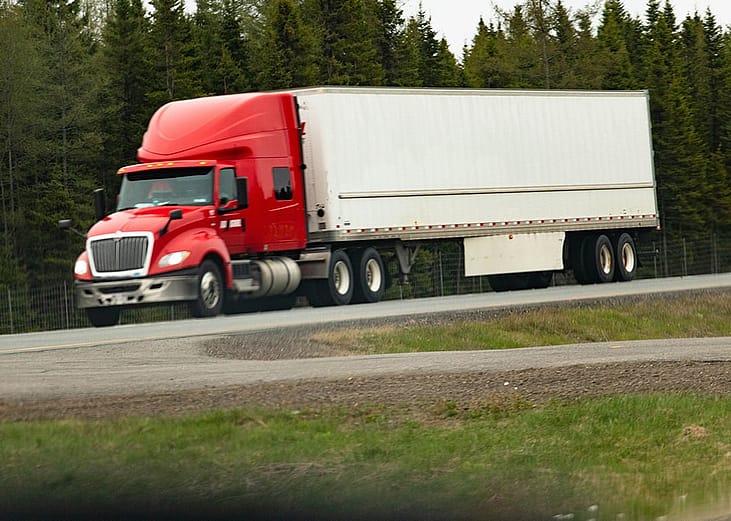
The most dangerous states for drivers, according to recent crash data

The most dangerous states for drivers, according to recent crash data
Every year, tens of thousands of Americans die on public roads, and traffic fatality rates vary significantly depending on where a person lives.
According to the National Highway Traffic Safety Administration (NHTSA), there were 40,901 traffic fatalities in the United States in 2023, followed by an estimated 39,345 in 2024. That marked the first time since 2020 that the annual toll fell below 40,000. The decline suggests modest progress in reducing traffic fatalities nationwide. However, the national average masks enormous variation from state to state, and in the most dangerous parts of the country, roads remain substantially more deadly than the national average suggests.
To understand where the risk is highest, researchers and federal agencies rely on fatality rates per 100 million vehicle miles traveled (VMT). This measure accounts for how much driving is actually happening rather than simply counting raw deaths. By that standard, the gap between the safest and most dangerous states is striking.
Below, Mokaram Injury Lawyers analyzes federal crash data to identify which states have the highest traffic fatality rates.
The States Where Drivers Face the Most Risk

Traffic fatality rates per 100 million vehicle miles traveled (VMT) vary widely across states, with Mississippi, Arizona, and South Carolina among the highest and Massachusetts among the lowest in 2023.
Mississippi
Mississippi consistently ranks at or near the top of every fatality metric. According to NHTSA's 2023 state traffic data, Mississippi recorded the highest fatality rate per 100 million VMT in the country at 1.79, compared with one of the lowest rates in Massachusetts at 0.56. The state also recorded the lowest blood alcohol concentration (BAC) reporting rate in the nation at just 6%, according to the Insurance Institute for Highway Safety (IIHS), making it difficult to fully assess how much impaired driving contributes to crashes. Researchers often cite factors such as rural road conditions, limited emergency response capacity, and lower seat belt compliance as contributing factors in Mississippi's persistent rankings.
Arizona
Arizona ranked second nationally in fatality rate per 100 million VMT in 2023 at 1.73, per NHTSA's Summary of Motor Vehicle Traffic Crashes. The state has seen significant growth in both population and traffic volume over the past decade, putting pressure on road infrastructure that has not kept up. Speeding-related deaths have increased considerably in recent years, and Arizona was among the states with the highest increases in overall fatalities between 2019 and 2023.
South Carolina
South Carolina followed closely at 1.72 fatalities per 100 million VMT in 2023, rounding out the top three most dangerous states by that measure. The state has historically struggled with high rates of unrestrained occupant deaths. Per NHTSA's 2023 data, nearly half (49%) of all passenger vehicle occupants killed nationally were unrestrained, and South Carolina consistently tracks above that average.
Montana
Montana presents a different profile. It is a sparsely populated state where long, rural stretches of highway and a high rate of alcohol involvement combine for deadly results. According to IIHS state-by-state fatality data, over 80% of Montana's crash deaths occurred on rural roads in 2023, one of the highest rural percentages in the country. Alcohol is a documented factor in roughly a third of the state's traffic fatalities.
Wyoming
Wyoming is also one of the most dangerous states when measured by deaths per capita. Despite having the smallest population of any state, Wyoming recorded approximately 27 deaths per 100,000 residents in 2023, among the highest per-capita rates nationally. Like Montana, Wyoming's rural highways, limited emergency services, and high speeds on open roads contribute to elevated risk.
The Broader Picture
Several patterns can be seen from the data:
- Rural roads are disproportionately deadly: Nationally, 41% of all traffic fatalities in 2023 occurred in rural areas, according to NHTSA's rural/urban crash data, even though rural roads carry far less total traffic than urban ones. The rural fatality rate per 100 million VMT was 1.65, roughly 1.5 times higher than the 1.07 rate recorded on urban roads.
- Alcohol remains a leading factor: Alcohol-impaired driving accounted for 12,429 deaths in 2023, or about 30% of all traffic fatalities, per NHTSA's overview of motor vehicle crashes. That figure declined by 7.6% from 2022 but remains one of the most persistent contributors to road deaths.
- Speeding claimed nearly 12,000 lives: Speeding-related crashes accounted for 11,775 fatalities in 2023, which is 29% of all traffic deaths, according to NHTSA’s report. Texas alone recorded 1,484 speeding-related fatalities, the highest of any state.
- Seat belts save lives, but not everyone uses them: The nationwide seat belt use rate among front-seat occupants was 92% in 2023. Yet nearly half of all passenger vehicle occupants killed that year were unrestrained, according to NHTSA's state traffic data, a stark illustration of what happens when protective measures go unused.

Alcohol impairment and speeding together account for nearly 60% of U.S. traffic fatalities.
Where the Roads Are Safest
For context, Massachusetts recorded the lowest fatality rate in the nation at 0.56 deaths per 100 million VMT in 2023. Minnesota (0.70) and New Jersey (0.71) also ranked among the safest states. Researchers associate factors such as urban road environments, stronger seat belt enforcement, lower speed limits, and more extensive emergency medical systems with lower fatality rates in these states.
A Declining Trend, With Real Stakes
The national picture is improving. NHTSA's 2024 estimates show 11 consecutive quarters of declining fatalities through the end of 2024, the longest sustained drop since 2006 to 2010. Fatalities fell in 35 states and Puerto Rico in 2024 compared to 2023.
Overall, the total number of road deaths remains higher than levels seen a decade ago, and the U.S. fatality rate is higher than that of many comparable high-income nations. Progress has been made, but it remains uneven, and in the states with the highest fatality rates, significant gaps remain between current outcomes and those seen in safer regions.
Data sourced from the National Highway Traffic Safety Administration (NHTSA) Fatality Analysis Reporting System (FARS) and the Insurance Institute for Highway Safety (IIHS). All statistics reflect 2023 final data unless otherwise noted.
This story was produced by Mokaram Injury Lawyers and reviewed and distributed by Stacker.