The welcome kit moment: Why timing and curation define your new hire’s first impression
The welcome kit moment: Why timing and curation define your new hire’s first impression
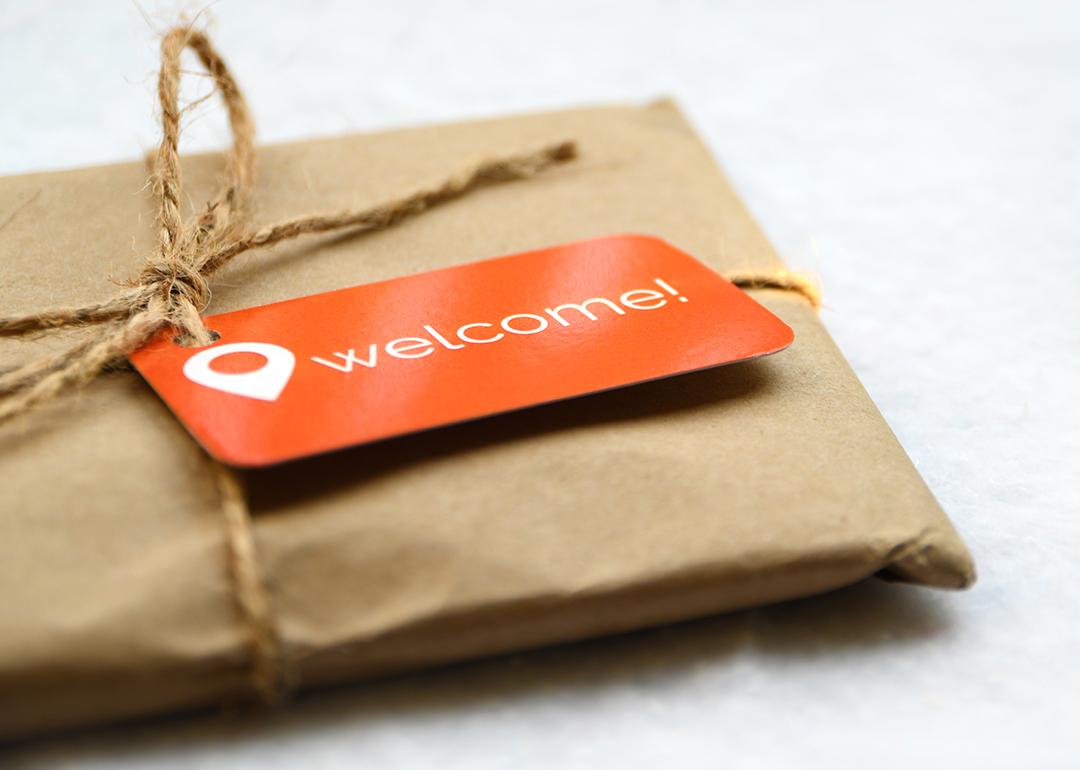
The moment a new employee opens their laptop on Day 1, the clock on their sense of belonging has already started. Whether they feel connected to their new organization, or still on the outside looking in, can hinge on something HR teams have historically treated as an afterthought: the Welcome Kit.
New research from Custom Ink’s 2026 Employee Onboarding Experience Audit, which surveyed more than 600 HR professionals and employees, reveals that most companies are flying blind when it comes to this critical onboarding moment. Only 26% of HR professionals say they are “extremely confident” their onboarding kits make new hires feel welcomed and valued. More striking: A late kit performs almost identically to no kit at all.
Timing Is the Hidden Variable
The audit’s most counterintuitive finding concerns delivery timing. Employees who received a Welcome Kit on Day 1 were nearly twice as likely to say they felt they “completely belonged from the start” (34%) compared to those who received no kit at all (18%). That’s a meaningful difference. But here’s where the data gets complicated.
Of employees who received a late Welcome Kit, 49% said it took time to feel included. Among those who received no kit at all, that figure was 44%. In other words, a kit that arrives after the first day produces outcomes nearly indistinguishable from receiving nothing.
This challenges the assumption that “eventually” is good enough. The Welcome Kit isn’t just a collection of branded merchandise, it’s a signal. When it arrives on Day 1, it says: We were ready for you. When it arrives weeks later, that signal is lost.
The Remote Work Amplifier
The stakes are especially high for remote and hybrid employees, where the Welcome Kit is often the only tangible first-day experience a new hire receives. There’s no office to walk through, no desk already set up, no colleague stopping by to say hello. The package that arrives before the first video call has to carry the weight of all of that.
Yet only 50% of remote-enabled organizations in the audit successfully ship a Welcome Kit before the employee’s start date. That’s a logistical gap with real human consequences; one that’s largely solvable once organizations understand what’s at stake.
The Real Barrier: Curation, Not Budget
When HR professionals were asked to identify their biggest challenges when creating a Welcome Kit, the results challenged a common assumption. “Deciding which items will make the strongest impression” ranked first at 53%, outpacing “getting budget approved for quality items” by six percentage points, and outranking every logistical and operational challenge on the list.
The top challenges HR teams face when creating a Welcome Kit:
- Deciding which items will make the strongest impression: 53%
- Getting budget approved for quality items: 47%
- Knowing if the current kit is actually making an impact: 45%
- Knowing what quantity or sizing to order: 44%
- Finding a vendor who handles everything (kitting and shipping): 43%
Cost anxiety is real, but it’s not the primary obstacle. The harder problem is confidence: knowing whether the choices being made will actually resonate with the person opening the box. That uncertainty is what the roughly three-quarters of HR teams who aren’t sure their kit is working are navigating with every new hire cycle.
This is, in some ways, good news. Curation is a solvable problem, particularly when there’s direct data from employees about what they actually want.
What Employees Actually Want
The audit asked more than 300 employees to select their top three items for the perfect Welcome Kit. The results were clear and, in several respects, instructive.
Top employee Welcome Kit wish list items:
- High-quality water bottle or tumbler: 43% (No. 1 by a significant margin)
- Tote bag or backpack: 36%
- Branded hoodie or sweatshirt: 34%
- Tech accessories (phone stand, charger, cable organizer): 34%
- Branded t-shirt: 32%
- Gift card or voucher to choose their own swag: 29%
The key word in the most popular item is “high-quality.” Employees aren’t asking for more items; they’re asking for better ones. A premium tumbler sits on a desk every day and signals genuine investment. By contrast, basic plastic bottles ranked among the most overdone and least appreciated items in the survey, consistent with a broader industry-wide shift away from disposable, low-engagement swag.
Brand recognition also matters. An overwhelming 91% of buyers believe their teams feel more valued when receiving recognized retail brands compared to generic private label alternatives. Employees notice the difference between thoughtful investment and a budget placeholder. And, they interpret quality as a signal of how much the organization values them as individuals.
The Business Case for Getting It Right
The argument for Welcome Kit investment doesn’t have to stay in the HR lane. Fifty percent of employees surveyed said the quality of their onboarding experience, including the Welcome Kit, directly affected how long they stayed at their company.
That transforms the conversation. A Welcome Kit isn’t a line item to trim; it’s a first-day investment with measurable retention implications. Organizations that frame it that way are better positioned to make the case for the time, budget, and logistical infrastructure it takes to execute well.
Research on broader branded merchandise trends reinforces the stakes: 74% of buyers cite team unity and belonging as their primary goal when selecting any form of branded gear. Onboarding is one of the highest-stakes moments to deliver on that goal—and one of the easiest to get wrong through inattention to timing and curation.
What Better Looks Like
The audit data points toward a fairly clear blueprint for Welcome Kits that work. Prioritize Day 1 delivery: A kit that arrives on time creates belonging outcomes that a late kit simply cannot replicate, regardless of what’s inside. Focus on fewer, higher-quality items rather than volume. Choose items employees will use daily. And recognize that what goes in the box communicates something about how much the organization values the person receiving it.
For remote and hybrid teams especially, this isn’t a nice-to-have. It’s often the only first-day experience that’s tangible, physical, and personal. The data suggests that getting it right (or wrong) leaves an impression that outlasts the unboxing by months.
HR teams that crack the curation and timing challenges don’t just improve onboarding satisfaction scores. They deliver a first-day signal that new hires carry with them long after the box is recycled.
This story was produced by Custom Ink and reviewed and distributed by Stacker.